Antibiotic Liver Injury Pattern Calculator (R-Ratio)
Enter Lab Results
Analysis Result
Enter your lab values and click analyze to see the R-ratio classification.
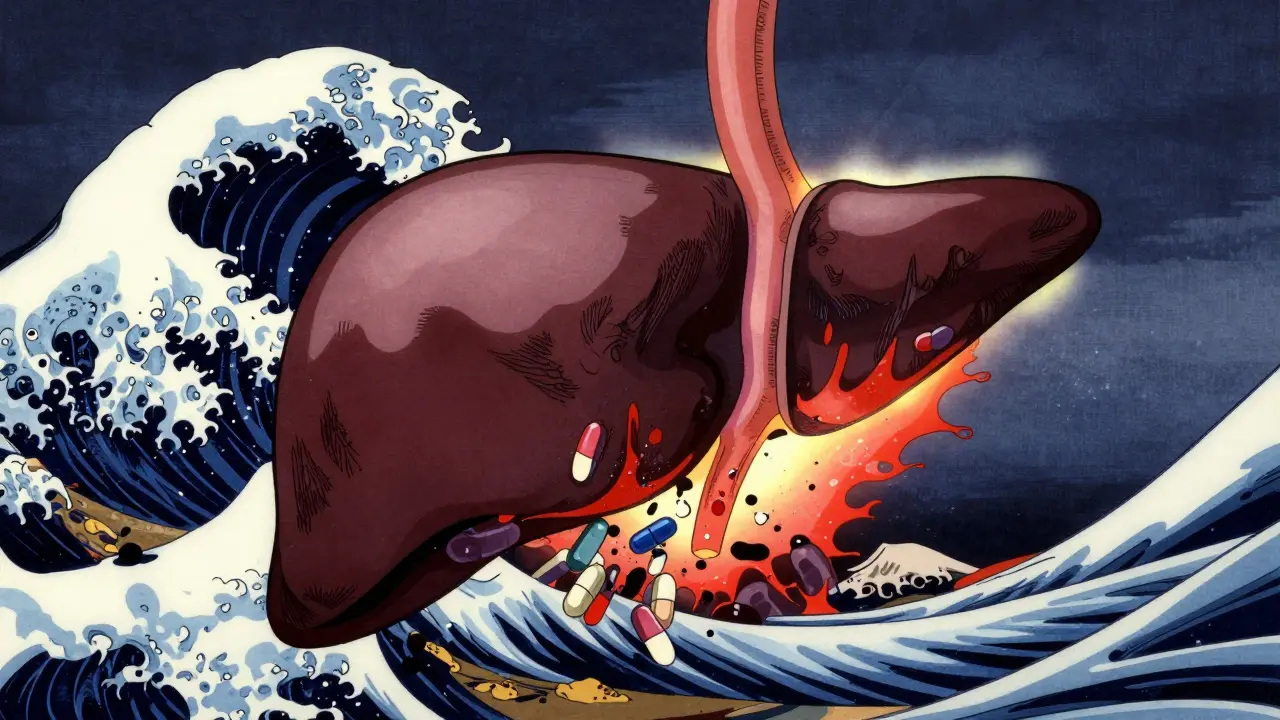
Have you ever wondered why a simple course of antibiotics might leave you feeling exhausted or cause unexplained nausea weeks after finishing the pills? It’s not just your imagination. Antibiotics are powerful tools for fighting infection, but they carry a hidden cost for some people: liver injury. In fact, research shows that antibiotics account for roughly 64% of all drug-induced liver injury (DILI) cases in intensive care settings. This isn't rare trivia; it's a significant clinical reality that affects how doctors prescribe these life-saving drugs.
The liver is your body’s primary filtration system, working hard to process medications. When certain antibiotics disrupt this process, the result can range from mild enzyme elevations to severe liver damage. Understanding the two main patterns of this injury-hepatitis and cholestasis-can help you recognize warning signs early and work better with your healthcare provider.
How Antibiotics Harm the Liver: The Two Main Patterns
When an antibiotic causes liver stress, it doesn’t always look the same. Doctors categorize the injury into two primary types based on which liver cells are affected and what blood tests reveal. Knowing the difference helps in diagnosing the problem quickly.
On the other hand, Cholestatic Injury involves blockage or reduced flow of bile from the liver to the intestines. Here, alkaline phosphatase (ALP) levels rise significantly-usually more than twice the ULN. You might notice itching, jaundice (yellowing of skin or eyes), or dark urine. Some patients experience a "mixed" pattern, where both ALT and ALP are elevated.
To determine the type, clinicians use the "R-ratio." It’s a simple calculation: divide the peak ALT value (relative to the upper limit of normal) by the peak ALP value. An R-ratio greater than 5 suggests hepatocellular injury. Less than 2 points to cholestasis. Between 2 and 5 indicates mixed injury. This metric helps doctors decide whether to stop the medication immediately or monitor closely.
Which Antibiotics Carry the Highest Risk?
Not all antibiotics are created equal when it comes to liver safety. While any drug can potentially cause issues, some have a much higher reputation for causing DILI. Identifying these high-risk agents is crucial for both prescribers and patients.
| Antibiotic Class | Risk Level | Injury Pattern | Typical Onset Time |
|---|---|---|---|
| Amoxicillin-Clavulanate | High | Cholestatic (70-80% of cases) | 1-6 weeks after starting |
| Fluoroquinolones (e.g., Ciprofloxacin) | Moderate | Mixed or Hepatocellular | 1-2 weeks |
| Tazobactam/Piperacillin | High (in ICU settings) | Hepatocellular | Often within first week |
| Nitrofurantoin | Moderate | Hepatocellular or Chronic | Variable (weeks to months) |
| Azithromycin | Low-Moderate | Mixed | Days to weeks |
Amoxicillin-clavulanate, often prescribed for sinus infections or earaches, holds the title for the highest population-attributable risk among antibiotics. Studies estimate an incidence of 15 to 20 cases per 100,000 prescriptions. What makes it tricky is the delay; symptoms often appear weeks after you’ve finished the course, making it hard to connect the dots back to the pill.
In hospital settings, particularly ICUs, broad-spectrum combinations like Tazobactam/piperacillin pose a serious threat. Research published in 2024 showed that nearly 29% of patients receiving this drug for seven days or longer developed liver injury. For comparison, meropenem had a lower rate of about 12% over the same period. Duration matters immensely here.
The Gut-Liver Axis: Why Microbiome Matters
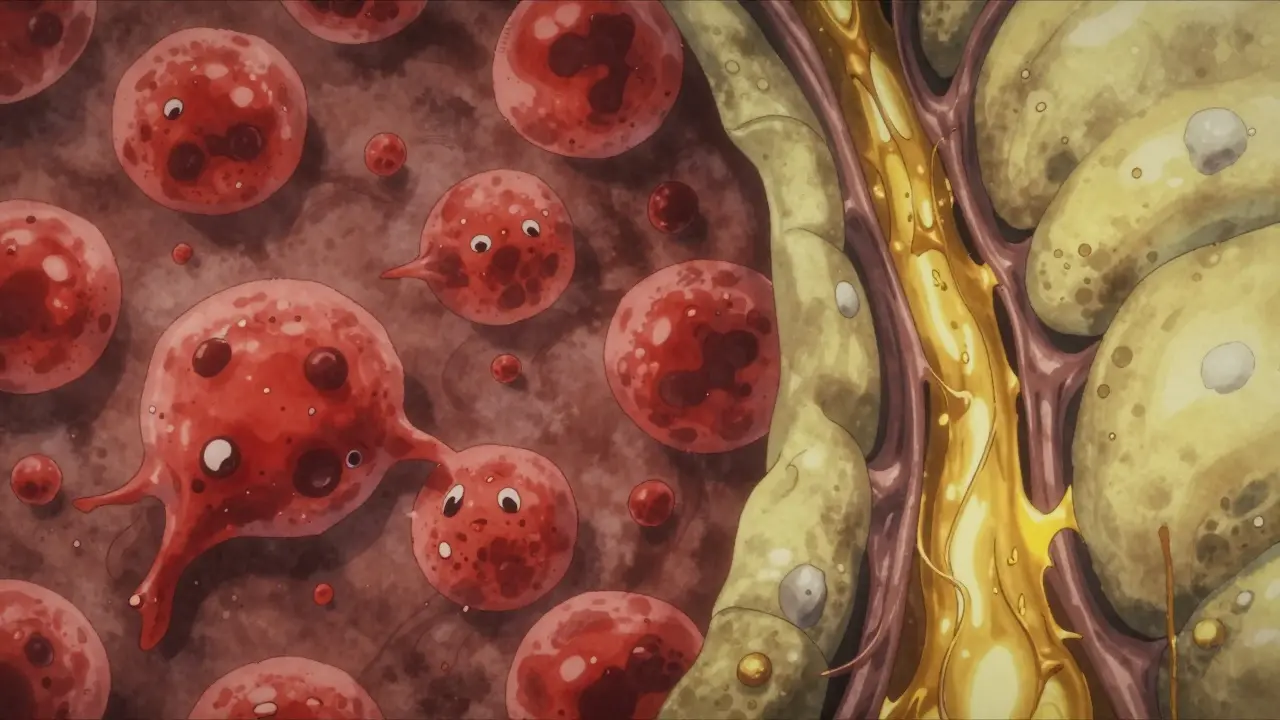
You might think liver injury happens directly inside the liver, but recent science points to a surprising culprit: your gut. The connection between your digestive tract and liver is called the gut-liver axis. Antibiotics don’t just kill bad bacteria; they wipe out good ones too.
This imbalance, known as dysbiosis, reduces the diversity of beneficial microbes like Faecalibacterium prausnitzii. When these helpful bacteria decline, the intestinal barrier weakens. Toxins and inflammatory signals leak through the gut wall, travel via the portal vein, and hit the liver hard. A study found that low levels of specific protective bacteria increased the risk of antibiotic-related liver injury by 3.7 times. This explains why some people get sick while others don’t-it’s partly about who lives in your gut before you take the drug.
Who Is Most at Risk?
If you’re taking antibiotics, you aren’t necessarily doomed to liver trouble. However, certain factors stack the odds against you. Recognizing these risks can prompt earlier monitoring.
- Prolonged Treatment: Courses lasting seven days or longer increase the risk of injury by 3.2 times compared to shorter durations. The longer the exposure, the higher the chance of cumulative damage.
- Sepsis: Patients suffering from severe systemic infections face an 1.8-fold higher risk. The liver is already under stress from the infection itself, making it more vulnerable to drug toxicity.
- Gender Differences: Interestingly, men may be more susceptible to certain types of injury. For example, liver injury linked to meropenem was 2.4 times more common in males than females in one large analysis.
- Pre-existing Conditions: Those with existing liver disease, alcohol use disorder, or metabolic syndrome have less reserve to handle additional stressors.
Genetics also play a role. Emerging research highlights associations with human leukocyte antigen (HLA) markers, suggesting that idiosyncratic reactions-unpredictable responses unique to individuals-are partly genetic. While we don’t yet have routine genetic testing for antibiotic safety, this field is advancing rapidly.

Recognizing Symptoms and Monitoring Protocols
Many cases of antibiotic-induced liver injury are silent, discovered only through routine blood tests. Others present with noticeable symptoms. Knowing what to look for can save your liver.
Common signs include unusual fatigue, loss of appetite, nausea, abdominal pain (especially in the upper right quadrant), and itching. Jaundice-a yellow tint to the skin or whites of the eyes-is a late sign indicating significant bilirubin buildup. Dark urine and pale stools also suggest cholestasis.
For high-risk antibiotics like amoxicillin-clavulanate, guidelines recommend baseline liver function tests before starting treatment. Repeat testing should occur at 1 to 2 weeks if the course continues. In critical care settings, weekly monitoring is standard for patients on broad-spectrum antibiotics for more than a week. The American Association for the Study of Liver Diseases (AASLD) advises stopping the offending drug if ALT exceeds 5 times the upper limit of normal, or if ALP exceeds 2 times the ULN accompanied by symptoms. Early discontinuation usually leads to full recovery, whereas delayed action can result in permanent scarring or acute liver failure.
What Should You Do If You Suspect Liver Injury?
If you develop concerning symptoms during or shortly after an antibiotic course, don’t ignore them. Contact your doctor immediately. They will likely order liver function tests (LFTs) to check ALT, AST, ALP, and bilirubin levels. Do not stop prescribed antibiotics without medical advice unless instructed, as untreated infections can be far more dangerous than potential liver side effects. However, clear communication with your provider ensures timely intervention.
In most cases, removing the trigger allows the liver to heal itself. Supportive care focuses on hydration, avoiding alcohol, and steering clear of other hepatotoxic substances like acetaminophen until levels normalize. Severe cases may require hospitalization for close observation or, rarely, evaluation for liver transplantation, though this is extremely uncommon with antibiotics alone.
How long does it take for the liver to recover from antibiotic injury?
Recovery time varies depending on the severity and type of injury. For mild hepatocellular injury, enzymes often normalize within 2 to 4 weeks after stopping the drug. Cholestatic injuries tend to resolve more slowly, sometimes taking several months for bile flow and ALP levels to return to baseline. Full histological healing may take longer, but most patients make a complete recovery without long-term consequences if the drug is stopped early.
Can I drink alcohol while taking antibiotics?
It is generally advised to avoid alcohol while taking antibiotics, especially those known to affect the liver like metronidazole or certain cephalosporins. Alcohol adds extra workload to the liver, increasing the risk of toxicity. Even with safer antibiotics, combining them with alcohol can worsen side effects like nausea and dizziness, and may mask early signs of liver distress.
Are probiotics effective in preventing antibiotic-related liver injury?
Current evidence is promising but not definitive. Since gut dysbiosis plays a key role in liver injury, restoring microbial balance with probiotics could theoretically reduce risk. Several phase 2 clinical trials are currently investigating specific probiotic strains for this purpose. While maintaining a healthy diet rich in fiber supports gut health, you should consult your doctor before starting probiotics, as they are not yet a standard preventive measure for DILI.
Why does amoxicillin-clavulanate cause liver problems so often?
The clavulanic acid component is largely responsible for the hepatotoxicity. It appears to form reactive metabolites that bind to liver proteins, triggering an immune-mediated response. Unlike direct toxic damage, this reaction is idiosyncratic, meaning it depends on individual immune sensitivity rather than dose. This is why even short courses can lead to significant cholestatic injury weeks later.
Is there a test to predict if I will get liver injury from antibiotics?
Currently, no widely available commercial test predicts susceptibility to antibiotic-induced liver injury. Research into HLA genetic markers and gut microbiome profiling shows promise for personalized risk assessment within the next few years. Until then, clinical vigilance, regular blood monitoring for high-risk patients, and awareness of personal history remain the best defenses.