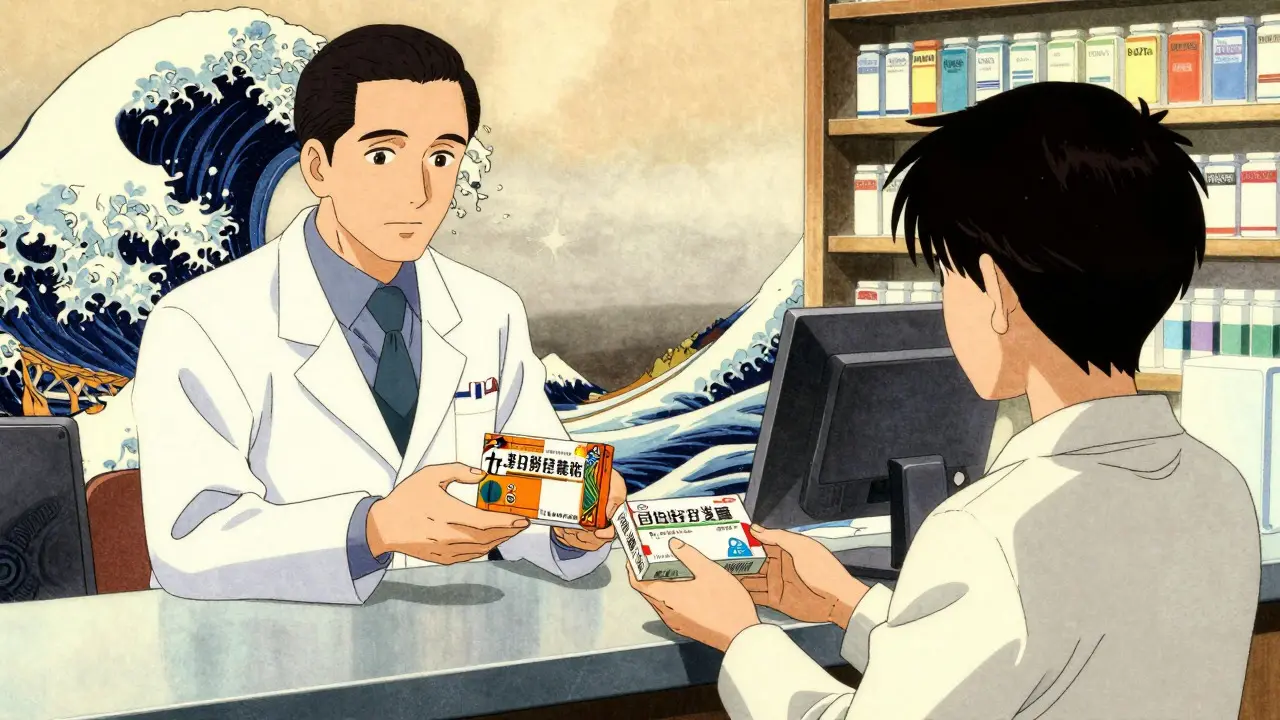
Imagine walking into a pharmacy to pick up your prescription. The pharmacist hands you two boxes that look nearly identical. One is the familiar brand-name box with the logo you trust. The other is plain, perhaps slightly different in color or shape, but contains the exact same medication. You might assume the second one is a standard generic, produced by a third-party manufacturer trying to undercut the big company. But what if I told you that the 'generic' box was actually made by the brand-name company itself?
This is the reality of authorized generics, which are pharmaceutical products identical to brand-name drugs but marketed under a different label, often by the brand owner themselves. It sounds like a marketing trick, but it’s a strategic move that has reshaped how we pay for medicine. For years, patients and insurers have asked why brand-name drugs cost so much. Authorized generics offer a clue: they prove that the high price tag isn’t just about production costs. It’s about market control.
What Exactly Is an Authorized Generic?
To understand why authorized generics cost less, we first need to define what they are. An authorized generic (AG) is not a copycat product. It is the real deal. It contains the same active ingredients, uses the same manufacturing process, and meets the same safety standards as the brand-name version. The only difference is the packaging and the price.
Here is how it works legally. When a pharmaceutical company develops a new drug, they file a New Drug Application (NDA) with the U.S. Food and Drug Administration (FDA). This NDA grants them exclusive rights to sell that specific formulation. Usually, when a patent expires, other companies can step in and make their own versions by filing an Abbreviated New Drug Application (ANDA). These are the traditional generics you see on shelves today.
However, the brand-name company has a loophole. Because they own the original NDA, they can choose to license that right to another company-or even sell the drug themselves-under a generic label. Since the drug is already approved via the original NDA, no new FDA review is needed. This allows the brand manufacturer to enter the generic market immediately, without waiting for competitors to navigate the regulatory approval process.
The Hatch-Waxman Act and the 180-Day Exclusivity Window
Why do brand companies bother selling a cheaper version of their own product? The answer lies in the Hatch-Waxman Act of 1984. This landmark legislation was designed to balance innovation with access. It gave drug manufacturers patent protection to recoup research costs, but it also created a pathway for generics to enter the market sooner.
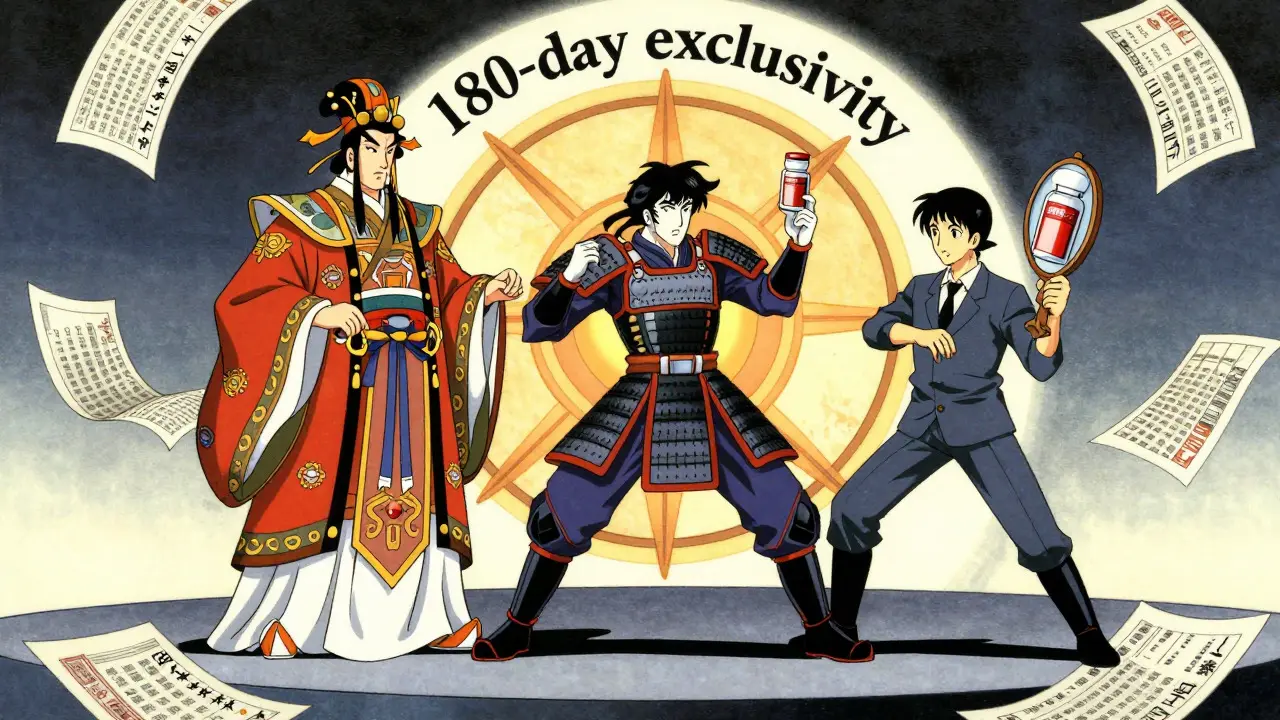
A key feature of this act is the 180-day exclusivity period. If a generic manufacturer is the first to challenge a brand’s patent and win, they get six months of sole rights to sell that generic. During this window, there is no competition. Historically, this lack of competition allowed the first generic entrant to keep prices high-often close to the brand-name price-because patients had nowhere else to go.
Brand companies realized they could disrupt this monopoly. By launching an authorized generic during those 180 days, they introduce immediate competition. Suddenly, the first generic challenger isn’t the only option. Patients and pharmacies now have a choice between the brand, the independent generic, and the authorized generic. This three-way dynamic forces prices down from day one.
| Feature | Brand-Name Drug | Authorized Generic | Traditional Generic |
|---|---|---|---|
| Manufacturer | Original Brand Company | Brand Company or Licensed Partner | Third-Party Manufacturer |
| FDA Approval Path | New Drug Application (NDA) | Uses Original NDA | Abbreviated New Drug Application (ANDA) |
| Pricing Strategy | Premium Price | Discounted (4-8% less than brand) | Competitive Market Price |
| Market Entry Timing | Patent Protected Period | During 180-Day Exclusivity | After Patent Expiry or Challenge |
| Quality Standards | Identical Active Ingredients | Identical Active Ingredients | Identical Active Ingredients |
Why Do Authorized Generics Cost Less?
You might wonder: if the drug is identical, why is the authorized generic cheaper? Isn’t it coming from the same factory? The short answer is yes, but the long answer involves economics and strategy.
First, authorized generics bypass many of the marketing and distribution costs associated with brand-name drugs. Brand companies spend billions on advertising, doctor samples, and promotional events to build loyalty around a specific name. An authorized generic skips all of that. It relies on the existing reputation of the drug but doesn’t require the same level of consumer-facing marketing spend.
Second, and more importantly, the lower price is a tactical weapon. The Federal Trade Commission (FTC) has analyzed this extensively. Their data shows that the mere presence of an authorized generic during the 180-day exclusivity period drives retail prices down by 4% to 8%. Wholesale prices drop even more significantly, by 7% to 14%. Without an AG, the first generic competitor might charge 80% of the brand price. With an AG, that number drops further because the brand company is actively competing against its own future revenue stream to protect its market share.
Think of it like a tech company releasing a 'lite' version of their smartphone. They don’t release it because the materials are cheaper; they release it to capture customers who think the flagship model is too expensive, preventing them from switching to a rival brand entirely.
The Role of Pharmacy Benefit Managers (PBMs)
If authorized generics are cheaper, why don’t all patients automatically save money? The answer often lies with Pharmacy Benefit Managers (PBMs). PBMs are the middlemen between insurance plans, pharmacies, and drug manufacturers. They decide which drugs appear on your insurance formulary-the list of covered medications-and at what tier.
Tiers determine your copay. A Tier 1 drug might cost $5, while a Tier 3 drug could cost $50. Here is where it gets tricky. Sometimes, PBMs place authorized generics on the same tier as the brand-name drug. In this scenario, you pay the same high copay regardless of whether you take the brand or the AG. The savings go to the insurer or the PBM, not necessarily to you.
However, when PBMs position AGs on a lower tier alongside traditional generics, patients see immediate benefits. A 2022 analysis by Truveris looked at 1.2 million patient records and found that when AGs were placed on favorable tiers, medication adherence improved by 8.2 percentage points. People stuck with their treatment because it was affordable. The problem arises when formulary decisions are opaque, leaving patients unaware that a cheaper, identical alternative exists.
Real-World Examples: EpiPen and Hepatitis C Drugs
Let’s look at some concrete examples to see how this plays out in practice. One of the most famous cases involved Mylan’s EpiPen. In 2016, public outrage peaked after the price of the EpiPen rose from $100 in 2007 to $600. Facing intense scrutiny, Mylan launched an authorized generic version of the epinephrine auto-injector for $300. It was exactly half the price of the branded product. While still expensive compared to older generics, it was a strategic move to calm public anger and retain customers who couldn’t afford the full brand price.
Another example comes from Gilead Sciences, a leader in hepatitis C treatments. Before patents expired on blockbuster drugs like Harvoni and Epclusa, Gilead released authorized generics. This allowed them to maintain a foothold in the market even as traditional generics prepared to enter. By offering a lower-cost option themselves, they prevented competitors from capturing 100% of the price-sensitive market segment.
Are Authorized Generics Safe and Effective?
A common concern among patients is quality. If it’s cheaper, is it weaker? The short answer is no. Authorized generics must meet the same rigorous FDA standards as the brand-name drug. They use the same active pharmaceutical ingredient (API), the same dosage form, and the same route of administration. The FDA requires NDA holders to notify them when marketing an AG, and these products are subject to the same quality control inspections.
In fact, because AGs are often manufactured in the same facilities as the brand-name version, some experts argue they may have fewer supply chain variables than traditional generics, which might be produced overseas in different plants. For patients worried about bioequivalence-the measure of how well a generic performs in the body compared to the brand-an authorized generic offers peace of mind. It is literally the same drug, just in a different box.
The Future of Authorized Generics
As we move through 2026, the landscape for authorized generics continues to evolve. Regulatory bodies are paying closer attention. The FTC remains vigilant about ensuring that AGs are used to foster competition rather than delay it. There have been concerns that some companies might use AGs as part of settlement agreements to kick back payments to generic challengers, effectively delaying broader competition. However, recent data suggests that AGs generally accelerate price reductions rather than hinder them.
Additionally, new legislation like the Inflation Reduction Act, which caps out-of-pocket prescription costs for Medicare beneficiaries at $2,000 annually, changes the calculus. As seniors face hard caps on spending, the availability of low-cost authorized generics becomes even more critical for maintaining access to essential therapies. Industry analysts project that AG strategies will remain viable through at least 2030, with brand manufacturers continuing to use them to capture 15-25% of the generic market share during the first year of competition.
For consumers, the takeaway is clear. Authorized generics are a legitimate, safe, and often cheaper alternative to brand-name drugs. They are not a scam; they are a market correction mechanism built into our healthcare system. The next time you fill a prescription, ask your pharmacist if an authorized generic is available. You might find that saving money doesn’t mean compromising on quality-it just means understanding how the pharmaceutical market really works.
Is an authorized generic the same as a regular generic?
Medically, yes. Both contain the same active ingredients and meet FDA safety standards. The difference is legal and logistical. Regular generics are made by third-party companies using an Abbreviated New Drug Application (ANDA). Authorized generics are made by the brand-name company (or a licensee) using the original New Drug Application (NDA). This allows authorized generics to enter the market earlier, often during the 180-day exclusivity period reserved for the first generic challenger.
Why would a brand company sell its own drug at a lower price?
It is a strategic move to protect market share. By launching an authorized generic, the brand company introduces competition during the period when only one independent generic manufacturer would otherwise have a monopoly. This forces prices down for everyone, including the brand itself, but it prevents the independent generic from charging near-brand prices. It helps the brand retain customers who are price-sensitive but might otherwise switch to a competitor's product later.
Do authorized generics always cost less for the patient?
Not always. While the wholesale and retail prices of authorized generics are typically 4% to 8% lower than brand-name drugs, your out-of-pocket cost depends on your insurance plan's formulary. If your Pharmacy Benefit Manager (PBM) places the authorized generic on the same tier as the brand-name drug, your copay will be the same. To save money, the AG needs to be placed on a lower tier, similar to traditional generics.
Are authorized generics regulated by the FDA?
Yes. Authorized generics are subject to the same FDA oversight as brand-name drugs. They must be manufactured under the same conditions and meet the same quality standards. The FDA maintains a quarterly list of reported authorized generics to ensure transparency. Companies must notify the FDA when they begin marketing an AG.
Can I ask my doctor or pharmacist for an authorized generic?
Absolutely. Pharmacists are often aware of which brand-name drugs have authorized generic counterparts. You can ask if an AG is available and if it is covered by your insurance at a lower tier. Doctors can also specify 'dispense as written' or allow substitution depending on state laws and insurance rules, but having the conversation ensures you get the most cost-effective option.
Trey Newkerk
July 28, 2026 AT 18:01Oh, look at you, trying to explain the obvious with a table. How quaint. You think this is about 'market control'? Please. It’s about greed wearing a suit and tie. They sell their own drug cheaper just to keep you from realizing how much they’re ripping you off on the brand. It’s not strategy; it’s psychological warfare. And you’re eating it up like it’s some great revelation.
The real joke is that we still trust these companies to have our best interests at heart. Spoiler alert: they don’t. They want your money, your data, and your soul. This article is just another way to make theft look like charity.
Charles PINSON
July 28, 2026 AT 20:57The nuance here is lost on the average reader, who likely conflates 'authorized' with 'inferior.' The Hatch-Waxman framework is a delicate balance of incentives, yet this post reduces it to a simplistic narrative of corporate villainy. One must appreciate the legal architecture that allows for such market corrections without dismantling the R&D pipeline entirely. It is sophisticated, if one has the education to grasp it.
John Anderson
July 30, 2026 AT 11:50Stop lying to people. The price isn't lower because of 'strategy'. It's lower because they don't pay for ads. Simple math. Why do you need a whole article to say what everyone already knows? Just tell the truth.
Patrick Plummer
July 31, 2026 AT 20:05You say it's safe! But are you sure?! The FDA is bought and paid for! Think about it!! Who watches the watchers?! It's all a lie!!
Kieran Healy
August 2, 2026 AT 17:21I actually found this really helpful :) I was always confused why my pharmacy would switch me to a different box sometimes. Knowing it might be the same company makes me feel a bit better about it. Thanks for explaining!
Kevin Burke
August 3, 2026 AT 11:25The essence of the matter is not the price, but the perception of value. When a brand dilutes its own equity by offering a generic version, it signals a fragility in the consumer's loyalty. We are not buying medicine; we are buying the promise of health, wrapped in marketing. The authorized generic strips away the illusion, leaving only the chemical reality. Is that not terrifying?
neal vince
August 3, 2026 AT 17:06It is important to note that the 180-day exclusivity period is often contested. Many patent challenges are frivolous, designed solely to delay competition. The authorized generic is merely a band-aid on a broken system. The FTC data cited is accurate, but it ignores the broader context of patent evergreening strategies employed by major pharmaceutical firms.
Sinead Doyle
August 5, 2026 AT 04:03theyr eally pushing the agenda here lol. PBMs are the real villains, controlled by shadowy figures who decide who lives and dies based on profit margins. The AGs are just a distraction to keep us fighting amongst ourselves while the elites cash out. Wake up sheeple!!!
Samuel Friday
August 6, 2026 AT 09:53This analysis is superficial at best. The economic implications of authorized generics extend far beyond simple price reduction. One must consider the impact on formulary design and the subtle coercion exerted by PBMs on patient choice. It is a fascinating dance of power, though most observers lack the intellect to perceive the steps.
Emily Schor
August 6, 2026 AT 23:28Good breakdown. It helps to understand why my copay didn't change even when I got the generic version. I'll definitely ask my pharmacist next time.
Arun Krishnan
August 7, 2026 AT 01:16This is a great explanation for those of us who aren't experts. It empowers patients to ask questions. Knowledge is power, and understanding these mechanisms can help save money. Well done.
Bobby Christiansen
August 7, 2026 AT 01:29Ugh, another article making big pharma sound smart. They are evil corporations trying to drain your wallet dry. Don't let them fool you with their 'strategic moves'. It's just greed, plain and simple. :(
Why do we even bother reading this stuff? It's all a scam.
anna arifiana
August 7, 2026 AT 23:12While the article presents a compelling argument regarding the mechanics of authorized generics, one must consider the broader implications for patient autonomy and the ethical responsibilities of pharmaceutical manufacturers. The notion that a 'strategic move' benefits the consumer is somewhat disingenuous when one examines the long-term trends in prescription pricing. Furthermore, the reliance on Pharmacy Benefit Managers introduces a layer of opacity that undermines the transparency supposedly offered by the availability of authorized generics. It is a complex web of financial incentives that rarely aligns with the best interests of the individual patient.
Marie-Gladys Darcelin
August 8, 2026 AT 00:54One cannot simply accept the premise that market forces alone ensure equitable access to medication. The role of regulatory oversight is paramount, yet it appears increasingly compromised by industry influence. The existence of authorized generics, while ostensibly beneficial, may serve to obscure the fundamental inequities inherent in the current healthcare model. A more rigorous examination of the socio-economic factors at play is required before celebrating such minor concessions.
Kyle Bonnette-Lykens
August 8, 2026 AT 11:06it works. prices go down. end of story.