
Fexofenadine & Fruit Juice Absorption Calculator
Pick the beverage you take with your dose and how much you drink. We'll estimate the drop in drug absorption and flag whether your timing is safe.
Absorption lost: --%
Inhibitor compound: --
Reference study reduction: --%
Volume factor applied: --
Imagine taking your allergy medication every morning with a glass of orange juice, only to find that your sneezing fits return with full force by midday. For millions of people using Fexofenadine, a second-generation non-sedating H1 antihistamine widely used for seasonal allergic rhinitis and chronic urticaria, this is not just a hypothetical frustration; it is a documented pharmacological reality. While most drug-food interactions involve increased potency or toxicity, fexofenadine behaves counterintuitively when paired with certain fruit juices, leading to a significant drop in its effectiveness.
The core issue lies in how the body absorbs the drug. Fexofenadine does not rely on standard liver enzymes for breakdown but instead depends on specific intestinal transporters to enter the bloodstream. When you consume grapefruit, orange, or apple juice, compounds in these drinks block these transporters. This results in less medication reaching your system, potentially leaving you unprotected against histamine reactions. Understanding this mechanism is crucial for anyone managing allergies with this specific class of antihistamines.
The Unusual Mechanism: Blocking Absorption Instead of Boosting It
Most people know that grapefruit juice can make certain drugs more potent by inhibiting CYP3A4 enzymes in the liver. However, the interaction between fexofenadine and fruit juice operates through a completely different pathway. Research led by Dr. Gail K. Dresser and Dr. David G. Bailey at the University of Western Ontario revealed that the problem occurs in the gut, not the liver. The active compounds in these juices inhibit organic anion-transporting polypeptides (OATPs), specifically OATP1A2, OATP1B1, OATP1B3, and OATP2B1.
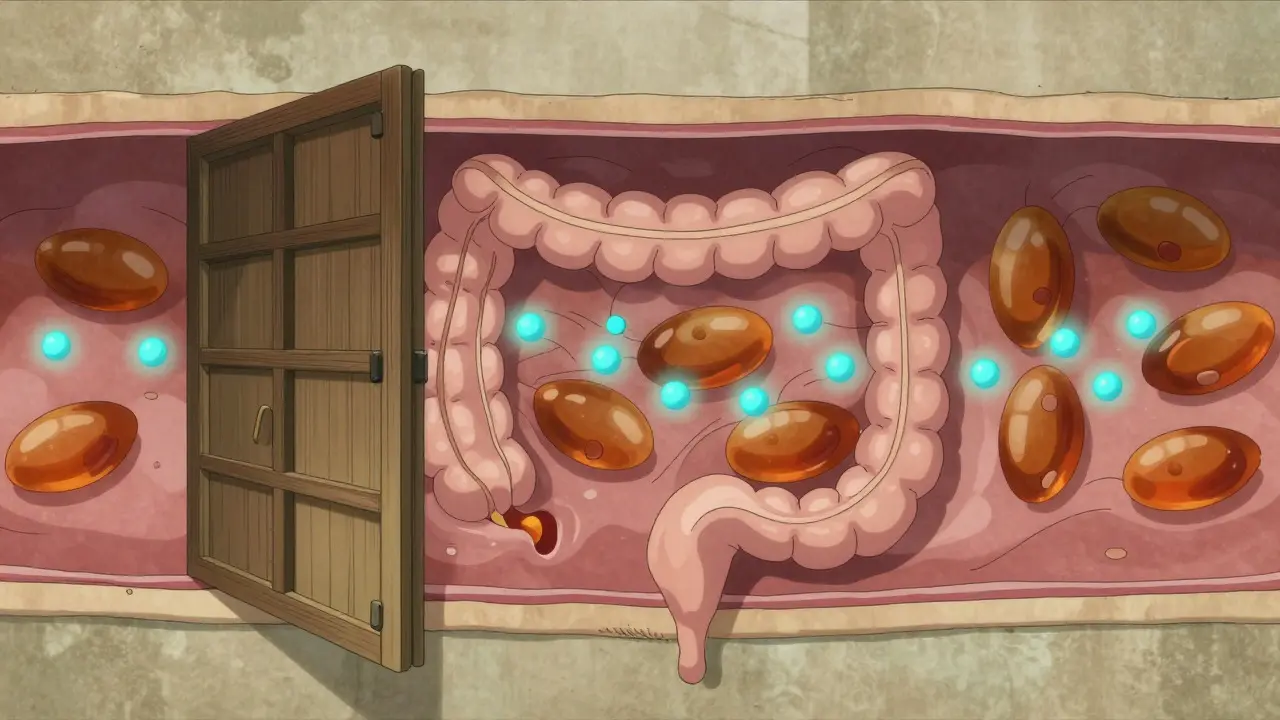
These OATP transporters are responsible for shuttling fexofenadine from the intestine into the blood. When flavonoids like naringin (found in grapefruit) and hesperidin (found in oranges) bind to these transporters, they effectively close the door. Consequently, the drug remains in the digestive tract and is excreted rather than absorbed. This explains why the interaction reduces efficacy rather than causing dangerous side effects. It is a case of 'less is more' working in reverse: less drug in the blood means less relief from symptoms.
| Juice Type | Volume Consumed | Reduction in AUC (Absorption) | Key Inhibitor Compound |
|---|---|---|---|
| Grapefruit (Normal Strength) | 1.2 Liters | 67% | Naringin / Bergamottin |
| Orange | 1.2 Liters | 72% | Hesperidin |
| Apple | 1.2 Liters | 77% | Flavonoids |
| Grapefruit (Dilute) | 8 oz Equivalent | 23% | Naringin |
Quantifying the Effect: How Much Juice Matters?
The degree of absorption reduction depends heavily on both the type of juice and the volume consumed. Clinical studies have shown that normal-strength grapefruit juice reduced the area under the curve (AUC)-a measure of total drug exposure-by 67%. Orange juice was slightly more potent, reducing AUC by 72%, while apple juice showed the strongest effect at 77% reduction in high-volume trials. These figures indicate that if you take a standard dose of fexofenadine with a large amount of these juices, you may be receiving only 30% to 40% of the intended therapeutic benefit.
However, the relationship is dose-dependent. A subsequent study confirmed that even dilute grapefruit juice, equivalent to one 8-ounce glass, reduced AUC by 23%. While this seems smaller, for patients with severe allergies or those near the threshold of symptom control, a 23% drop can be the difference between comfort and distress. Volume also plays a critical role; increasing the amount of orange juice further decreased fexofenadine exposure by up to 40% in animal models. Therefore, sipping juice throughout the day while taking medication poses a greater risk than drinking a single small glass immediately before dosing.
Which Antihistamines Are Affected?
A common misconception is that all antihistamines share this vulnerability. In reality, the interaction is specific to fexofenadine among the popular second-generation options. Loratadine (Claritin) and cetirizine (Zyrtec) do not rely on the same OATP transporters for absorption, meaning their efficacy is largely unaffected by fruit juice consumption. This distinction has become a significant marketing point for competitors, who highlight that their products do not require strict timing rules regarding breakfast beverages.
If you are currently using fexofenadine and finding it ineffective, consider whether you are consuming juice regularly around your dosing time. If switching to water restores your symptom control, the juice interaction is likely the culprit. Conversely, if you prefer the convenience of not worrying about food timing, consulting a healthcare provider about switching to loratadine or cetirizine might be a practical solution, provided your medical history allows for the change.
Practical Timing Guidelines for Maximum Efficacy
To mitigate this interaction, the FDA recommends separating fexofenadine administration from fruit juice consumption. The inhibition window lasts between 2 and 4 hours. Based on this data, the safest approach is to wait at least 4 hours after taking the medication before drinking fruit juice, or to drink the juice at least 1 to 2 hours before taking the pill. Using plain water as the vehicle for swallowing the tablet is the gold standard for ensuring consistent absorption.
Beyond timing, be aware of other potential inhibitors. Green tea contains polyphenols that can also inhibit OATPs, so it is wise to avoid drinking strong green tea immediately before or after your dose. Whole fruits can also contain similar inhibitory compounds, though the concentration is generally lower than in concentrated juices. If you eat a whole grapefruit or several apples right before taking your medication, the risk remains, albeit lower than with liquid juice. Developing a habit of taking your allergy medication with a full glass of water, either first thing in the morning before breakfast or well after your last beverage, ensures peak performance from the drug.

Real-World Experiences and Common Mistakes
Patient communities frequently report discovering this interaction late in their treatment journey. Many users describe periods of poor symptom control that coincided with changes in their breakfast routine, such as adding orange juice. One common anecdote involves a long-term user who noticed their allergies returning despite consistent dosing; upon switching to water, their symptoms resolved within two weeks. This highlights a key diagnostic clue: if your allergy medication suddenly stops working without any change in dosage or environmental allergens, review your dietary habits.
Another frequent error involves confusion over which juices are problematic. Some patients assume that only grapefruit juice matters, given its reputation in drug interactions. However, orange and apple juices are equally significant for fexofenadine. Tomato juice, while technically derived from a fruit, does not significantly inhibit OATPs and is generally considered safe. Still, when in doubt, sticking to water is the simplest and most reliable strategy to guarantee that your antihistamine works as intended.
Frequently Asked Questions
Can I take fexofenadine with milk?
Yes, milk does not significantly interact with fexofenadine absorption. Unlike fruit juices, dairy products do not inhibit the OATP transporters required for the drug to enter the bloodstream. You can safely take fexofenadine with milk or yogurt if preferred, though water remains the neutral choice.
Does grapefruit affect Zyrtec or Claritin?
No, grapefruit juice does not significantly reduce the absorption of cetirizine (Zyrtec) or loratadine (Claritin). These medications use different metabolic pathways and transporters, making them resistant to the specific OATP inhibition caused by grapefruit flavonoids.
How long does the interaction last?
The inhibitory effect of fruit juice on fexofenadine absorption lasts approximately 2 to 4 hours. To be safe, experts recommend waiting at least 4 hours after taking the medication before consuming fruit juice, or drinking the juice at least 1-2 hours before dosing.
Is apple juice really a problem?
Yes, apple juice can reduce fexofenadine absorption by up to 77% in high-volume studies. Although it is often perceived as milder than grapefruit, its flavonoid content is sufficient to inhibit the necessary transporters, making it clinically relevant for allergy management.
What should I do if my allergies aren't controlled?
If you are taking fexofenadine consistently but experiencing breakthrough symptoms, check if you are consuming fruit juice or green tea near your dosing time. Try switching to water for 1-2 weeks. If no improvement occurs, consult your doctor to evaluate whether a different antihistamine or additional therapy is needed.