
Flight DVT Risk Calculator
Enter your details to assess your baseline risk for Venous Thromboembolism (VTE).
Risk Assessment
Ready to Calculate
Baseline: ~1 in 4,656 flights
Enter your data to see personalized advice.
Imagine you are sitting in a cramped airplane seat for six hours. Your legs feel heavy. You have been prescribed anticoagulants is medication that prevents blood clots from forming or growing, commonly known as blood thinners. Now imagine those same symptoms turning into pain, swelling, or worse-a pulmonary embolism. For millions of people managing conditions like atrial fibrillation or previous deep vein thrombosis (DVT), this isn't just a fear; it's a medical reality they must navigate every time they book a ticket. Traveling internationally while on these medications requires more than just packing your pills. It demands a strategic approach to balancing the risk of clotting against the risk of bleeding.
The good news? With the right preparation, flying on blood thinners is safe. The challenge lies in the details. From choosing the right medication class to understanding how time zones affect your dosage, small oversights can lead to serious complications. This guide breaks down exactly what you need to know to stay safe, based on current guidelines from major health organizations.
Understanding the Real Risk: Is Flying Dangerous?
First, let’s clear up a myth. The term "economy class syndrome" suggests that only people sitting in cheap seats get blood clots. That is not true. The real culprit is immobility. When you sit still for long periods, blood flow slows down in your legs, allowing clots to form. This condition is medically known as venous thromboembolism (VTE) is a condition involving blood clots in the veins, including deep vein thrombosis (DVT) and pulmonary embolism (PE).
According to the Centers for Disease Control and Prevention (CDC), the absolute risk of developing VTE during a flight is actually quite low-about 1 in 4,656 flights for average travelers. However, if you have additional risk factors, that number jumps significantly. You are considered higher risk if you:
- Are over 40 years old (risk increases by 10% per decade).
- Have a Body Mass Index (BMI) of 30 kg/m² or higher.
- Had surgery or a significant injury within the last three months.
- Are pregnant or within three months postpartum.
- Have a history of blood clots or inherited clotting disorders like Factor V Leiden.
- Have active cancer or chronic heart failure.
If you fall into one of these categories, your body is already working harder to prevent clots. Adding eight hours of sitting to the mix requires extra vigilance.
Choosing the Right Medication for Travel
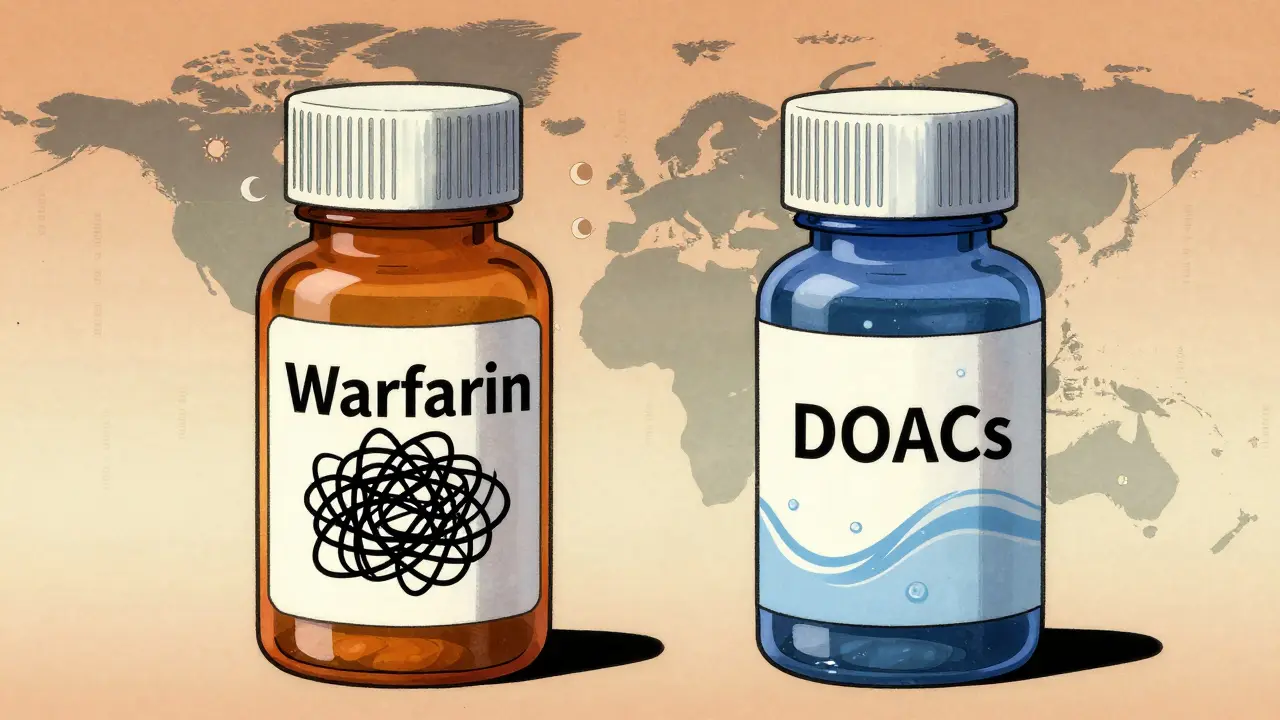
Not all blood thinners are created equal when it comes to travel logistics. The two main classes you will encounter are Vitamin K Antagonists (VKAs) like Warfarin is an oral anticoagulant that interferes with vitamin K-dependent clotting factors and Direct Oral Anticoagulants (DOACs) like Rivaroxaban is a direct factor Xa inhibitor used to prevent stroke and blood clots or Apixaban.
Here is why the choice matters:
| Feature | Warfarin (Coumadin) | DOACs (e.g., Rivaroxaban, Apixaban) |
|---|---|---|
| Onset of Action | Slow (4-5 days to reach therapeutic levels) | Fast (2 hours after ingestion) |
| Monitoring Required | Yes (Regular INR tests needed) | No routine monitoring required |
| Food Interactions | High (Vitamin K intake affects dosage) | Low to None |
| Cost (approx.) | $4.00 for 30 tablets | $574.99 for 30 tablets (varies by brand/insurance) |
| Travel Convenience | Low (Requires INR testing abroad) | High (Predictable dosing) |
For most travelers, DOACs offer superior convenience. They work quickly, don’t require constant blood tests, and aren’t messed up by eating a salad full of spinach. However, cost is a barrier for many. If you are on Warfarin, you must plan ahead. You cannot simply stop taking it because you forgot a dose; doing so makes your blood "stickier" and increases clot risk paradoxically.
Pre-Flight Medical Checklist
Before you even pack your bags, you need to handle the medical logistics. Skipping this step is the most common reason for travel-related emergencies.
- Get an INR Test (If on Warfarin): Schedule an International Normalized Ratio (INR) test one to two weeks before departure. Your target range is typically 2.0-3.0 for atrial fibrillation, but mechanical heart valves may require 2.5-3.5. Bring a copy of this result with you.
- Consult Your Doctor About Prophylaxis: If you are high-risk, ask about preventive measures. The American College of Chest Physicians (ACCP) recommends against using aspirin for general travelers, but for very high-risk patients, they may suggest specific prophylactic doses of anticoagulants.
- Check Destination Availability: Not all countries stock the same drugs. According to the World Health Organization, Apixaban is unavailable in 32% of low-income countries. Verify that your specific medication is accessible at your destination or carry enough supply for the entire trip plus a buffer.
- Carry Documentation: Keep a list of your medications, dosages, and your doctor’s contact info in your carry-on. Include a letter from your physician explaining your condition and treatment. This helps if you go through customs or need emergency care abroad.
In-Flight Strategies to Prevent Clots
Once you are on the plane, your behavior matters as much as your medication. Here is how to keep your blood moving:
- Wear Compression Stockings: Use below-knee graduated compression stockings that provide 15-30 mmHg of pressure at the ankle. These are recommended by the ACCP for high-risk travelers. Make sure they fit correctly; ill-fitting socks can restrict blood flow further.
- Hydrate with Water Only: Avoid alcohol and sugary drinks. Dehydration thickens your blood, making clots more likely. Drink water regularly throughout the flight.
- Move Frequently: Walk up and down the aisle every 2-3 hours. If you can’t leave your seat, perform seated calf exercises every 30 minutes. Lift your heels, then your toes, repeatedly. This pumps blood back up your legs.
- Choose Aisle Seats: If possible, book an aisle seat. It allows you to stand up and stretch without disturbing other passengers or waiting for them to move.
Dr. Susan Coogan, a vascular surgeon, emphasizes that reliability is key. "If you skip doses or stop taking them for a period of time, your blood can actually become MORE sticky," she notes. Set alarms on your phone to ensure you take your medication at the correct intervals, even across time zones.
Navigating Time Zones and Dosing
Time zone changes can be tricky for anticoagulant users. The general rule is to take your medication at the same clock time relative to your new location, not your home time. For example, if you usually take your pill at 8 AM, continue to take it at 8 AM local time once you arrive.
However, if you are crossing multiple time zones rapidly, consult your pharmacist. Some DOACs have specific half-lives that might require slight adjustments. Never double up on doses to "catch up." If you miss a dose, follow the specific instructions provided by your manufacturer or doctor. For Warfarin users, drastic changes in diet due to travel (like sudden increases in green leafy vegetables) can alter your INR. Try to maintain a consistent diet regarding Vitamin K intake while traveling.

Recognizing Emergency Symptoms
You must know the signs of both clotting and bleeding. DVT symptoms often appear unilaterally (on one side). Watch for:
- Swelling in one leg (present in 72% of DVT cases).
- Pain or tenderness in the calf or thigh.
- Redness or warmth in the affected area.
If a clot breaks loose and travels to the lungs (pulmonary embolism), symptoms include:
- Sudden shortness of breath.
- Chest pain that worsens when you breathe deeply.
- Rapid heart rate.
Bleeding risks, though less common during travel, are also serious. Seek immediate help if you experience unusual bruising, prolonged nosebleeds, or blood in your urine or stool. Remember, DVT can develop up to eight weeks after travel, so remain vigilant even after you return home.
Post-Travel Monitoring
Your job doesn’t end when you land. If you had a recent surgery or were hospitalized before traveling, schedule a follow-up appointment within a week of returning. For Warfarin users, get an INR test soon after arrival to check for any fluctuations caused by stress, diet changes, or dehydration. If you are on DOACs, monitor yourself for any signs of bleeding or clotting. If you feel unwell, do not assume it is just "travel fatigue." Contact a healthcare provider immediately.
Can I fly if I was diagnosed with a blood clot recently?
Generally, yes, but timing is critical. The International Air Transport Association (IATA) states that patients may fly once they are asymptomatic and stable on anticoagulant therapy. However, Cambridge University Hospitals advises against long-distance travel within four weeks of a DVT or PE diagnosis. Always consult your hematologist or primary care physician before booking a flight after a recent clot event.
Do I need to take extra medication to prevent clots while flying?
For most people already on therapeutic anticoagulation, no. The ACCP advises against adding aspirin or extra anticoagulants as it increases bleeding risk without proven benefit for average travelers. However, for very high-risk individuals (e.g., active cancer, recent major surgery), doctors may prescribe specific prophylactic doses of LMWH or DOACs. Never self-medicate; this decision must come from your doctor.
Is it better to take Warfarin or a DOAC when traveling?
DOACs are generally more convenient for travel because they do not require regular blood tests (INR) and have fewer food interactions. Warfarin requires careful monitoring and dietary consistency, which can be difficult to maintain while traveling. However, DOACs are significantly more expensive. Discuss with your doctor if switching to a DOAC temporarily for travel is appropriate for your case.
What should I do if I miss a dose of my blood thinner while abroad?
Follow the specific instructions given by your doctor or the medication leaflet. Generally, if you remember within a few hours, take it. If it is close to the next dose, skip the missed one and resume your normal schedule. Do not double up. For Warfarin users, missing a dose can significantly impact your INR, so try to get tested locally if you miss multiple doses.
Are compression stockings really necessary?
For high-risk travelers, yes. The ACCP gives a weak recommendation (Grade 2C) for wearing 15-30 mmHg below-knee graduated compression stockings. They help improve blood flow in the legs and reduce the risk of DVT. Ensure they fit properly; off-the-shelf elastic socks are not effective and may even cause harm.