
That sudden, crushing pain in your upper right abdomen isn't just a bad meal. It is likely your body sounding the alarm for gallstones, which are hardened deposits of digestive fluid that can form one or more stones in your gallbladder. For millions of people, these small pebbles sit quietly, causing no issues at all. But when they move, they can block the tubes that carry bile from your liver to your intestine, triggering a condition known as biliary colic, which is episodic abdominal pain caused by temporary obstruction of the cystic duct by gallstones. If you have ever woken up in the middle of the night clutching your side, wondering if it is heartburn or something worse, you are not alone. Understanding the difference between a simple stone blockage and a serious infection like cholecystitis, which is acute inflammation of the gallbladder often caused by a persistent gallstone obstruction, is the first step toward getting relief.
The Silent Majority vs. The Symptomatic Few
You might be surprised to learn that having gallstones does not automatically mean you will feel pain. In fact, about 10-15% of adults in developed countries have them, yet roughly 80% remain completely asymptomatic throughout their lives. These are called "silent" gallstones. Only about 1-3% of people with silent stones develop symptoms each year. So, why do some stones cause chaos while others hide away?
It comes down to chemistry and movement. Gallstones form when there is an imbalance in the substances that make up bile-specifically cholesterol or bilirubin. In Western populations, about 80% of gallstones are cholesterol stones, which form when your liver excretes more cholesterol than your bile can dissolve. The remaining 20% are pigment stones, made of excess bilirubin. When your gallbladder doesn't empty completely or frequently enough, this concentrated bile hardens into stones. If a stone slips out of the gallbladder and gets stuck in the cystic duct-the tube connecting the gallbladder to the common bile duct-you get biliary colic.
The risk factors are clear and well-documented. Women are two to three times more likely to develop gallstones than men, largely due to estrogen levels that increase cholesterol in bile. Obesity plays a significant role too; with nearly 40% of US adults classified as obese, the incidence of gallstone disease continues to rise. Certain ethnic groups, including Hispanic populations, also show higher rates. If you fit into these categories, knowing the signs of trouble early can save you a trip to the emergency room.
Recognizing Biliary Colic: What It Feels Like
Biliary colic is not a constant ache. It is distinct, intense, and predictable in its unpredictability. The pain typically starts abruptly, often after a fatty meal, and peaks within an hour. It is located in the right upper quadrant of your abdomen or the center of your upper stomach (epigastrium). Unlike gas pain, it does not fluctuate. It is steady, moderate to severe, and lasts anywhere from one to five hours before the stone dislodges or moves back, providing sudden relief.
A key detail many patients miss: vomiting or passing gas does not relieve biliary colic. If you think throwing up will help, you might be disappointed. The pain is visceral, stemming from the stretching of the gallbladder wall as it tries to squeeze against a blockage. This distinguishes it from other gastrointestinal issues like indigestion or ulcers. If the pain persists longer than five hours, or if you develop a fever, it is no longer just colic-it may have progressed to acute cholecystitis, which requires immediate medical attention.
When Colic Becomes Cholecystitis
If a gallstone remains lodged in the cystic duct for more than several hours, the gallbladder becomes inflamed and infected. This is acute cholecystitis. It affects about 20% of patients who experience biliary colic. The symptoms escalate quickly: the pain becomes constant and sharper, often radiating to the right shoulder or back. You might develop a fever, chills, nausea, and tenderness when someone presses on your upper right abdomen.
Why does this matter? Because untreated cholecystitis can lead to serious complications. The gallbladder can become gangrenous, perforate, or spread infection to the surrounding tissues. Additionally, if a stone migrates into the common bile duct (a condition called choledocholithiasis), it can block the flow of bile entirely, leading to jaundice (yellowing of the skin and eyes) or pancreatitis, a dangerous inflammation of the pancreas. According to NHS data, untreated symptomatic gallstones lead to emergency hospitalization in 20-30% of cases within five years. Catching it early changes the game entirely.

Surgical Choices: Why Laparoscopy Is the Gold Standard
Once you have had symptomatic gallstones, the likelihood of recurrence is high. More than 90% of patients experiencing a first episode of biliary colic will have recurrent pain within ten years, with two-thirds seeing a return within just two years. This is why doctors rarely recommend "watchful waiting" for anyone who has already been in pain. The definitive treatment is cholecystectomy, which is the surgical removal of the gallbladder.
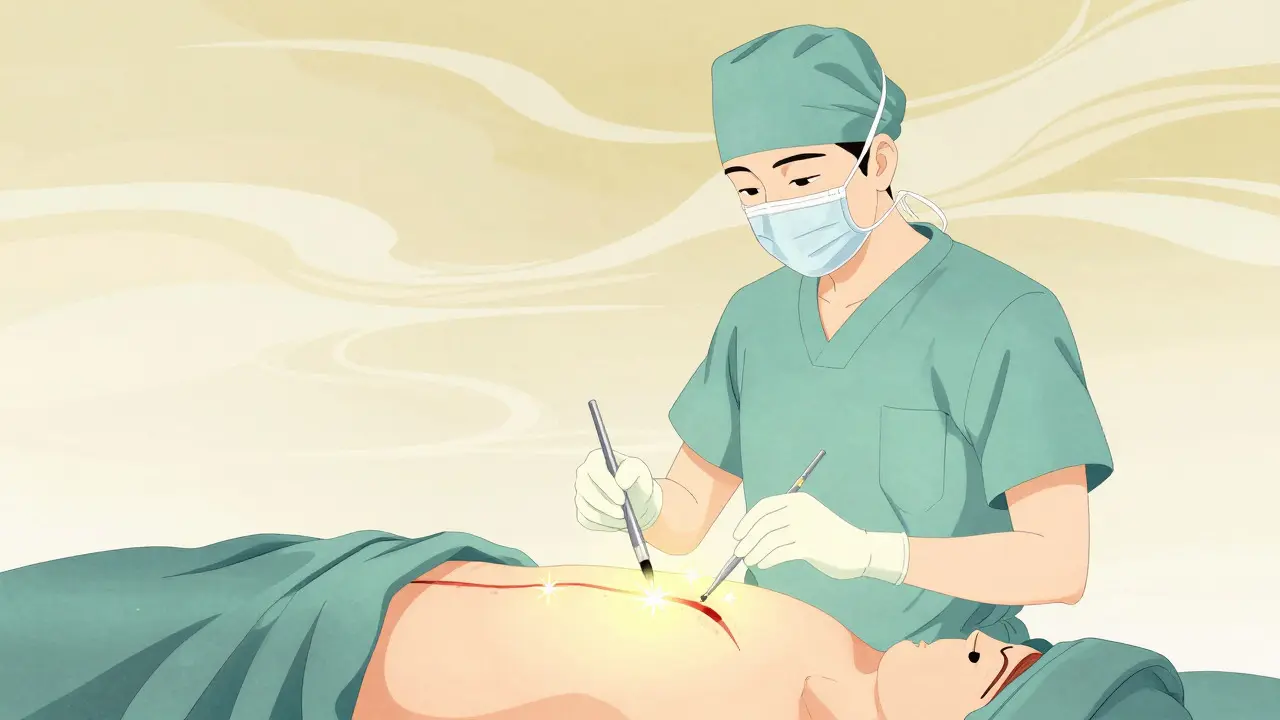
Today, 90% of these surgeries are performed laparoscopically. This minimally invasive procedure involves making four small incisions in the abdomen. A camera and specialized tools are inserted to detach the gallbladder from the liver and bile ducts. Compared to open surgery, which requires a large incision and a hospital stay of nearly five days, laparoscopic cholecystectomy offers a median recovery time of just seven days and an average hospital stay of 1.2 days. Most patients go home the same day or the next morning.
| Feature | Laparoscopic Cholecystectomy | Open Cholecystectomy |
|---|---|---|
| Hospital Stay | 1.2 days (average) | 4.7 days (average) |
| Recovery Time | Median 7 days | Median 30 days |
| Pain Level | Mild to Moderate | Moderate to Severe |
| Complication Rate | <2% in experienced hands | Higher risk of infection/hernia |
| Conversion Risk | 5-10% may need conversion to open | N/A |
Is it perfect? No. About 5-10% of laparoscopic cases require conversion to open surgery due to severe inflammation or anatomical variations. However, the benefits far outweigh the risks for most patients. Patient satisfaction rates hover around 95%, with most reporting significant improvement in quality of life within two weeks. One patient shared her story of enduring 17 episodes of biliary colic over 18 months before finally opting for surgery. Within ten days post-op, her symptoms vanished completely, and she was back to full activity in two weeks.
Non-Surgical Options: Are They Worth It?
If surgery sounds daunting, you might wonder about alternatives. There are two main non-surgical approaches: oral dissolution therapy and shock-wave lithotripsy. Ursodeoxycholic acid is a medication that can dissolve small cholesterol stones. However, it takes six to twenty-four months to work, and it only succeeds in 30-50% of cases. Worse, half of those patients see their stones return within five years. Shock-wave lithotripsy breaks stones into smaller pieces, but it has largely fallen out of favor due to high recurrence rates and the risk of fragments causing blockages elsewhere.
For most people, especially those with recurrent symptoms, these options are not practical. They delay the inevitable and expose you to ongoing risk of complications like pancreatitis. Surgery removes the source of the problem permanently. Your body adapts well to living without a gallbladder; bile flows directly from the liver to the small intestine. Some people experience looser stools initially, but this usually resolves within a few weeks.
Timing Matters: The 72-Hour Rule
If you are diagnosed with acute cholecystitis, timing is critical. Guidelines from the Society of American Gastrointestinal and Endoscopic Surgeons (SAGES) recommend performing cholecystectomy within 72 hours of diagnosis. Early surgery reduces the rate of conversion from laparoscopic to open surgery from 25% to just 7%. Waiting allows inflammation to worsen, making the operation more difficult and risky. For elderly patients or those with multiple comorbidities, the decision is more nuanced. Mortality rates do increase with age and health complexity, so a thorough risk-benefit analysis with your surgeon is essential. But for healthy individuals, early intervention is the safest path.
Living With Gallstones: Prevention and Management
While you cannot always prevent gallstones, you can manage risk factors. Rapid weight loss, such as that seen in crash diets or after bariatric surgery, actually increases the risk of stone formation because it releases cholesterol into the bile. Aim for gradual weight loss-no more than one to two pounds per week. A diet rich in fiber and low in refined carbohydrates and saturated fats supports gallbladder health. Staying hydrated and maintaining regular physical activity also helps keep your digestive system moving smoothly.
If you are prone to gallstones, avoid skipping meals. Fasting causes bile to stagnate in the gallbladder, promoting stone formation. Eat regular, balanced meals to encourage consistent gallbladder emptying. Listen to your body. If you notice patterns of pain after certain foods, keep a food diary. Common triggers include fried foods, dairy products, and heavily processed meals.
How long does it take to recover from gallbladder surgery?
Most patients recover from laparoscopic cholecystectomy within one to two weeks. You can usually return to light activities within a few days and resume normal work duties within a week. Heavy lifting should be avoided for about four to six weeks to allow internal healing.
Can I live a normal life without a gallbladder?
Yes, absolutely. The gallbladder stores bile, but your liver continues to produce it. Without the gallbladder, bile drips continuously into your intestine. Most people eat normally after recovery, though some may need to limit very fatty foods temporarily to avoid loose stools.
What are the signs that biliary colic has turned into cholecystitis?
If your abdominal pain lasts longer than five hours, becomes constant rather than episodic, or is accompanied by fever, chills, or persistent vomiting, seek immediate medical care. These are signs of acute cholecystitis, which requires prompt treatment to prevent serious complications.
Are gallstones more common in women?
Yes, women are two to three times more likely to develop gallstones than men. Hormonal factors, particularly estrogen, increase cholesterol levels in bile, promoting stone formation. Pregnancy and hormone replacement therapy also raise the risk.
Is it safe to wait and see if gallstone pain goes away?
Waiting is risky. Over 90% of people with symptomatic gallstones will have recurrent attacks within ten years. Delaying treatment increases the chance of developing complications like cholecystitis, pancreatitis, or bile duct obstruction, which are more dangerous and harder to treat than simple biliary colic.