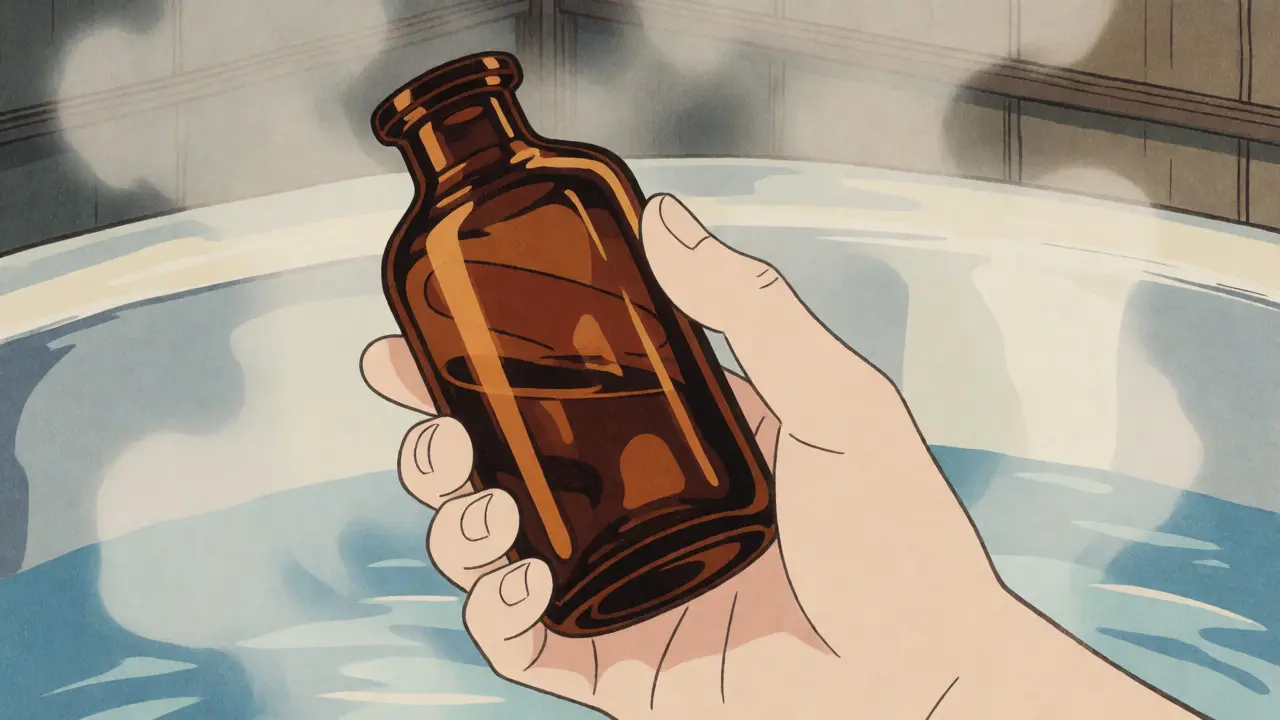
You grab a bottle of antibiotics from the bathroom cabinet, pop two pills, and wash them down. Simple, right? But if that bottle sat next to your steaming shower for three weeks, you might have just swallowed degraded chemicals instead of medicine. Most of us glance at the expiry date and call it a day, ignoring the tiny text about temperature and light. That’s a mistake. Medication storage isn’t just bureaucratic red tape; it’s the difference between effective treatment and potential toxicity.
The instructions are there because drugs are chemical compounds. They break down when exposed to heat, humidity, or light. If you don’t know how to read the label, you’re guessing. And guessing with your health is risky. Let’s fix that. Here is exactly what those confusing lines mean and where to actually keep your meds.
Where to Look: Decoding the Label Layout
First things first: stop looking at the front of the box. The marketing copy tells you what the drug does, not how to keep it alive. You need to hunt for specific sections depending on whether you bought it over-the-counter (OTC) or got it via prescription.
For OTC meds like ibuprofen or cough syrup, look for the Drug Facts panel. This standardized table is mandated by the FDA in the US and similar bodies elsewhere. It’s usually on the back or side. Scan past "Uses" and "Warnings." The storage info lives under Other Information. It’s often small print, but it’s legally required to be there.
Prescription labels are trickier. Pharmacies often slap their own stickers over the manufacturer’s original box. Your pharmacy sticker might say "Take twice daily," but it rarely details storage nuances. To get the full picture, check the original manufacturer’s leaflet inside the box. Look for a section titled Storage and Handling or simply "Storage." If you threw the leaflet away, ask your pharmacist. They have access to the official prescribing information, which includes precise environmental limits.
Temperature: What "Room Temperature" Actually Means
This is the biggest source of confusion. When a label says "Store at room temperature," do you think of your cozy living room in winter? Or a hot kitchen in summer? Neither is quite right.
In pharmaceutical terms, Controlled Room Temperature has a strict definition. According to the United States Pharmacopeia (USP), this means between 20°C and 25°C (68°F to 77°F). Excursions outside this range are allowed during shipping or short-term use, but long-term storage must stay within these bounds. If your house hits 30°C (86°F) in July without AC, your "room temp" meds are technically overheating.
Some drugs require stricter conditions:
- Refrigerate: This doesn’t mean the freezer door. It means the main compartment of your fridge, ideally between 2°C and 8°C (36°F to 46°F). Never put these in the freezer unless explicitly told to; freezing can destroy the molecular structure of liquids like insulin or certain suspensions.
- Cool Place: Often defined as below 15°C (59°F). This might mean a basement or a shaded pantry, not necessarily the fridge.
- Protect from Freezing: Critical for liquids and biologics. Ice crystals can rupture cells or separate emulsions, rendering the drug useless.
A common myth? Putting everything in the fridge. Don’t. Moisture is the enemy of tablets and capsules. Unless the label says refrigerate, keep them dry.
Humidity and Light: The Silent Killers
Bathrooms are terrible places for medication. Think about it: you take a hot shower, steam fills the room, and your pill bottles sit on the shelf absorbing moisture. Humidity breaks down chemical bonds faster than air alone. It causes tablets to soften, crack, or stick together. More importantly, it accelerates hydrolysis, a reaction where water molecules split the active ingredient into inactive or toxic byproducts.
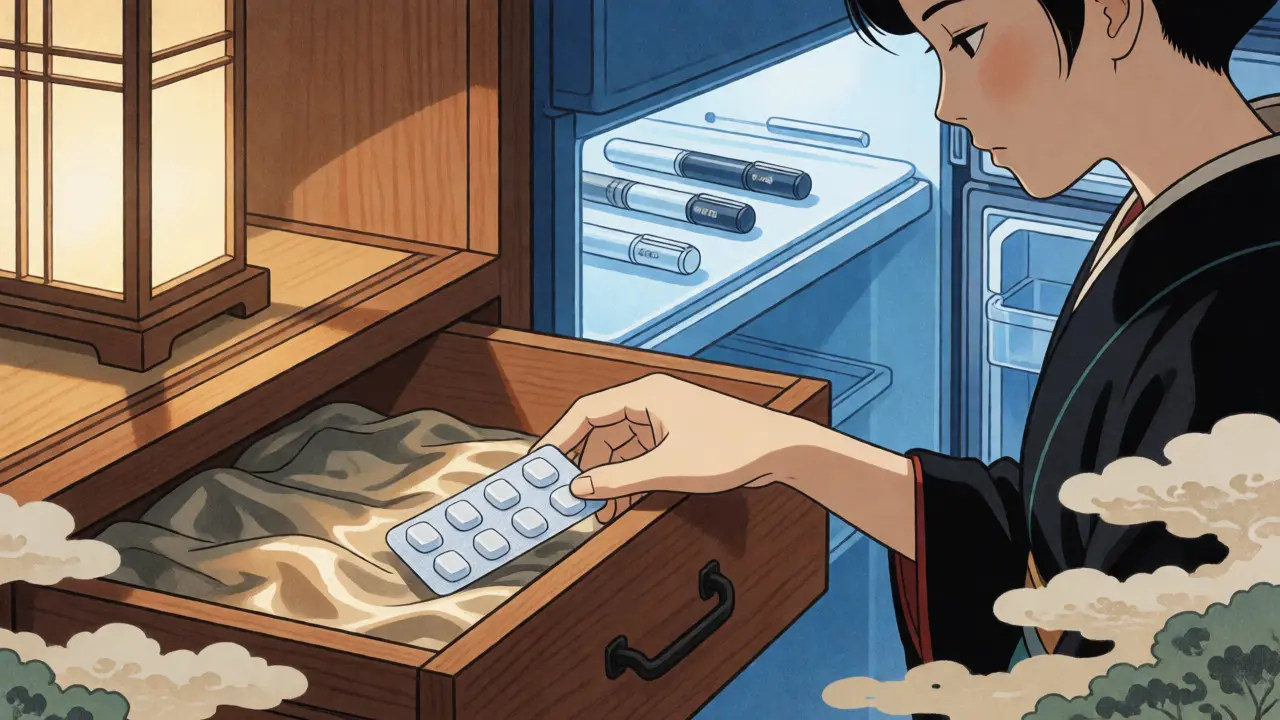
If a label says Store in a Dry Place, avoid the bathroom and the kitchen sink area. A bedroom drawer or a closet in a climate-controlled part of the house is better.
Then there’s light. Some drugs are photosensitive. Exposure to UV rays triggers oxidation, changing the color and potency of the medication. Nitroglycerin, used for chest pain, is notoriously sensitive. If your nitro tablets turn clear or crumble, they’ve likely degraded due to light or heat exposure. Labels will specify Protect from Light. Keep these in their original opaque containers. Don’t transfer them to cute, clear glass jars unless you’re sure the jar blocks UV.
Special Cases: Liquids, Biologics, and Opened Bottles
Solid pills are relatively stable. Liquids and injectables are fragile. Once you open a bottle of antibiotic suspension, the clock starts ticking differently. Unopened, it might last two years. Reconstituted (mixed with water), it often expires in 10-14 days, even if refrigerated. Why? Because introducing water allows bacterial growth and chemical degradation to accelerate. Always write the "discard after" date on the bottle immediately after mixing.
Biologics-drugs made from living organisms like insulin, monoclonal antibodies, or vaccines-are extremely picky. They denature (unfold and lose shape) if heated too much or shaken too hard. Shaking creates bubbles that can damage protein structures. Handle these gently. If you travel, never leave insulin in a checked bag; cargo holds can freeze, ruining the medication. Use an insulated cooler pack, not direct ice contact.
Common Mistakes and How to Fix Them
We surveyed habits and found patterns. Here are the most frequent errors and how to correct them.
| Mistake | Why It’s Bad | The Fix |
|---|---|---|
| Storing all meds in the bathroom cabinet | High humidity and temperature fluctuations from showers degrade pills. | Move non-refrigerated meds to a bedroom drawer or hallway closet. |
| Leaving meds in the car | Car interiors can hit 60°C (140°F) in summer, destroying efficacy. | Only carry what you need for the day. Leave the rest at home. |
| Using the refrigerator door for insulin | The door experiences the most temperature swings every time you open it. | Store in the main body of the fridge, away from vents. |
| Transferring pills to generic organizers | Exposes light-sensitive drugs to ambient light and air. | Keep originals until needed, or use opaque, sealed compartments. |
Another trap: ignoring "keep out of reach of children." While this sounds obvious, improper storage leads to accidental ingestion. High shelves are good, but ensure adults can still access them safely. For seniors with vision issues, consider large-print labels or blister packs that indicate if a dose was missed, which also helps track freshness.

Traveling with Medications
Trip planning shouldn’t end with booking flights. You need a plan for your meds. Air pressure changes in cabins are generally fine for pills, but liquids can expand and leak. Keep liquid meds upright and in zip-lock bags.
If you’re going somewhere hot, remember that "room temperature" abroad might mean 35°C (95°F). If your drug requires strict cooling, bring a portable cooler. Do not rely on hotel fridges being set correctly. Check the temperature yourself. Conversely, in very cold climates, protect liquids from freezing. Insulate bottles with clothing or bubble wrap.
Always carry medications in your hand luggage. Checked bags can go missing, or worse, sit on a tarmac in the sun for hours. Keep them in their original labeled containers to avoid security hassles. A photo of the prescription on your phone helps if you lose the paperwork.
When to Toss It: Signs of Degradation
Even if you follow the rules, things happen. Power outages ruin fridge contents. Leaks damage boxes. How do you know if a med is bad?
Look for physical changes:
- Tablets: Crumbling, discoloration, or unusual odor.
- Capsules: Melting or sticking together.
- Liquids: Cloudiness, separation that doesn’t mix back, or sediment.
- Injections: Particles floating in clear solutions.
If a medication looks different than usual, don’t risk it. Contact your pharmacist. They can tell you if the change is normal (some drugs naturally darken) or a sign of failure. Remember, expired or degraded meds aren’t always dangerous, but they are unreliable. Taking a half-strength antibiotic when you need full strength can lead to resistant infections.
Your Action Plan
Don’t overhaul your entire medicine cabinet today. Start small. Next time you buy a new med, read the storage section before putting it away. Ask yourself: Is this spot dry? Is it cool? Is it out of sunlight?
If you have complex regimens, create zones. One zone for fridge items, one for room-temp solids, one for emergency kits. Use a thermometer in your fridge to ensure it stays between 2°C and 8°C. Replace old stock annually. It’s cheap insurance for your health.
Can I store all my medications in the refrigerator?
No. Only store medications in the refrigerator if the label explicitly says "Refrigerate." Most tablets and capsules should be kept at controlled room temperature. Refrigerators introduce humidity, which can cause pills to deteriorate, crack, or lose potency. Always check the specific storage instructions on the label.
What happens if I accidentally froze my medication?
If a medication is frozen and the label says "Do Not Freeze," discard it. Freezing can alter the chemical structure of liquids and suspensions, making them ineffective or unsafe. For solid tablets, accidental brief freezing is less critical, but prolonged exposure should be discussed with a pharmacist. Never refreeze thawed medications.
Is it safe to keep medication in the bathroom?
Generally, no. Bathrooms experience high humidity and temperature fluctuations from showers and baths. This environment accelerates the breakdown of many medications. Unless a specific product is designed for bathroom storage (like some creams), move your pills to a cool, dry place like a bedroom drawer or a linen closet.
How long do opened liquid antibiotics last?
Once reconstituted with water, liquid antibiotics typically last only 10 to 14 days, even when stored in the refrigerator. The exact timeframe depends on the specific drug, so always check the label or ask your pharmacist. Write the expiration date on the bottle immediately after mixing to avoid confusion.
What does "protect from light" mean in practice?
It means keeping the medication in its original container, which is often amber or opaque plastic/glass designed to block UV rays. Avoid transferring these drugs to clear glass jars or leaving them on windowsills. Prolonged exposure to sunlight can cause chemical reactions that reduce the drug's effectiveness or create harmful byproducts.
Aurelio Haney
September 4, 2026 AT 05:07Finally someone said it. 😤 The bathroom cabinet is a graveyard for meds and everyone knows it but nobody moves them. It’s not rocket science it’s just laziness combined with ignorance. 🙄 You think your ibuprofen survives the steam? No. It turns into chalky garbage. Move them to a bedroom drawer or get over yourself. 💀
Mary Tait
September 6, 2026 AT 00:47This article is long overdue. Americans have been ignoring FDA guidelines for decades because they are too busy being lazy or stupid. We have the best pharmaceutical regulations in the world, yet people still store insulin next to their shower heads. It is pathetic. If you cannot read a label, do not take medication. Simple as that.
Rebecca Makayla Crane
September 7, 2026 AT 22:17I mean, duh? 🙄 But I guess some people need this spelled out like they're five. ✨ It's actually embarrassing how many adults don't know what 'room temperature' means. Like, go look up USP definitions if you care about your health. Otherwise, enjoy your degraded chemicals. 💅✨🍷
Jim Bisesi
September 9, 2026 AT 20:54ugh i hate reading labels. its so much work. why cant they just make pills that dont break down? im gonna keep mine in the car anyway. whatever. 😩
Louis Tarro
September 11, 2026 AT 09:09I appreciate the thoroughness here. It really helps to understand the chemical rationale behind the rules rather than just following blindly. The point about humidity causing hydrolysis was particularly illuminating for me. I had no idea water molecules could split active ingredients so effectively. Thank you for shedding light on this vital aspect of personal healthcare management.
Shu Chowdhury
September 11, 2026 AT 09:44the part about liquid antibiotics expiring after mixing is crucial. i always forget to write the date. good reminder.
Amy B
September 12, 2026 AT 15:13Omg wait, so my nitroglycerin tablets turning clear means they're basically candy now?? That’s terrifying! 😱 I’ve been keeping them in a clear little plastic case from the pharmacy. Do I need to buy amber glass jars immediately? Also, does the fridge door really matter that much for insulin? My doctor never mentioned the vents thing!
Rob Alderman
September 12, 2026 AT 20:42The distinction between controlled room temperature and ambient household temperature is often overlooked by laypeople. Most individuals fail to realize that standard HVAC systems do not maintain the strict 20-25°C range required by pharmacopeial standards year-round. This lack of precision leads to significant efficacy loss in sensitive compounds.
Evelyn Reed
September 13, 2026 AT 08:30interesting perspective on the thermodynamic instability of biologics. usually we focus on kinetic degradation but the entropic unfolding due to thermal agitation is the real killer for proteins. also the point about checked baggage pressure differentials affecting liquid expansion is valid though less critical for solid dosage forms.
Somnath Thombre
September 13, 2026 AT 21:41bro this is super useful!! i used to keep everything in the kitchen near the stove lol. big mistake. now i have a dedicated box in the bedroom. works great. thanks for the tips! 👍🔥
Kimberley Odish
September 15, 2026 AT 09:48The analysis is superficial at best. You fail to address the specific stability profiles of hygroscopic excipients versus active pharmaceutical ingredients. Furthermore, the advice regarding travel ignores the reality of airline cargo hold temperatures which can fluctuate wildly beyond simple freezing concerns. One must consider the cumulative thermal load, not just instantaneous extremes. This level of generalization is insufficient for clinical application.
Louis Tarro
September 16, 2026 AT 03:03To add to the previous point, the concept of cumulative thermal load is indeed significant. However, for most patients, maintaining a consistent environment within the home is the primary variable they can control. The airport scenario is an edge case compared to daily storage habits.