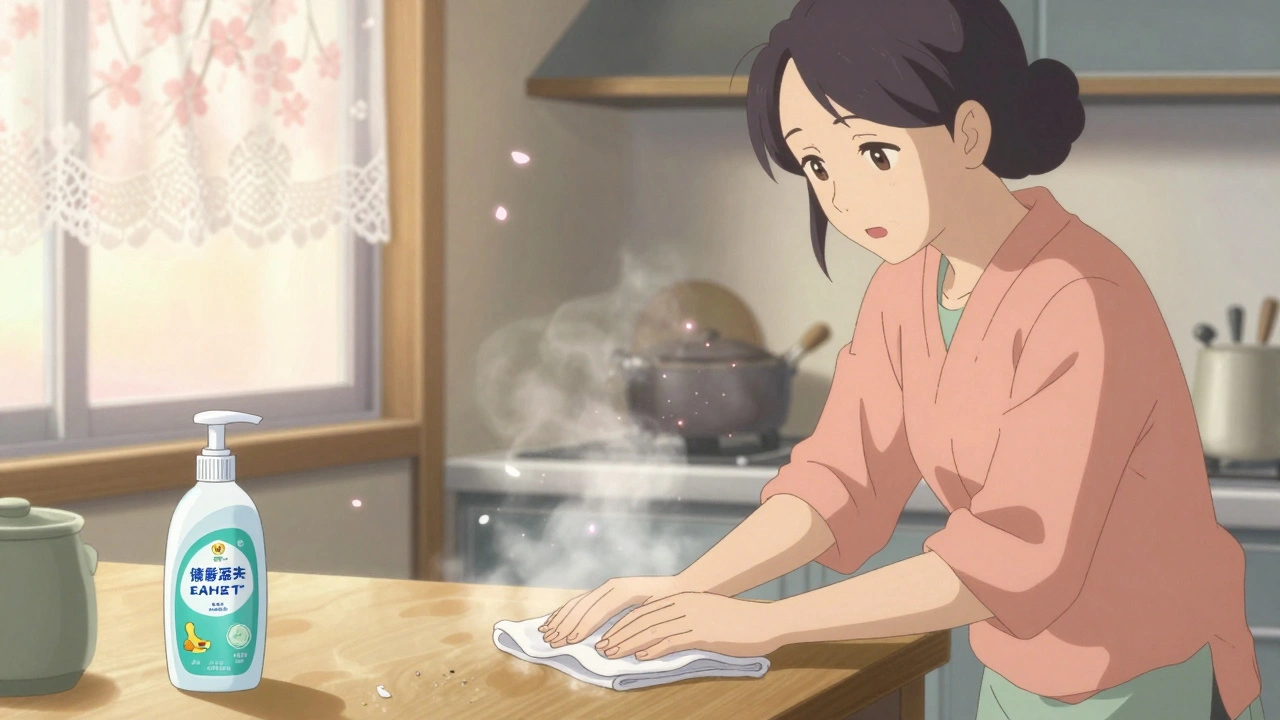
Every time you reach for a spray bottle to clean the kitchen counter, you might be stirring up more than just dirt. For people with allergies or asthma, many common cleaning products are silent triggers-releasing chemicals that set off sneezing, wheezing, or even full-blown asthma attacks. It’s not just about smelling nice. It’s about breathing safely.
Why Regular Cleaners Make Allergies Worse
Most conventional cleaners don’t remove allergens-they redistribute them. A 2020 study found that even after wiping down surfaces multiple times with a dry cloth, 87% of peanut, milk, and egg residues remained. That’s not cleaning. That’s spreading.
And it gets worse. Sprays filled with ammonia, bleach, or synthetic fragrances release volatile organic compounds (VOCs) into the air. The European Community Respiratory Health Survey showed that people who used these sprays regularly had a 51% higher risk of developing adult-onset asthma. That’s not a small risk. It’s a public health issue.
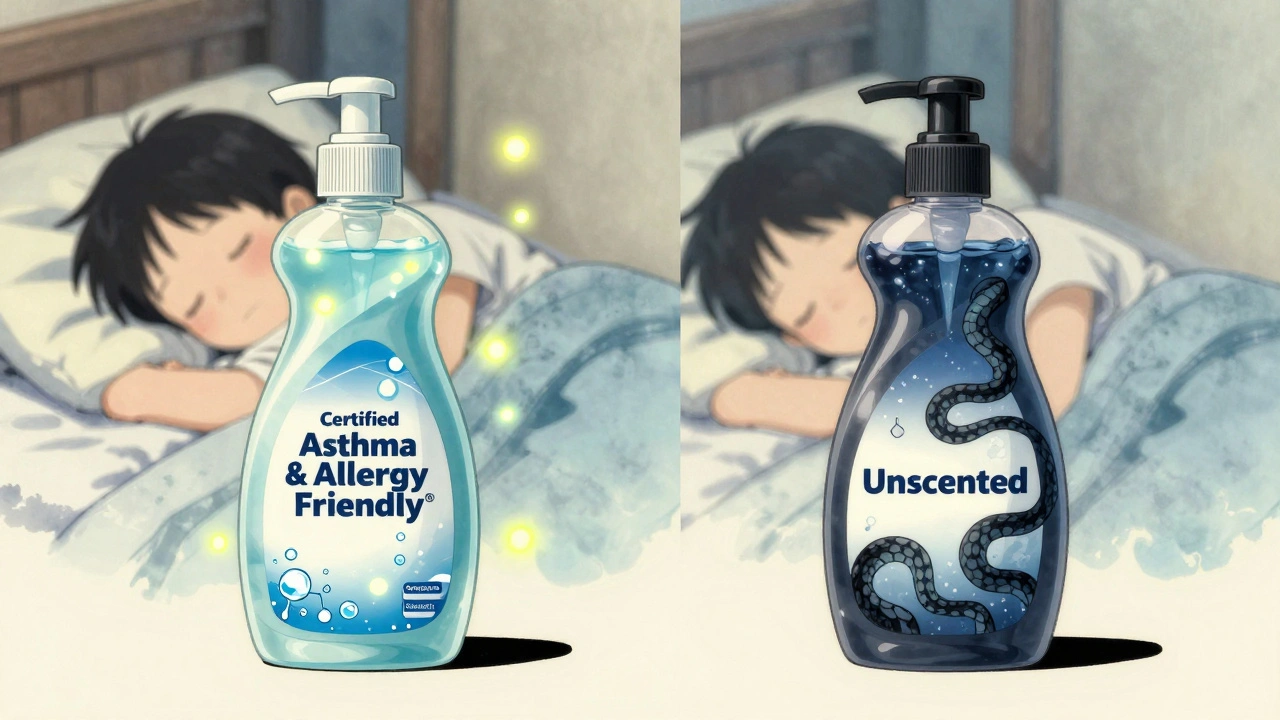
Even products labeled ‘natural’ or ‘unscented’ aren’t safe. A 2024 study found that 18% of people with fragrance sensitivity reacted to wipes labeled ‘unscented’ because hidden masking agents were still there. Labels lie. Certifications don’t.
What Makes a Cleaner Truly Allergy-Friendly?
Not all ‘green’ cleaners are created equal. The only way to know a product actually reduces allergens is to look for the Asthma & Allergy Friendly® certification. This program, updated in March 2024, tests products for three things:
- Can it remove at least 85% of common allergens like dust mites, pet dander, and pollen from hard surfaces?
- Are VOC emissions below 0.5 parts per million?
- Does it avoid 12+ known fragrance allergens identified in recent NIH research?
Products that pass these tests aren’t just ‘better.’ They’re clinically proven. For example, Renegade Brands’ Sweat-X Free & Clear detergent removes 92% of allergens. Standard ‘natural’ cleaners? Only 76%. That gap matters.
The active ingredients in real allergy-friendly cleaners are simple and safe:
- Potassium cocoate (5-15%) - a coconut-based surfactant that lifts dirt without irritating lungs
- Potassium citrate (2-8%) - softens water so cleaners work better without harsh chemicals
- Hydrogen peroxide (3-5%) - a gentle oxidizer that kills germs without the fumes of bleach
- Corn-derived ethanol (10-20%) - evaporates cleanly, no lingering residue
Compare that to conventional cleaners: 20-30% ammonia or bleach. Those don’t clean-they poison the air.
What to Buy: Top Certified Products
If you’re switching to allergy-safe cleaning, focus on certified products. Here’s what works based on real testing and user reports:
| Product | Form | Key Feature | Price (32oz) | Rating (EWG) |
|---|---|---|---|---|
| Seventh Generation Free & Clear Laundry Detergent | Laundry | Removes 90%+ allergens from fabrics | $5.99 | 1.2 |
| Renegade Brands Sweat-X Free & Clear All-Purpose Cleaner | Spray | 92% allergen removal, no fragrance | $6.25 | 1.0 |
| Attitude All-Purpose Cleaner | Spray | Plant-based, EWG #1 rated | $5.50 | 1.1 |
| Ecover Zero Dish Soap | Handwash | Zero fragrance, tested for food allergens | $4.75 | 1.3 |
| Method All-Purpose Cleaner (Unscented) | Spray | Not certified, but low VOC | $3.99 | 3.5 |
Notice the difference? Certified products cost more-around $5.75 per 32oz-but they’re backed by science. Non-certified ‘natural’ cleaners average $3.25, but many still trigger reactions. The $2.50 difference? It’s the cost of breathing easier.
On Amazon, certified products have an average 4.3-star rating across 12,500 reviews. The top 5-star comments? ‘My child stopped sneezing after switching.’ ‘No more nighttime coughing.’ ‘Finally, a cleaner that doesn’t make me feel sick.’
What to Avoid
Steer clear of these common traps:
- ‘Unscented’ wipes - 68% of people with fragrance sensitivity react to them because of hidden masking agents.
- Bleach and ammonia sprays - even occasional use increases asthma risk by 30-50%.
- Homemade vinegar solutions - while fine for general cleaning, they remove only 67% of peanut residue. Certified cleaners remove 89%.
- Products with ‘fragrance’ or ‘essential oils’ - even lavender or tea tree oil can trigger reactions in sensitive people.
The Food Standards Agency warns that homemade cleaners lack standardized testing. They’re great for general tidying, but not for removing food allergens or dust mite debris.
How to Clean Right: The Two-Cloth Method
Using the right product isn’t enough. How you clean matters just as much.
For years, people wiped surfaces dry with a cloth-thinking that was enough. But dry wiping kicks allergens into the air. A 2023 study found that using a single damp cloth still left 42% of allergens airborne.
The fix? The two-cloth method:
- Use one damp microfiber cloth with your certified cleaner to lift dirt and allergens.
- Use a second damp cloth with plain water to rinse off any residue.
This reduces airborne allergens by 63% compared to single-cloth cleaning. It’s simple. It’s cheap. And it’s backed by the Indoor Air Journal.
Also, avoid feather dusters and dry mops. They’re allergen blowers. Stick to damp microfiber cloths and HEPA-filter vacuums.
Real Results: Families Who Switched
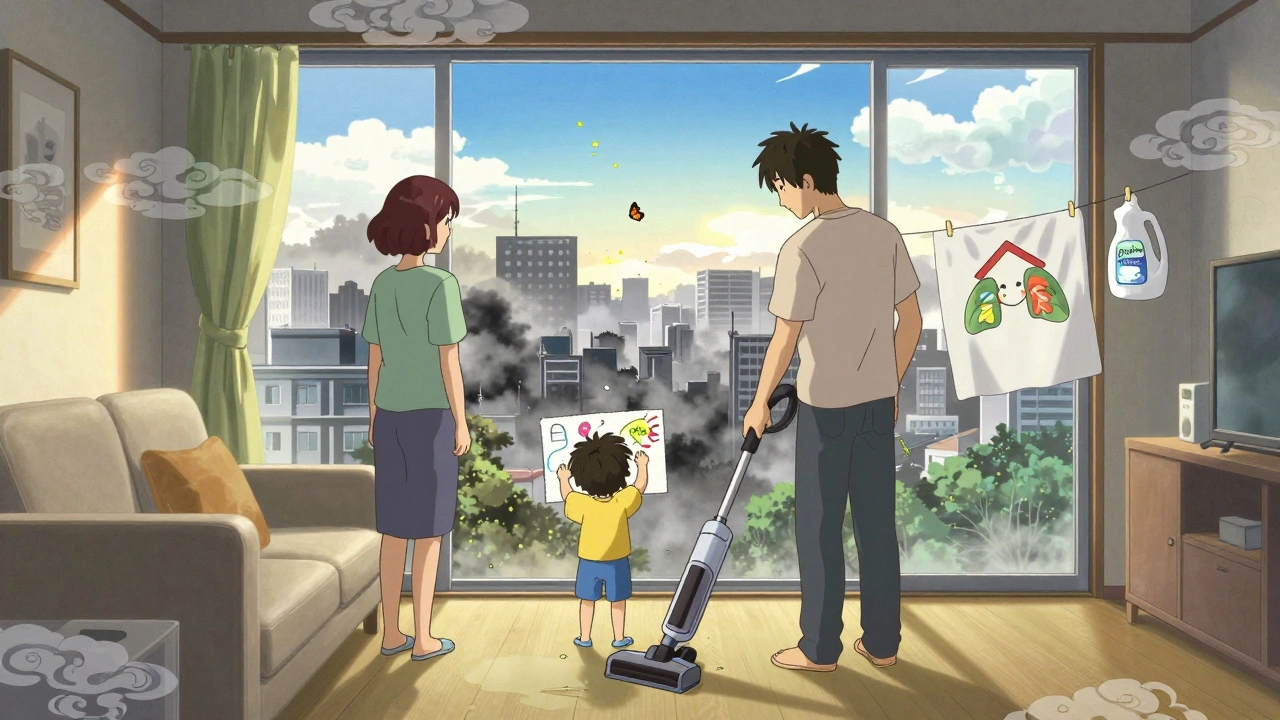
In 2023, the Asthma and Allergy Foundation ran a ‘Healthy Home Project’ with 45 families whose children had severe allergies. They replaced all cleaners with certified products, started using the two-cloth method, and cleaned bedding weekly.
Within 12 months, emergency room visits for asthma attacks dropped by 41%. That’s not a coincidence. That’s science.
One mother in Bristol shared on Reddit: ‘My son’s eczema flared up every time I cleaned. After switching to Seventh Generation Free & Clear, his skin cleared up in three weeks. Our allergist said it was the first time in two years he didn’t need a steroid cream.’
These aren’t anecdotes. They’re outcomes.
Cost vs. Value: Is It Worth It?
Yes. Here’s why.
Switching your entire home to certified cleaners costs $75-$150 upfront. That includes laundry detergent, all-purpose spray, dish soap, and floor cleaner.
Compare that to the cost of untreated allergies: missed work, doctor visits, inhalers, ER trips. The CDC estimates poor indoor air quality costs the U.S. $58 billion a year. That’s not just money-it’s health.
And the market is growing fast. The global allergy-friendly cleaning market hit $4.2 billion in 2024 and is projected to reach $7.1 billion by 2028. Hospitals, schools, and daycare centers are switching because they know the cost of not acting is higher.
Plus, refill systems are rising in popularity. Brands like Attitude and Ecover now offer concentrate refills that cut plastic waste by 80% and lower the cost per use by nearly 40%.
What’s Next: The Future of Allergy-Safe Cleaning
In 2025, the European Chemicals Agency is pushing to ban 17 common irritants from household cleaners. That’s a big win.
New tech is emerging too. Electrostatic sprayers, calibrated for hypoallergenic solutions, now reduce product use by 65% while capturing more allergens. They’re being used in hospitals and are starting to appear in home kits.
And certification standards keep getting stricter. The Asthma & Allergy Foundation added 12 new fragrance allergens to its testing list in March 2024. That means fewer hidden triggers.
What you’re buying today isn’t just a cleaner. It’s protection. For your lungs. For your kids. For your long-term health.
Are all ‘natural’ cleaning products safe for allergies?
No. Many ‘natural’ or ‘green’ cleaners still contain undisclosed fragrances, essential oils, or preservatives that trigger reactions. Only products with the Asthma & Allergy Friendly® certification have been clinically tested to remove allergens and avoid known irritants. Look for the logo-don’t trust labels.
Can I use vinegar and water instead?
Vinegar and water work fine for general cleaning like windows or counters, but they’re not effective against food allergens. Studies show they remove only 67% of peanut residue. Certified cleaners remove 89%. If you have children with food allergies or someone with asthma, stick to certified products for surfaces where food is prepared or eaten.
How long does it take to see results after switching cleaners?
Most people notice a difference in 2-3 weeks. Allergen buildup takes time to clear from carpets, bedding, and furniture. One parent reported her child’s eczema improved within three weeks of switching laundry detergent. For asthma symptoms, reduced sneezing and nighttime coughing often show up in the same timeframe.
Do I need to replace all my cleaning products at once?
You don’t have to, but it helps. Start with laundry detergent and all-purpose spray-they’re used most often and have the biggest impact on indoor air quality. Then replace dish soap, floor cleaner, and bathroom products over the next few weeks. The key is consistency: once you start, stick with certified products.
Are refillable cleaners better for allergies?
Yes. Refill systems reduce plastic waste and often use purer formulations because they’re concentrated. Less water means fewer additives. Brands like Attitude and Ecover offer refill pouches that lower your cost per use and reduce exposure to preservatives used in diluted products. Just make sure the refill concentrate is also certified.
Can I use allergy-friendly cleaners on pets’ bedding?
Absolutely. Pet dander is one of the top allergens in homes. Certified laundry detergents like Seventh Generation and Renegade are tested to remove pet dander from fabrics. Wash pet bedding weekly in hot water (at least 130°F) with a certified detergent to cut allergen levels by over 90%.
Kidar Saleh
December 3, 2025 AT 11:10After switching to certified cleaners, my son’s asthma attacks dropped from weekly to once every three months. I didn’t believe it at first-thought it was just hype. But the difference? Night and day. No more midnight nebulizer sessions. No more panic when the vacuum runs. This isn’t a trend. It’s survival.
And the two-cloth method? Game changer. I used to think wiping once was enough. Turns out, I was just spreading allergens around like confetti. Now I wipe twice. It takes 90 seconds extra. Worth every second.
My allergist called it ‘the quiet revolution in home health.’ And honestly? She’s right.
Stop trusting ‘natural.’ Start trusting certification.
Also, avoid ‘unscented’ wipes like the plague. They’re the sneakiest trigger of all.
Myson Jones
December 4, 2025 AT 10:25I’ve been using Ecover Zero Dish Soap for six months now. No more throat tightness after washing dishes. No more headaches. I used to think it was just stress. Turns out, it was the soap.
Switching was expensive at first. But I started with just the dish soap. Then laundry. Then all-purpose. Took me three months. Now I’m all in.
And the refill pouches? Genius. Less plastic, less cost, less junk in the formula. I didn’t even know that was a thing until last month.
Also, HEPA vacuum. Non-negotiable. If you’re still using a broom or feather duster… you’re basically throwing allergens into the air on purpose.
It’s not about being perfect. It’s about being consistent.
parth pandya
December 6, 2025 AT 02:55im realllyy thnkng of switchin to renegade cleaner… my kid has severr alergiees and i dont wanna make thingss worse… but is it worth the price? i mean 6.25 for 32oz? i usually buy the cheapo ones for 2.99… plz help
Albert Essel
December 6, 2025 AT 06:39parth pandya, I hear you. The upfront cost is intimidating. But think of it this way: if your child has one ER visit for an asthma attack, that costs $1,200–$3,000. A full set of certified cleaners? $100–$150. One visit wipes out the entire investment, plus interest.
And you don’t have to buy everything at once. Start with laundry detergent. That’s the biggest exposure point-skin contact, airborne particles, hours of contact. Seventh Generation Free & Clear is the most affordable certified option. $5.99. Less than a gallon of milk.
Then move to all-purpose. Then dish soap. You’ll feel the difference before you finish the first bottle.
Charles Moore
December 8, 2025 AT 00:59My wife and I switched to certified cleaners after our daughter’s allergy diagnosis. We didn’t tell anyone. Just did it quietly. Started with the laundry. Then the kitchen. Then the bathroom.
Three weeks in, she stopped coughing at night. No meds. No inhaler. Just… peace.
People ask me if it’s worth it. I say: Would you rather pay $6 a bottle or $10,000 in medical bills? Because that’s what this is. Prevention. Not luxury.
And yes, the two-cloth method? We do it every single time. Even when we’re tired. Even when we’re in a rush. Because now, we know. It’s not about being clean. It’s about being safe.
Rashi Taliyan
December 8, 2025 AT 02:38My mom used to clean with bleach. Every. Single. Day. Said it was ‘the only thing that kills germs.’
I used to think she was just old-fashioned.
Then I got asthma at 28. Then my brother got eczema. Then my niece had a reaction to ‘unscented’ wipes.
I didn’t say anything. I just… started buying different stuff. Quietly. Hiding the bottles.
Two months later, my mom asked why I wasn’t using the bleach anymore. I said, ‘It’s making us sick.’ She laughed.
Three months later, she bought a bottle of Renegade. She didn’t say why. But she did it.
That’s the thing about this stuff. It doesn’t need a speech. It just needs to be there.
And now? We all breathe easier.
Kara Bysterbusch
December 8, 2025 AT 07:43The science here is not just compelling-it’s devastatingly elegant. We’ve spent decades conflating ‘clean’ with ‘smells like a spa.’ We’ve normalized chemical exposure as the price of hygiene. But the data doesn’t lie: VOCs from conventional cleaners are a leading, under-recognized contributor to adult-onset asthma.
The Asthma & Allergy Friendly® certification isn’t a marketing gimmick-it’s a clinical benchmark. It’s the only standard that measures actual allergen removal, not just ingredient lists.
And the two-cloth method? That’s public health in action. A $0.50 microfiber cloth, two passes, and a 63% reduction in airborne allergens. No tech. No apps. Just physics and discipline.
What’s more, the global market projection to $7.1 billion by 2028? That’s not just capitalism. That’s collective awakening.
We’re not just buying cleaners. We’re rewriting the narrative of domestic safety.
Rashmin Patel
December 9, 2025 AT 06:21OMG I JUST REALIZED I’VE BEEN USING ‘UNSCENTED’ WIPES FOR MY KID’S HIGHCHAIR AND MY HANDS HAVE BEEN ITCHING NONSTOP SINCE LAST YEAR 😭 I THOUGHT IT WAS DRY SKIN BUT NOW I KNOW IT WAS THE MASKING AGENTS!! I JUST ORDERED THE RENEGADE CLEANER AND SEVENTH GENERATION DETERGENT AND I’M SO EXCITED!!
Also, I’ve been using vinegar on the kitchen counter for years because ‘it’s natural’ but now I know it only removes 67% of peanut residue?? That’s like leaving half the danger behind!! I’m switching to the two-cloth method tomorrow and I’m telling EVERYONE!!
And the refill pouches?? I’m in. Less plastic + less chemicals + less money spent = WIN WIN WIN!!
Also, my dog’s bedding? I’m washing it in the certified detergent. He’s got dander allergies too. This is life-changing. I’m not even kidding.
PS: If you’re reading this and still using bleach… please just stop. Your lungs will thank you. I promise.
Cindy Lopez
December 10, 2025 AT 01:48Yeah, I guess it’s nice that some people can afford to spend $6 on cleaner. Meanwhile, I’m choosing between food and soap. Not everyone has that luxury.
Also, ‘certified’ doesn’t mean ‘better.’ It just means more expensive.
And vinegar works fine for me.
James Kerr
December 11, 2025 AT 19:54Man, I didn’t even know this was a thing. I just thought my wife was being extra when she switched all the cleaners. But now I get it.
My daughter stopped sneezing after we switched laundry detergent. No big announcement. No fanfare. Just… quiet relief.
Now I just grab the Renegade spray without thinking. And I don’t even notice it’s different. That’s how good it is.
Also, the two-cloth thing? I do it now. Feels weird at first, but now I’d feel weird not doing it.
Life’s too short to breathe bad air. 🙌
vinoth kumar
December 13, 2025 AT 19:45Wow, I never thought about how cleaning affects allergies. I always thought it was just about dust. But now I see it’s the chemicals. I’m from India, and here most people use soap and water or vinegar. But I think I’ll try the certified ones now for my son’s asthma.
Also, I found Seventh Generation on Amazon India! It’s a bit expensive, but I think it’s worth it.
Thanks for this post. Really opened my eyes.