Antihistamine Cross-Reactivity Checker
This tool helps you understand cross-reactivity patterns between different antihistamines based on medical research. It's important to note:
- Reactions may occur even after long-term use without issues
- Genetic variations in H1 receptors affect how your body responds
- Oral challenge testing is still the gold standard for diagnosis
- This tool is informational only - not medical advice
Your Reaction History
Select which antihistamines caused reactions for you (you can select multiple):
Potential Alternatives
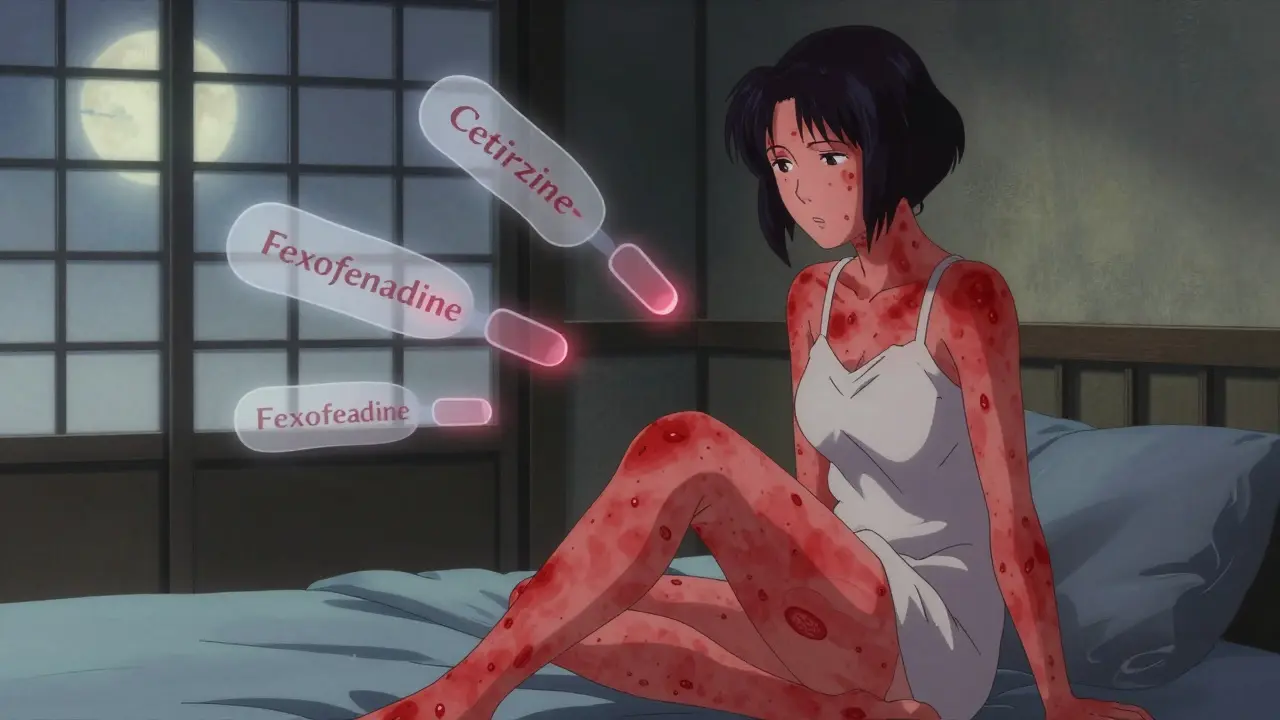
It’s a cruel twist: you take an antihistamine to stop your allergies, and instead, your skin breaks out in hives. You’re not imagining it. This isn’t rare-it’s documented, and it’s happening to people who thought they were doing the right thing. Antihistamine allergies are real, and they’re more complex than most doctors even realize.
How an Allergy Medicine Can Cause Allergies
Antihistamines work by blocking histamine, the chemical your body releases during an allergic reaction. But in rare cases, these drugs don’t block histamine-they trigger it. Scientists now believe certain people have a genetic quirk in their H1 receptors, the main target of most antihistamines. Instead of calming the receptor down, the drug locks it into an active state. Think of it like turning a light switch on when you meant to turn it off. The result? Itching, swelling, hives-the very symptoms the drug was supposed to fix.This isn’t just theory. A 2017 study tracked a woman who broke out in hives every time she took common antihistamines like cetirizine, loratadine, and fexofenadine. She had tried every standard treatment for chronic urticaria. Nothing worked. Only after stopping all antihistamines-and treating an underlying infection-did her skin finally clear up. Her body wasn’t reacting to the drug as an allergen. It was reacting to the drug as a stimulant.
Why Cross-Reactivity Is So Confusing
You’d think if you react to one antihistamine, you’d react to all of them. But that’s not how it works. Some people react to piperidine drugs like fexofenadine and desloratadine but can tolerate piperazine drugs like cetirizine. Others react to both. One patient in a 2018 study had skin reactions to ketotifen, even though a skin test came back negative. That’s the problem: standard allergy tests often miss this.Antihistamines come in different chemical families. First-generation ones like diphenhydramine (Benadryl) cross into your brain and make you sleepy. Second-generation ones like loratadine (Claritin) and cetirizine (Zyrtec) are designed to stay out of your brain. But when it comes to triggering reactions, the chemical class doesn’t predict the outcome. Two drugs can look totally different under a microscope and still cause the same reaction in a hypersensitive person. The receptor itself is the real culprit-not the drug’s label.

What Happens Inside the Receptor
In 2024, scientists used cryo-electron microscopy to map exactly how antihistamines bind to the H1 receptor. They found two key spots where these drugs latch on. In most people, the drug fits snugly and holds the receptor in the “off” position. But in those with hypersensitivity, the same drug seems to nudge the receptor into the “on” position. The difference? A tiny change in the receptor’s shape-likely caused by genetic variations. These changes are so small, they don’t show up on routine blood tests or skin prick tests.This also explains why some patients react to drugs they’ve taken for years without issue. Your receptors don’t change overnight. But if you’re dealing with a chronic infection, inflammation, or hormonal shift, your body’s environment can alter how the receptor responds. One patient’s hives vanished only after treating a hidden sinus infection. The antihistamine wasn’t the problem. The infection was the trigger that flipped the switch.
Why Skin Tests Don’t Always Work
Doctors often rely on skin prick tests to check for allergies. But with antihistamine hypersensitivity, those tests are unreliable. In the 2018 case, ketotifen gave a negative skin test-but caused a full-blown reaction during an oral challenge. The reaction didn’t show up until 120 minutes after ingestion. That’s not an immediate allergic reaction like peanut or bee sting allergies. It’s delayed, subtle, and easily mistaken for worsening urticaria.That’s why the gold standard for diagnosis is an oral challenge under medical supervision. You take a tiny dose of the drug and wait. If your skin reacts, you know. But this isn’t done lightly. It carries risk. That’s why many doctors never consider it. They assume the patient is just reacting to their underlying condition. The result? Years of misdiagnosis, more antihistamines, and worsening symptoms.

What to Do If You Think You’re Reacting
If you’ve been taking antihistamines for weeks or months and your hives are getting worse, stop. Not just one-stop them all. Keep a log. Note when symptoms started, which drugs you took, and how long after taking them they appeared. Did you get sick? Had surgery? Start a new medication? Infections are a common trigger for these paradoxical reactions.Don’t switch to another antihistamine hoping it’ll work better. If you reacted to one, you might react to others-even ones you’ve never tried. The safest move is to see an allergist who understands this rare phenomenon. They may recommend:
- Stopping all H1 antihistamines for 2-4 weeks
- Testing for underlying infections (sinus, dental, H. pylori)
- Trying non-antihistamine treatments like leukotriene blockers (montelukast) or omalizumab (Xolair)
- Considering mast cell stabilizers like ketotifen (if you haven’t reacted to it)
Some patients respond to doxepin, an older antidepressant with strong antihistamine properties. But again-only if you haven’t reacted to it before. This isn’t about finding a better antihistamine. It’s about avoiding them entirely.
What’s Next for Antihistamine Safety
The 2024 structural study of the H1 receptor opened the door to designing new drugs that avoid triggering these reactions. Scientists now know exactly where the drug binds-and where it goes wrong. Future antihistamines could be built to avoid the “on” switch entirely, even in people with receptor quirks. For now, we’re stuck with what we have: drugs that work for most, but can backfire in a few.What’s clear is that we’ve been treating this like a standard allergy. We’re wrong. This is a pharmacological paradox-one that requires a different kind of thinking. If you’re one of the rare people affected, you’re not crazy. You’re not allergic to your medication. Your body is just wired differently. And that’s something medicine is only now beginning to understand.
Can you be allergic to antihistamines if you’ve taken them before without issues?
Yes. Reactions can develop over time. Changes in your health-like an infection, stress, or hormonal shift-can alter how your H1 receptors respond to the drug. Someone who took cetirizine for years without problems might suddenly develop hives after a viral illness. This isn’t a new allergy to the drug. It’s a change in how your body processes it.
Are first-generation antihistamines more likely to cause reactions than second-generation ones?
Not necessarily. Both types can trigger paradoxical reactions. First-generation antihistamines like diphenhydramine are more sedating and have more side effects, but that doesn’t make them more likely to cause hives. The reaction depends on your receptor structure, not the drug’s sedative properties. Cases have been documented with both classes.
If a skin test is negative, can I still be allergic to an antihistamine?
Absolutely. Skin tests for antihistamine hypersensitivity are unreliable. One study showed a patient had a negative skin test to ketotifen but developed severe hives after taking it orally. The reaction was delayed and dose-dependent. Oral challenge remains the only reliable way to confirm this type of reaction.
What should I take instead of antihistamines if I’m allergic to them?
Options include leukotriene inhibitors like montelukast, mast cell stabilizers like cromolyn, or biologics like omalizumab (Xolair). In some cases, doxepin (a tricyclic antidepressant) is used off-label for its potent antihistamine effect-but only if you haven’t reacted to it before. Always work with an allergist. Avoid self-medicating.
Is this condition permanent?
Not always. Some patients regain tolerance after treating an underlying infection or after a period of avoidance. One study showed symptoms nearly disappeared after six months without antihistamines and proper infection management. But for others, the sensitivity remains. Avoidance is the safest long-term strategy.
Joanna Reyes
February 25, 2026 AT 11:11Okay, I’ve been dealing with this for years, and honestly, no one ever explained it like this. I thought I was just ‘overreacting’ to my own meds-like, maybe I was being dramatic. But reading this, it clicked: it’s not my fault. My body’s receptors are just wired wrong. I took Zyrtec for six years, then one spring, after a bad sinus infection, I broke out in hives within an hour. Same dose. Same routine. Just… different biology. I stopped everything cold turkey, and after three months, my skin finally calmed down. I’m now on montelukast and it’s been life-changing. No more nightly antihistamine panic. If you’re reading this and your hives are getting worse despite meds? Stop. Just stop. And find an allergist who’s heard of this. You’re not crazy. Your body’s just telling you it’s time to rethink everything.
Nerina Devi
February 25, 2026 AT 16:36This is so important. In India, we’re taught to take antihistamines for everything-itching, rashes, even mild colds. But I’ve seen friends develop worse symptoms after taking them. One woman switched from cetirizine to loratadine, thinking it was ‘stronger,’ and ended up in the ER. No one told her this could happen. We need more awareness. Doctors here don’t even consider this as a possibility. It’s not just a Western issue. This should be in medical training globally. Thank you for writing this. It’s not just science-it’s survival.
Dinesh Dawn
February 26, 2026 AT 13:16Yeah, this makes sense. I’ve had chronic hives since 2020. Tried every pill. Nothing helped. Then I stopped all antihistamines for a month just to see what happened. Guess what? My skin cleared up. I didn’t even realize how much I’d been relying on them. Now I use cold compresses, oatmeal baths, and stress reduction. Turns out, my body just needed a break. The meds were masking the real problem-my immune system was already overloaded. Sometimes less is more.
Haley Gumm
February 27, 2026 AT 09:20Oh please. Another ‘I have a rare condition’ story. You took a Benadryl and got hives? Congrats, you’re allergic. That’s not a ‘pharmacological paradox,’ that’s called an allergy. You don’t need a 2024 cryo-EM study to tell you that. If you react to a drug, you’re allergic. Period. Stop overcomplicating it with jargon. The real paradox is why anyone thinks this is groundbreaking. Also, ‘hormonal shift’? That’s your body saying you’re stressed out and eating too much sugar. Get a grip.
Gabrielle Conroy
February 27, 2026 AT 12:33THIS. IS. LIFE-CHANGING. 🙌 I’ve been in this hell for 4 years. I thought I was going crazy. Every time I took Zyrtec, my face swelled. I thought it was stress. I thought I was allergic to pollen. I thought I was just ‘sensitive.’ Turns out? My H1 receptors were being tricked. I stopped everything. Did the oral challenge. Got diagnosed. Started on Xolair. And now… I can sleep. I can go outside. I can eat without panic. If you’re reading this and you’re suffering? Don’t give up. Find an allergist who’s read this paper. You’re not broken. You’re just misunderstood. And you’re not alone. 💛
Spenser Bickett
February 28, 2026 AT 15:51Christopher Wiedenhaupt
March 2, 2026 AT 09:56The scientific evidence presented here is compelling. The concept of receptor-level pharmacodynamic variability, particularly in the context of H1 receptor conformational dynamics, aligns with recent findings in structural pharmacology. The 2024 cryo-EM data provides a plausible mechanistic basis for paradoxical reactions. While clinical case reports are valuable, larger cohort studies are needed to determine prevalence. I recommend integrating this into pharmacovigilance databases and updating prescribing guidelines accordingly. Standard allergy testing protocols are indeed inadequate for this phenomenon. Further research into genetic polymorphisms of the HRH1 gene is warranted.
John Smith
March 2, 2026 AT 10:33Shalini Gautam
March 3, 2026 AT 18:25As an Indian woman who’s been told ‘just take antihistamines’ for everything since childhood, I’m tired of Western medicine acting like this is new. We’ve seen this for decades. My aunt had the same issue-she stopped all antihistamines and switched to ayurvedic turmeric and neem. Her skin cleared in weeks. Why aren’t we talking about traditional remedies? Why is everything always ‘new science’? This isn’t a breakthrough. It’s a re-discovery. And it’s time we stopped treating non-Western healing as ‘alternative’ and started seeing it as wisdom.
Natanya Green
March 5, 2026 AT 04:09OMG I’m crying. I thought I was the only one. I’ve been on 3 different antihistamines and each time I got worse. I thought I was allergic to my own skin. I stopped everything. I cried for 3 days. I felt so alone. Then I found this article. I’m on montelukast now. My hives are gone. I’m not ‘weird.’ I’m not ‘overreacting.’ I’m not broken. I’m just… differently wired. And now I know. Thank you. Thank you. Thank you. 🤍
Steven Pam
March 5, 2026 AT 04:17This is actually really hopeful. I’ve been stuck in this loop for years-take med, get worse, take stronger med, get worse. I thought I was just unlucky. But now I see it’s not about luck. It’s about biology. And if science can map how the receptor works? That means we can fix it. Not just manage it. Future drugs could be designed to avoid this flip. That’s huge. We’re not just talking about one person’s weird reaction. We’re talking about a whole new class of safer meds. This is the kind of science that changes lives. Keep going. We’re with you.
Timothy Haroutunian
March 6, 2026 AT 09:05I read the whole thing. Took me 45 minutes. And honestly? I’m exhausted. All this jargon. All this ‘receptor quirk’ nonsense. Look. I’ve had hives for 10 years. I took Benadryl. Got hives. Took Zyrtec. Got hives. Took Xolair. Still hives. I don’t need a 2024 cryo-EM study. I need a doctor who listens. Who doesn’t act like I’m some weirdo lab rat. Who doesn’t say ‘maybe it’s your hormones’ like I’m a 1950s housewife. I just want to sleep without itching. I just want to wear a t-shirt without feeling like I’m on fire. And if your solution is ‘stop everything and wait six months’? Cool. But I’ve been waiting. And I’m tired. So thanks for the science. But I just want relief. Not a PhD.