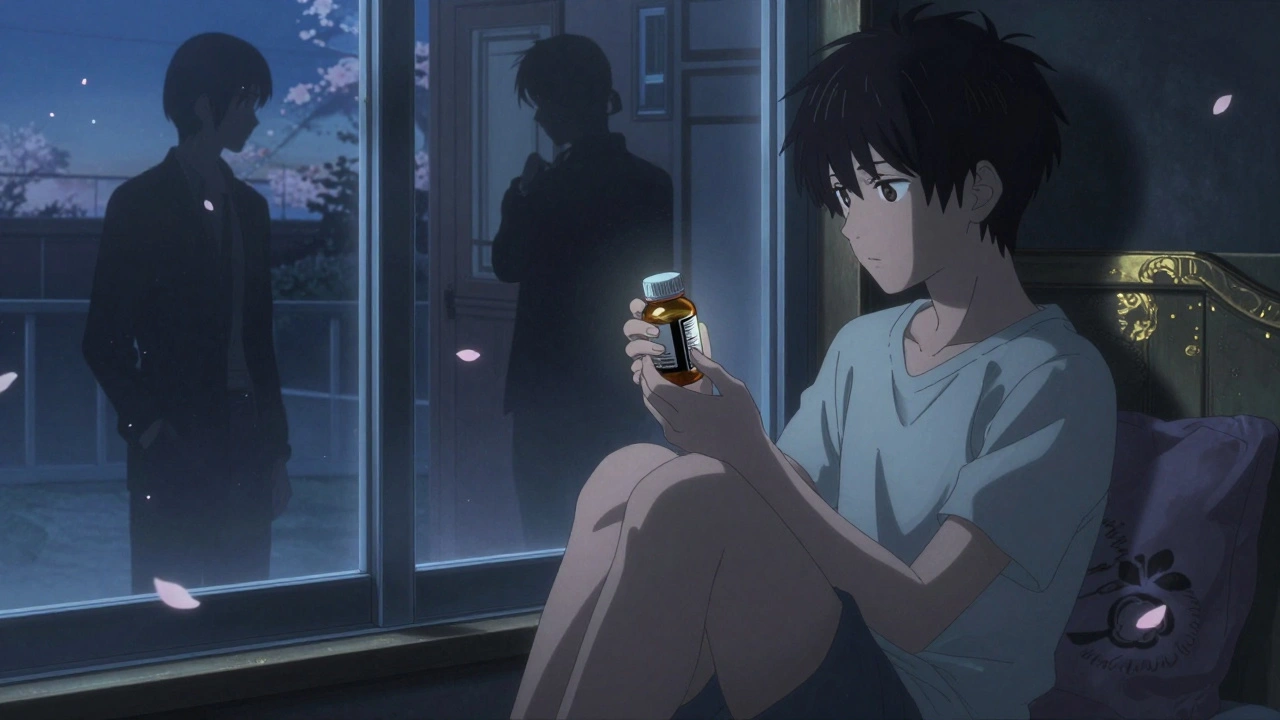
When the FDA slapped a black box warning on antidepressants for children and teens in 2005, it was meant to protect them. But what happened next surprised even experts. Suicide rates went up. Prescriptions dropped. And families were left caught between fear and desperation.
What the Black Box Warning Actually Says
The FDA’s black box warning is the strongest safety alert they can give. It’s printed in bold, framed in a black border, and appears on every antidepressant package insert. The message is clear: antidepressants may increase the risk of suicidal thinking and behavior in children and adolescents.
This warning came after a review of 24 clinical trials involving over 4,400 young patients. The data showed a 2% higher chance of suicidal thoughts or behaviors-like talking about death or making plans-among those taking antidepressants compared to those on placebo. No one died in these trials. But the FDA decided the risk was too big to ignore.
By 2007, the warning was expanded to include young adults up to age 24. It applies to every antidepressant on the market, from SSRIs like Prozac and Zoloft to SNRIs like Effexor. The FDA didn’t pick and choose. If it treats depression, it carries the warning.
The Intended Goal vs. What Really Happened
The goal was simple: get doctors and parents to watch closer. The FDA asked clinicians to monitor patients weekly during the first month of treatment, then every two weeks after that. Pharmacists were told to hand out MedGuides-simple fact sheets-to families when they picked up prescriptions.
But real life doesn’t follow clinical trial rules. In the real world, many doctors couldn’t keep up with the extra visits. Rural clinics didn’t have enough staff. Parents panicked. And prescriptions dropped.
Between 2003 and 2007, antidepressant use in teens fell by 31%. That’s over a million fewer prescriptions in just two years. Meanwhile, depression diagnoses in youth rose by 14%. More kids were struggling. Fewer were getting treatment.
And then came the numbers no one expected. Suicide rates among 10- to 19-year-olds jumped from 2.0 to 3.5 per 100,000-a 75% increase. The same pattern showed up in young adults after the 2007 expansion. A 2023 Harvard study found a 22% spike in psychotropic drug poisonings (a proxy for suicide attempts) among teens after the warning. Among young adults, it was 34%.
Why Did This Happen?
The problem wasn’t the drugs. It was the fear.
Parents read the warning and assumed antidepressants caused suicide. They didn’t hear the nuance: the risk was small, and it was mostly about thoughts of suicide-not death. They didn’t know that untreated depression carries a far higher risk of suicide than medication.
One parent on Reddit wrote: “My daughter’s doctor said the warning was doing more harm than good. We waited six months to start meds. By then, she was in the hospital.”
Surveys show 74% of parents delayed or refused antidepressants for their kids because of the warning. Forty-one percent said they were terrified the meds would make suicidal thoughts worse. But among those who did start treatment, 67% reported improvement. The warning didn’t stop suicide. It stopped care.

What the Experts Are Saying Now
Researchers like Dr. Stephen Soumerai from Harvard Pilgrim Health Care Institute say the evidence is overwhelming: “The consistency in observed harms and absence of observed benefits after the Black-Box Warnings indicate this is not a coincidence.”
Studies from Sweden, where suicide rates rose after the warning, found that many young people who died by suicide had never been treated with antidepressants. The same pattern showed up in the U.S. The kids who needed help the most were the ones who got left behind.
The American College of Neuropsychopharmacology called for a reevaluation in 2022. So did the FDA’s own advisory panel in September 2023. Even pharmaceutical companies like Eli Lilly and Pfizer have asked the FDA to change the wording.
The European Medicines Agency never issued a similar warning. And guess what? European countries didn’t see the same spike in youth suicides after 2005. That’s not a coincidence.
What Should Parents and Teens Do?
The warning isn’t going away anytime soon. But you don’t have to let it scare you into silence.
If your child is struggling with depression, anxiety, or OCD, here’s what matters:
- Don’t refuse medication because of the warning. Refuse it because you didn’t talk about it.
- Ask your doctor: “What are the risks of treatment vs. no treatment?”
- Make sure your child is monitored closely-especially in the first four weeks. That’s when risk is highest.
- Watch for sudden changes: withdrawal, agitation, sleeplessness, talking about hopelessness.
- Don’t assume the warning means “never.” It means “be careful.”
The Mayo Clinic puts it simply: “Although at first you may find the suicide warning alarming, it’s important to get the facts.”

Where Do We Go From Here?
The current black box warning is a blunt tool. It treats every teen the same. But depression isn’t one-size-fits-all.
Researchers at the National Institute of Mental Health are working on better tools-ways to identify which kids are truly at risk for suicidal thoughts from medication, and which ones are more likely to benefit. Early results are expected in early 2024.
For now, the best thing you can do is stay informed. Don’t let a warning label make decisions for you. Talk to your doctor. Ask questions. Share your fears. And remember: the greatest risk isn’t the pill. It’s doing nothing.
Do antidepressants cause suicide in teens?
No, antidepressants don’t cause suicide. The FDA warning says they may increase the risk of suicidal thoughts or behaviors in some teens during the first few weeks of treatment. But in clinical trials, no teen died by suicide while taking these medications. The bigger risk is leaving depression untreated-untreated depression is linked to far higher rates of suicide.
Why did suicide rates go up after the black box warning?
After the warning, many parents stopped giving their kids antidepressants-even when they needed them. Studies show prescriptions dropped by 20-50%, while depression diagnoses rose. With fewer kids getting treatment, suicide rates climbed. The warning was meant to protect, but it ended up blocking care for those who needed it most.
Are all antidepressants covered by the black box warning?
Yes. The FDA’s black box warning applies to every prescription antidepressant approved for use in children and adolescents, including SSRIs like fluoxetine (Prozac), sertraline (Zoloft), and escitalopram (Lexapro), as well as SNRIs like venlafaxine (Effexor). It doesn’t matter which drug it is-if it’s used to treat depression in youth, it carries the warning.
How often should a teen be monitored when starting antidepressants?
The FDA recommends weekly check-ins during the first month of treatment, then every two weeks for the next month, and then regular follow-ups. But in practice, only about 37% of teens receive this level of monitoring. If you’re starting medication, make sure your doctor has a clear plan-and don’t hesitate to ask for more frequent visits if you’re worried.
Should I avoid antidepressants for my teen because of the warning?
No. The warning is a reminder to be cautious, not a reason to avoid treatment. For many teens with moderate to severe depression, antidepressants are life-saving. The risk of suicide is much higher without treatment than with it. Work with a qualified mental health provider to weigh the risks and benefits for your child’s specific situation.
Is the black box warning going away?
Not yet. As of late 2023, the FDA has not removed or changed the warning, despite growing evidence that it may be doing more harm than good. Several medical groups and pharmaceutical companies have urged the FDA to revise it. A new risk-stratification tool is being developed to replace the blanket warning with more personalized guidance-but it’s still in testing.
What to Do Next
If you’re considering antidepressants for a teen, don’t wait. Start the conversation. Ask your doctor for data-not fear. Request a monitoring plan. If your provider doesn’t have one, ask for a referral to a child psychiatrist.
If you’ve already started treatment and are scared, talk to your provider. Most side effects happen early. Most improvements come after 4-6 weeks. Don’t quit because of a warning label. Quit because you and your doctor agree it’s not helping.
Depression doesn’t wait. Neither should you.
Kurt Russell
December 7, 2025 AT 15:18This warning is a goddamn disaster. I’ve seen it firsthand-my cousin’s therapist told her to wait six months because of the black box, and by the time she got meds, she was in the ER with a bottle of pills. The FDA didn’t save lives-they just made parents too scared to help their kids. Depression doesn’t care about warnings. It just waits. And when it strikes, it doesn’t ask for permission.
Ashley Farmer
December 8, 2025 AT 11:52I’m a school counselor, and I’ve watched this play out for nearly two decades. The warning scared parents into silence, and kids paid the price. I had one 15-year-old girl who told me, ‘I didn’t want to be a burden, so I didn’t say anything until I couldn’t breathe.’ We got her on medication after months of waiting. She’s now in college. The warning didn’t protect her-it delayed her life.
Stacy here
December 9, 2025 AT 21:20Let’s be real-this is all a Big Pharma scam. The FDA didn’t act because of science. They acted because drug companies paid them off to scare parents into thinking meds are dangerous. Meanwhile, the real cause of youth suicide? Social media algorithms, school pressure, and the collapse of community. But hey, let’s blame Prozac instead of the system that’s crushing kids. Classic distraction tactic. 🤡
Sam Mathew Cheriyan
December 11, 2025 AT 08:43uuhh so like... antidepressants cause suicide?? but wait... i read somewhere that in india we dont even have black box warning and suicide rates are lower?? maybe its the west being too drama? idk man. also my cousin took sertraline and now he’s a monk. so... yk?
Ernie Blevins
December 12, 2025 AT 07:47So what you’re saying is… kids are weak? That’s it? You’re blaming the medicine because parents can’t handle the truth? If your kid’s depressed, they’re already broken. Pills don’t fix broken. They just numb it. And numbness is just a fancy word for giving up.
Nancy Carlsen
December 14, 2025 AT 01:50My teenage niece started fluoxetine last year. First week? She cried a lot. Second week? She laughed at a meme for the first time in months. Now she’s drawing again. 🌈 I’m so glad we didn’t listen to the fear. The warning is scary-but silence is scarier. 💙
Ted Rosenwasser
December 15, 2025 AT 04:35It’s fascinating how the FDA, an institution with zero understanding of developmental neurobiology, was allowed to issue a blanket warning that contradicts the entire body of clinical literature. The 2% increase in suicidal ideation was statistically insignificant and clinically irrelevant compared to the 40-60% remission rate seen with SSRIs in adolescents. This is a textbook case of regulatory overreach masquerading as precaution. The real tragedy? The erosion of medical autonomy.
Helen Maples
December 16, 2025 AT 06:36Stop romanticizing the warning. It’s not about fear-it’s about responsibility. If you’re going to give a child a psychoactive drug, you have a duty to monitor them. The problem isn’t the label. The problem is that 63% of doctors ignored the monitoring guidelines. Blame the system, not the warning. And if you’re skipping follow-ups? You’re not being brave. You’re being negligent.
Andrew Frazier
December 16, 2025 AT 14:54Why do we always let the feds ruin everything? In America we used to be tough. Now we’re scared of pills. In Russia they just tell kids to suck it up. In China they give them hard work and discipline. We’re raising a generation of crybabies who think a pill will fix their problems. This warning? It’s the softness of the West. Pathetic.
Mayur Panchamia
December 16, 2025 AT 18:15OMG!! This is why I hate Western medicine!! In India, we have yoga, meditation, family dinners, and god’s grace!! Why do you need pills?? My aunt’s son was depressed for 3 years!! He didn’t take any pills!! He just chanted “Om Namah Shivaya” 108 times a day!! Now he’s a yoga teacher!! You people are so addicted to chemicals!! You don’t need science-you need soul!!
Karen Mitchell
December 17, 2025 AT 22:57It is, in fact, a matter of profound moral and ethical concern that the medical establishment has permitted the dissemination of pharmaceutical interventions to minors under conditions of demonstrable increased risk for self-harm, particularly when alternative modalities-such as cognitive behavioral therapy, family systems intervention, and structured social reintegration-are underutilized and underfunded. The black box warning, while imperfect, remains a necessary safeguard against the commodification of mental health. To suggest otherwise is not merely irresponsible-it is indefensible.