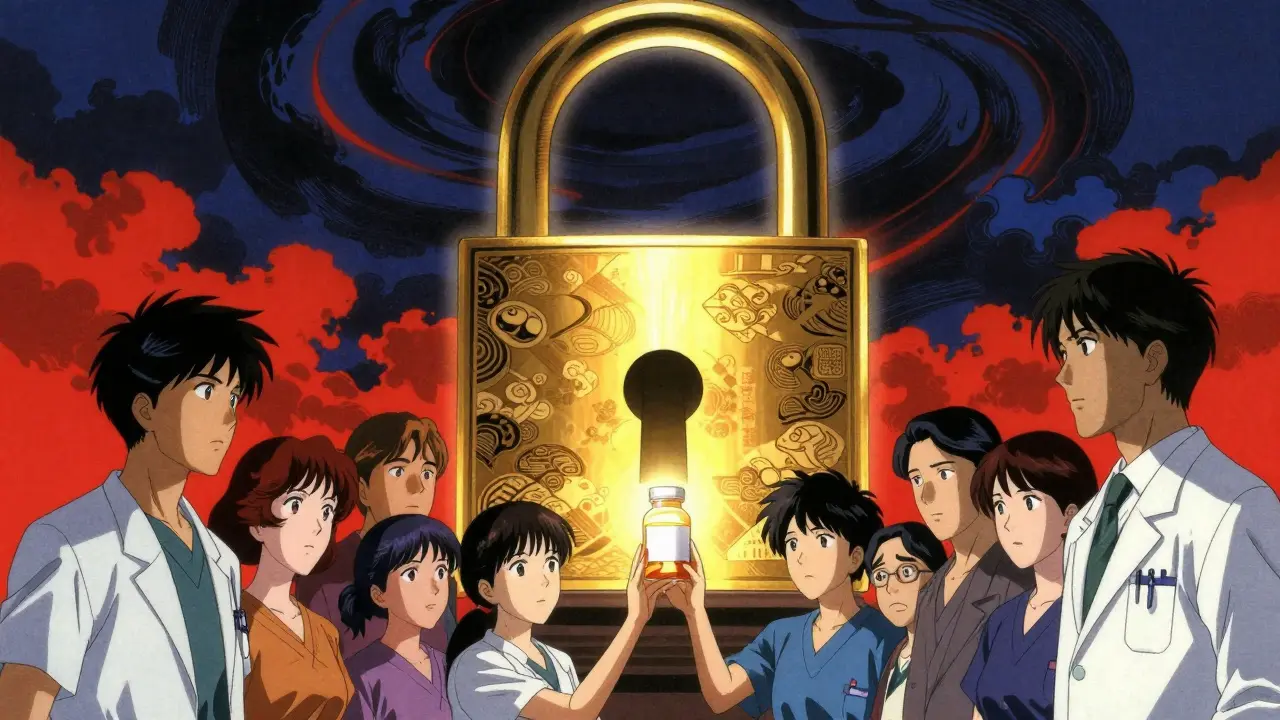
Imagine a life-saving drug costs $1,200 a year. Now imagine that same drug could be made for $230 if someone else were allowed to produce it. This isn't a hypothetical scenario; it happened in Thailand during the mid-2000s when the government used compulsory licensing, a legal tool that allows governments to authorize third parties to produce patented inventions without the patent holder's consent. While pharmaceutical companies argue this undermines innovation, public health advocates see it as a critical safety valve for saving lives during crises.
The concept sits at the tense intersection of intellectual property rights and human survival. It forces us to ask a difficult question: when does the exclusive right to profit from an invention outweigh the public's right to access it? The answer isn't simple, but understanding how compulsory licensing works reveals why it remains one of the most powerful-and controversial-tools in global health policy.
What Is Compulsory Licensing?
At its core, compulsory licensing is a mechanism that breaks the monopoly granted by patents. Normally, a patent gives its owner the exclusive right to make, use, or sell an invention for a set period, usually 20 years. A compulsory license overrides this exclusivity. It permits a government to allow another party-often a generic manufacturer-to produce the patented product while ensuring the original patent holder receives "adequate remuneration" or fair compensation.
This isn't about stealing ideas. It’s about balancing interests. The framework recognizes that patents are a social contract: society grants temporary monopolies in exchange for innovation, but if that monopoly harms the public interest, the state can intervene. The modern rules governing this balance were largely established by the TRIPS Agreement (Agreement on Trade-Related Aspects of Intellectual Property Rights), which came into force in 1995 under the World Trade Organization (WTO). Article 31 of TRIPS sets the international standard, requiring that licenses be granted predominantly for the domestic market and that negotiations for voluntary terms be attempted first, unless there is an emergency.
Why Do Governments Use It?
You might wonder why a country would risk angering big pharma or facing trade disputes just to issue a compulsory license. The reasons usually boil down to three factors: price, access, and emergency.
Price and Access: When branded drugs remain unaffordable for large segments of the population, governments may step in. In Brazil, the government issued a compulsory license for efavirenz, an HIV medication, after the manufacturer refused to lower the price significantly. The result? The cost per tablet dropped from $1.55 to $0.48. That’s a 69% reduction, making treatment accessible to thousands more patients.
Public Health Emergencies: During pandemics, speed matters more than protocol. When COVID-19 hit, countries like Canada, Germany, and Israel prepared or issued compulsory licenses for coronavirus-related technologies. The goal was clear: bypass lengthy negotiations to get vaccines, tests, and treatments produced quickly. Although the WTO eventually agreed to a temporary waiver for vaccine patents in 2022, many countries relied on national compulsory licensing laws to act faster.
National Security and Infrastructure: It’s not just about medicine. The U.S. Clean Air Act allows compulsory licensing if patented technology is needed to meet environmental standards. Similarly, defense needs can trigger licenses in various jurisdictions. The principle remains the same: if the public good is at stake, the patent monopoly can be lifted.

How It Works in Practice: A Step-by-Step Look
Issuing a compulsory license isn’t as simple as flipping a switch. It involves navigating complex legal procedures that vary by country. Here is how the process typically unfolds in major jurisdictions:
- Attempt Negotiation: Under normal circumstances, the applicant must first try to negotiate a voluntary license with the patent holder on reasonable commercial terms. This step is waived only in cases of "extreme urgency" or for public non-commercial use.
- Demonstrate Need: The applicant must prove that the invention is not being worked locally, that there is a national emergency, or that the public interest requires intervention.
- Government Authorization: A relevant authority-such as a patent office or court-reviews the application. In India, this goes through the Intellectual Property Appellate Board (IPAB); in the U.S., it often involves the Court of Federal Claims.
- Determine Compensation: The patent holder must receive adequate remuneration. How much? That depends on local law. In the U.S., courts use the "Georgia-Pacific factors," considering 15 variables including comparable royalty rates. In India, royalties have been set at around 6% of net sales in landmark cases.
- Issue License: Once approved, the licensee can manufacture and distribute the product, usually limited to the domestic market unless specific export provisions apply.
The timeline varies wildly. In the U.S., resolving a compulsory license claim under Title 28, U.S.C. § 1498 takes an average of 2.7 years. In India, the IPAB processes applications in 18-24 months. Speed is crucial in emergencies, which is why some countries, like Spain, introduced fast-track mechanisms during the pandemic, waiving prior negotiation requirements entirely.
Global Case Studies: Successes and Challenges
To understand the real-world impact of compulsory licensing, we need to look at where it has been used. The data shows it is rare but highly effective when deployed correctly.
| Country | Drug/Tech | Original Price | New Price | Reduction |
|---|---|---|---|---|
| Brazil | Efavirenz (HIV) | $1.55/tablet | $0.48/tablet | 69% |
| Thailand | Lopinavir/Ritonavir (HIV) | $1,200/year | $230/year | 81% |
| India | Nexavar (Cancer) | High cost | Generic entry | ~90%* |
| Rwanda | HIV Meds (Imported) | Market rate | Subsidized | Significant |
*Note: India’s Nexavar case involved a prolonged legal battle. Bayer successfully challenged the initial compulsory license in 2013, highlighting the legal risks involved.
Thailand’s Model: Between 2006 and 2008, Thailand issued compulsory licenses for several HIV and cardiovascular drugs. The results were dramatic. Prices for Abbott’s lopinavir/ritonavir plummeted from $1,200 to $230 annually. This move saved the Thai government millions and expanded treatment coverage significantly. However, it also sparked diplomatic tensions with the U.S., which placed Thailand on its Special 301 Watch List-a signal of potential trade pressure.
India’s Legal Battles: India has issued 22 compulsory licenses since 2005, mostly for cancer medications. The most famous case involved Natco Pharma and Bayer’s Nexavar. Natco argued that Bayer’s price was too high and that the drug wasn’t being manufactured locally. The Indian patent office agreed, issuing a compulsory license. Bayer fought back, and the Delhi High Court revoked the license in 2013, ruling that Natco hadn’t sufficiently demonstrated the public need. This case serves as a cautionary tale: even well-intentioned licenses face intense legal scrutiny.
The Export Clause Exception: Most compulsory licenses are for domestic use. But what if a country can’t make the drugs itself? The WTO created a solution in 2003, formalized in 2005, allowing countries with limited manufacturing capacity to import generics produced under compulsory license elsewhere. Only Canada has used this mechanism so far, shipping HIV medications to Rwanda in 2012. The process is cumbersome, which limits its broader adoption.

The Debate: Innovation vs. Access
Compulsory licensing is not without critics. The pharmaceutical industry argues that patents fund research and development (R&D). Without strong patent protection, companies won’t invest billions in creating new drugs.
A 2018 study in the Journal of Health Economics found that countries with active compulsory licensing frameworks saw a 15-20% reduction in pharmaceutical R&D investment. The International Federation of Pharmaceutical Manufacturers & Associations (IFPMA) claims that each compulsory license announcement causes an average 8.2% drop in stock prices for affected companies. They argue this chilling effect ultimately hurts patients by slowing the pipeline of new medicines.
However, public health experts counter that the threat of compulsory licensing is often enough to secure voluntary price cuts. Dr. Brook Baker of Northeastern University notes that the mere possibility of licensing helped drive down prices for 90% of HIV medications in developing countries since 2000. Furthermore, Professor Jorge L. Contreras analyzed 127 cases and found that compulsory licenses reduced drug prices by 65-90% in 83% of instances, provided they were implemented with clear procedural frameworks.
The truth likely lies in the middle. Compulsory licensing shouldn’t be the first resort, but it must remain a credible last option. As Dr. Francis Gurry, former Director General of WIPO, stated, it should be used "as a last resort after genuine efforts to negotiate a voluntary license." Yet, as Dr. Ellen 't Hoen argues, during pandemics, those negotiation requirements create unnecessary barriers when time is of the essence.
Future Trends: What’s Next for Patent Overrides?
The landscape of compulsory licensing is evolving. With the rise of antimicrobial resistance and climate change adaptation technologies, the scope may expand beyond traditional pharmaceuticals. The Boston Consulting Group predicts a 40% increase in compulsory licensing activity between 2023 and 2028.
Key developments to watch include:
- Pandemic Treaty Negotiations: The WHO is drafting a treaty that includes provisions for automatic licensing of essential health products during declared public health emergencies. If adopted, this could streamline the process globally.
- EU Regulatory Changes: The European Commission proposed streamlining compulsory licensing for "critical health technologies" in 2023, requiring patent holders to respond to licensing requests within 30 days or face expedited action.
- Targeted Use: Experts predict that future licenses will become more targeted, focusing on specific therapeutic areas or emergency contexts rather than broad applications.
For now, compulsory licensing remains a niche but vital tool. It is rarely used because it is legally complex and politically risky. But when lives are on the line, it offers a way to prioritize health over profit. Understanding how it works helps policymakers, advocates, and citizens navigate one of the most critical debates in modern healthcare.
Is compulsory licensing legal under international law?
Yes. Compulsory licensing is explicitly permitted under Article 31 of the TRIPS Agreement, which is part of the World Trade Organization (WTO) framework. The Doha Declaration on TRIPS and Public Health (2001) further affirmed that WTO members have the right to use these provisions to protect public health.
Do patent holders get paid when a compulsory license is issued?
Yes. TRIPS requires that patent owners receive "adequate remuneration" considering the economic value of the license. The amount varies by jurisdiction. In the U.S., courts determine damages based on factors like comparable royalty rates. In India, royalties have been set at percentages of net sales, such as 6% in the Nexavar case.
Can a country export medicines produced under a compulsory license?
Generally, compulsory licenses are for the supply of the domestic market. However, a 2003 WTO waiver and subsequent 2005 amendment allow countries with limited manufacturing capacity to import generics produced under compulsory license elsewhere. Only Canada has used this mechanism so far, exporting HIV drugs to Rwanda in 2012.
How long does it take to obtain a compulsory license?
The timeline varies significantly by country. In the United States, litigation under Title 28, U.S.C. § 1498 averages 2.7 years. In India, the Intellectual Property Appellate Board processes applications in 18-24 months. Emergency provisions, like those used in Spain during COVID-19, can accelerate the process by waiving prior negotiation requirements.
Does compulsory licensing hurt pharmaceutical innovation?
This is debated. Some studies suggest a 15-20% reduction in R&D investment in countries with active licensing frameworks. However, others argue that the threat of licensing encourages voluntary price reductions, as seen with HIV drugs. Most experts agree it should be a last resort to balance access and innovation incentives.
Frank Arlyss
May 23, 2026 AT 00:04Frank here. I dont care about your legal jargon or TRIPS agreements. My cousin is dying because he cant afford the insulin this article talks about. You sit there typing while people suffer. It makes me sick to my stomach that you think explaining laws helps anyone right now. We need action not articles.
Tim Reynolds
May 23, 2026 AT 20:36The so-called 'TRIPS Agreement' is a facade; it is merely a tool for corporate hegemony! They want you to believe in 'innovation'; they do not want you to question the monopoly! The elites are watching; they are waiting for you to comply! Do not trust the WTO; they are liars!!!
Groman Neta
May 25, 2026 AT 14:26This entire piece is a masterclass in mediocrity. The author fails to grasp the fundamental economic realities of pharmaceutical R&D, presenting a skewed narrative that ignores the sheer magnitude of capital required to bring a single drug to market. It is insulting to assume that compulsory licensing is a panacea when the underlying issue is the complex interplay of global supply chains and regulatory hurdles. Furthermore, the citation of outdated case studies from Thailand and Brazil demonstrates a lack of current awareness regarding modern patent law nuances. One would expect better analysis from a publication that claims to inform the public on such critical matters. Instead, we get a superficial overview that serves only to inflame rather than educate. It is truly disheartening to see such intellectual laziness rewarded with visibility.
Ryan Jones
May 27, 2026 AT 11:47you guys really think patents are the problem? no. its the deep state controlling the FDA and suppressing cures that actually work. big pharma knows too much. they keep the prices high to fund their secret projects. wake up sheeple. the truth is hidden in plain sight but you ignore it because you are too busy reading bad articles like this one
Gareth Tyler
May 27, 2026 AT 13:14Interesting perspective on the balance between profit and health. In Australia we have seen some interesting debates around PBS pricing which feels similar. Always good to read different viewpoints on how other countries handle these tough ethical dilemmas. Keep sharing knowledge.
Sharon O’Mahonh
May 28, 2026 AT 23:50Hey everyone let's remember that at the end of the day human life is more important than any stock price. We can use our collective voice to push for policies that prioritize access over profit. The paradigm shift needs to happen from within us first before it happens in legislation. Let's uplift each other in this discussion and focus on solutions that heal rather than divide. 💖✨
Jonhnnie john13
May 29, 2026 AT 23:06The data presented is flawed. The correlation between compulsory licensing and reduced R&D is spurious at best. You are ignoring the massive subsidies and tax breaks these companies receive. It is a rigged game designed to fail the patient while enriching shareholders. Stop pretending it is a fair market.
Anthony Padilla
May 30, 2026 AT 09:08As someone who has traveled extensively through rural India i can tell you the impact of generic drugs is huge. People are living longer because of companies like Natco and others who step up when big corps wont. Its not just about money its about dignity. We need more leaders willing to take that stand even if it means fighting legal battles. Great article overall though typos aside lol
Elizabeth Fandry
May 31, 2026 AT 04:36One must consider the ontological implications of intellectual property as a construct of bourgeois society 🧐. The commodification of health is an affront to the very essence of human existence. To suggest that innovation requires such exorbitant barriers is to misunderstand the collaborative nature of scientific progress. We are all beneficiaries of prior work yet we demand exclusivity. It is a paradox that reveals the hollowness of modern capitalist ethics. Truly enlightening discourse for those willing to look beyond the veil of materialism. 🌹📚
Madeline Petes
May 31, 2026 AT 23:19I totally agree with the need for change but we gotta be realistic about how slow the system moves. Still its amazing to see countries like Thailand standing up for their people. Gives me hope that things can get better if we keep pushing. Lets keep the conversation going and support each other!
Ramanath Rao
June 2, 2026 AT 14:19You Americans always complain about prices but then refuse to understand how generics save millions of lives in developing nations. India has been doing this for decades and look at the results. Cancer patients who would have died are now surviving. Stop being so selfish and narrow-minded. Learn from the rest of the world instead of just crying about your own wallets.
irine sabrina
June 2, 2026 AT 18:50It is so important to have these conversations with empathy and understanding. Every side has valid concerns whether it is the need for innovation or the urgent need for access. By listening to each other we can find common ground that benefits everyone involved. Let us strive for a future where no one has to choose between bankruptcy and survival. Thank you for sharing this informative post.
Gary Helminiak
June 3, 2026 AT 21:12Well folks, as a patent attorney myself, I have to say this article hits on several key points but glosses over the procedural nightmares involved in actually executing a compulsory license under US law specifically Title 28 Section 1498 which is rarely invoked successfully against private entities without government involvement. The Georgia-Pacific factors are notoriously difficult to navigate and courts are hesitant to set precedents that might destabilize the entire IP framework. However, the international examples cited are spot on and demonstrate that when political will exists, the mechanism works wonders for public health outcomes. It is a delicate dance between incentivizing discovery and ensuring equitable distribution and we are still figuring out the choreography. Hope this adds some depth to the discussion! 👨⚖️💊
dane thorp
June 5, 2026 AT 04:14Please refrain from attacking individuals personally. This topic is complex and requires respectful dialogue to reach any meaningful conclusions.