
We often forget to take our medicine. It’s not a secret; studies show nearly half of all people with chronic conditions skip doses at some point. But what if your pill could talk? That’s exactly what Digital Pill Sensors, a type of ingestible technology, promise to do. Imagine swallowing a tablet that secretly signals you’ve taken your dose. By early 2026, this isn’t science fiction anymore. It’s a reality being used by patients worldwide.
The technology combines traditional medication with tiny electronics. You swallow the pill, it dissolves, and the sensor sends a signal to a wearable patch on your skin. That patch forwards the data to your phone and eventually your doctor. The goal isn’t just surveillance; it’s about giving everyone involved-patients, caregivers, doctors-a clear picture of how medicine is actually working in daily life.
Understanding the Mechanism Behind Smart Pills
To understand why this matters, you have to look at how the hardware functions. These aren’t magic bullets. Inside the capsule lies a microscopic circuit. When the pill hits your stomach acid, a chemical reaction activates the sensor. This reaction is specific: gastric fluid interacts with copper-magnesium electrodes embedded in the device. This generates a small electrical spark, enough to send a radio frequency burst.
Proteus Digital Health pioneered this approach years ago. Their designs typically rely on a disk no larger than a grain of rice-about 5 mm wide. Once the sensor wakes up, it uses Bluetooth Low Energy (BLE) to beam a unique code to the patch on your abdomen. Think of it like a handshake. The pill says, “I am here.” The patch replies, “I received you.” Without that exchange, the system logs a missed dose. This immediate feedback loop is the backbone of modern adherence tracking.
This setup allows for precise timing. Unlike self-reporting diaries where patients might forget to mark a dose later, or lie to protect their privacy, the sensor provides objective proof. The system captures the exact timestamp of ingestion, down to the minute. Over weeks and months, this builds a dataset far more reliable than memory alone.
Bridging the Gap with Medication Adherence
Why do we need this level of precision? Because non-adherence is expensive. The World Health Organization estimates that medication adherence rates for chronic diseases hover around 50%. The consequences are heavy hospital readmissions, disease progression, and billions in wasted healthcare spending.
Digital pills tackle this directly. Consider a patient managing schizophrenia. Missing doses can lead to relapse and hospitalization. With a digital pill, a caregiver gets a notification on a secure dashboard if the patient hasn’t swallowed their morning medication by a certain hour. In clinical trials, this intervention helped increase adherence rates significantly, jumping from roughly 62% to 84% in specific studies.
However, the insights aren’t just for emergencies. They reveal patterns. Maybe you consistently skip doses on weekends. Or perhaps you take your medication right before bed, increasing the risk of drowsiness. The data visualizes these habits without judgment. Doctors can then adjust dosing times or connect with social workers to address barriers like cost or confusion.
| Metric | Typical Value | Context |
|---|---|---|
| Transmission Range | Several meters | Requires proximity of patch to body |
| Battery Life | 72 hours max | Patch replaces energy for sensor |
| Success Rate | ~88-92% | Variability depends on body mass index |
It’s important to note limitations though. Body composition affects signal reception. Patients with higher BMI (over 35) might see failure rates rise toward 18% due to tissue thickness blocking the signal. Also, the patch itself has a battery limit, typically lasting about three days before needing a change or recharge. If the patch comes off during a shower, the data stream stops until it snaps back on.

Detecting Side Effects and Physiological Changes
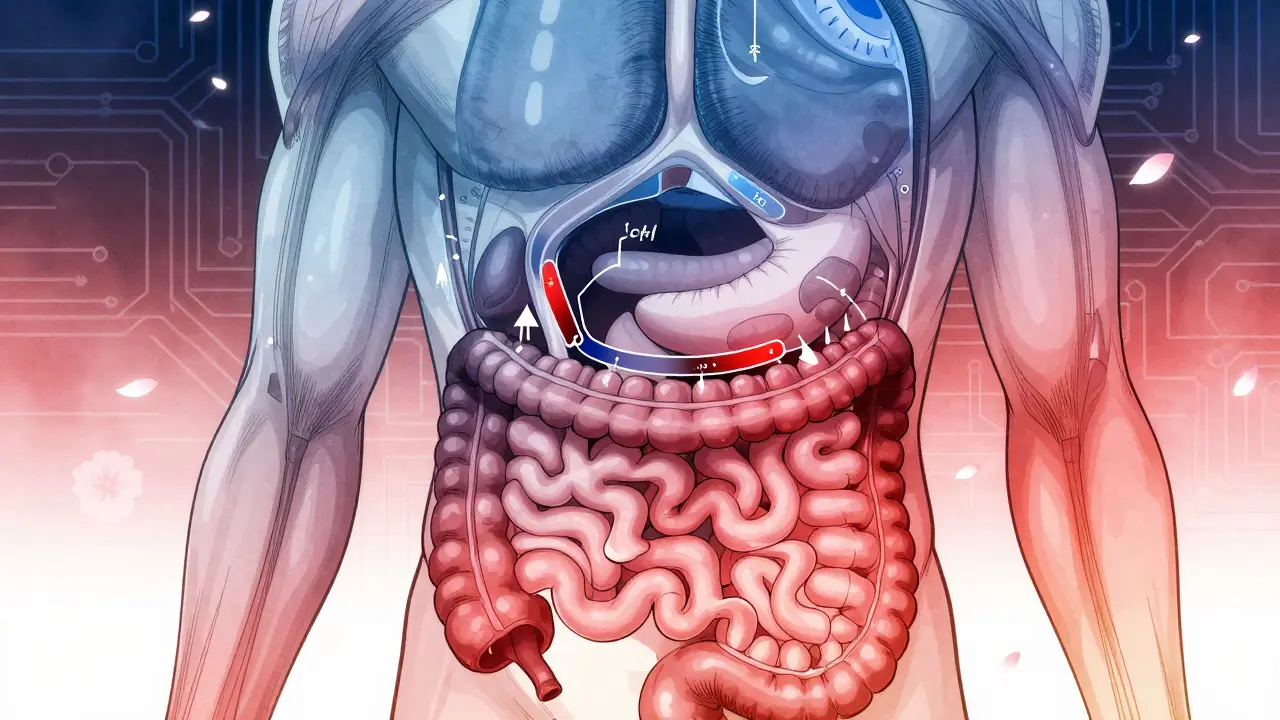
This is where the technology gets interesting in 2026. Early models just tracked ingestion. Newer iterations go deeper. Some platforms, like the IntelliCap developed by Philips Research, monitor internal metrics such as gastrointestinal temperature and pH levels.
Why does that matter? Because side effects often happen before a patient notices symptoms. If a medication causes an adverse gut reaction, the internal sensor picks up pH shifts or temperature spikes immediately. Instead of waiting for the patient to feel sick, the doctor sees the spike in the data log. This proactive monitoring could theoretically flag toxicity or severe reactions earlier than traditional reporting methods ever could.
In mental health and pain management, detecting changes in physiological parameters helps distinguish between side effects and disease progression. For instance, if a patient reports feeling tired, is it because the drug is too strong, or is the illness worsening? Continuous heart rate data (often within ±2 beats per minute accuracy) alongside the pill data adds context that simple intake records lack.
We are seeing partnerships form to leverage this data. Companies are integrating artificial intelligence algorithms to predict adherence lapses before they happen. An algorithm might notice a patient is moving less (tracked via the patch) and sleeping more irregularly, predicting a missed dose with high accuracy days in advance. This transforms the tech from a recorder to a predictor.
Navigating Privacy and Patient Comfort
You might be asking, “Does this feel like being watched?” Honestly, yes, for many it does. Surveys from 2022 indicate that while patients appreciate the safety net, 61% felt uncomfortable knowing someone else had access to their swallowing habits. The feeling of constant monitoring can cause anxiety.
Data security is the countermeasure. Transmission uses Advanced Encryption Standard (AES) protocols. Under regulations like HIPAA, this information is treated as protected health information. Insurance companies and employers generally cannot access this raw data without explicit consent. The Electronic Frontier Foundation has been vocal about the potential risks of sensitive health data exploitation, urging stricter laws.
However, the comfort factor extends beyond data. Physical comfort is an issue too. About 22% of trial participants stopped using the patch because of skin irritation. Allergies to adhesives are common. Also, elderly users sometimes struggle with the smartphone connectivity required to manage the device. If you can’t pair the patch, you can’t get the benefit. User interface design remains a work in progress for geriatric populations.
Current Adoption and Future Trajectory
Where does this stand today? We aren’t all taking digital pills yet. Market adoption sits heavily in clinical trials. Pharmaceutical companies love them for research because they provide irrefutable evidence of compliance. In real-world clinical settings, they are still niche.
However, regulatory bodies are catching up. The Food and Drug Administration (FDA) began approving these combination products years ago, starting with psychiatric medications. More recently, approvals expanded to tuberculosis treatments. As the market matures-projected to reach over $2 billion by 2029-we expect costs to stabilize.
Funding reimbursement is the biggest hurdle. Currently, payers view the technology as an optional add-on. Until insurance plans routinely cover the subscription fees for the patches and software, widespread personal use will remain limited. We are currently in the transition phase where high-risk regimens get priority approval, while routine medications wait for cost-benefit analysis.
Is a digital pill safe to swallow?
Yes, the sensor components are designed to pass safely through the digestive system. They are made from biocompatible materials like silicon and magnesium that dissolve or pass naturally. The sensors are incredibly small, typically 5mm in diameter.
How much does the system cost?
Costs vary significantly by program. Clinical trials usually absorb the cost for participants. Direct-to-consumer pricing can range from hundreds of dollars annually for the patch subscriptions and software access, though insurance coverage is inconsistent.
Can anyone buy a digital pill online?
Generally, no. These require a prescription for the underlying medication. Plus, enrollment involves setting up medical accounts. You cannot buy the electronic component separately without the associated pharmaceutical product.
Does it work with every medication?
Not yet. Currently, specific brands like Abilify MyCite are integrated. Generic pills do not contain the sensor. The sensor must be manufactured directly into the medication coating or casing during production.
Who sees my data?
Your prescribing physician and designated caregivers see the adherence logs. Data is transmitted securely via HIPAA-compliant channels. Employers or insurers do not receive automatic updates without your permission.
Vicki Marinker
April 2, 2026 AT 23:24This entire concept feels like a step too far into corporate surveillance disguised as healthcare progress.
Sam Hayes
April 3, 2026 AT 14:39i honestly think the tech is solid but people forget the patch needs changing every three days
if you shower without care the data stream stops until you snap it back on
Hudson Nascimento Santos
April 4, 2026 AT 05:20The question of autonomy remains central here.
We must consider what freedom truly means in medicine.
Technology often encroaches on private life.
This creates a dependency on external validation.
Patients stop trusting their own bodies instinctively.
They rely on the machine instead of internal cues.
That shift alters the relationship between doctor and patient.
The dynamic becomes data-driven rather than experience-based.
We risk turning illness management into compliance tracking.
Such tools prioritize metrics over holistic well-being.
A spike in temperature tells us little about pain.
Emotional distress goes unnoticed by these sensors.
We cannot quantify the human spirit with circuits.
True healing requires connection not just monitoring.
Society must debate where the boundary lies.
Freedom of choice should remain intact regardless of the hardware.
The Charlotte Moms Blog
April 5, 2026 AT 02:50Data breaches are frequent, and this system invites new risks!!! Privacy isn't optional, it is essential!!! The encryption looks good on paper, but history proves systems fail!
We must demand better protection protocols before trusting our health!
Joey Petelle
April 5, 2026 AT 19:36Oh please, save the doomsday prediction for the next apocalypse cult gathering!
The real world cares more about getting the medication than playing spy games.
HARSH GUSANI
April 6, 2026 AT 00:31America leads the way on tech innovation 🇺🇸
Other countries lag behind due to weak regulations 🚫
We must protect our citizens with the best tools available 👀
Dee McDonald
April 7, 2026 AT 08:25You need to focus on saving lives not borders!!
Healthcare is a universal right that deserves advanced tools! This technology can save thousands from missed doses!
We push forward because hesitation kills patients slowly!
Joseph Rutakangwa
April 8, 2026 AT 11:28adherence is key
Goodwin Colangelo
April 8, 2026 AT 12:47You are absolutely right about that!
When we miss doses the disease gets worse faster.
Tools help us stay on track and feel better overall.
Let us all support each other in staying healthy today.
angel sharma
April 9, 2026 AT 00:24I have been thinking deeply about how this changes society fundamentally and i believe we are standing at the precipice of a new era where biology merges seamlessly with digital intelligence.
It is quite remarkable how far we have come since the simple paper diary was the only record of intake.
Now we have machines living inside us guiding us through our daily routines with precision that rivals any surgeon.
The implications stretch far beyond just remembering a pill at noon.
We are talking about preventative measures that stop crises before they even begin.
Imagine if chronic diseases could be managed proactively rather than reactively.
The cost savings would be astronomical for the healthcare system globally.
We should embrace this evolution with open arms and optimistic hearts.
Every person deserves the chance to live their longest life possible.
The future is bright for those who adopt these methods early.