Emergency Medication List Validator
Check Your Emergency Medication List
This tool helps you verify that your emergency medication list contains all critical information. Based on CDC, FDA, and medical guidelines, the most complete emergency lists include these items.
Required Information
Check each item below. Click the box if your list includes it.
Every year, thousands of people are rushed to emergency rooms unconscious or unable to speak. In those critical minutes, first responders don’t have time to guess what medications you’re taking. That’s where a simple, updated emergency medication list can save your life.
You don’t need to be elderly or have a chronic illness to need this. Even if you take just one prescription, a single drug interaction can turn a minor accident into a life-threatening event. A 2022 FDA report found that nearly two out of three American adults take at least one prescription drug. More than 40% take two or more. And when you mix those with over-the-counter painkillers, vitamins, or herbal supplements, the risk of a dangerous reaction grows fast.
Why Your Medication List Matters More Than You Think
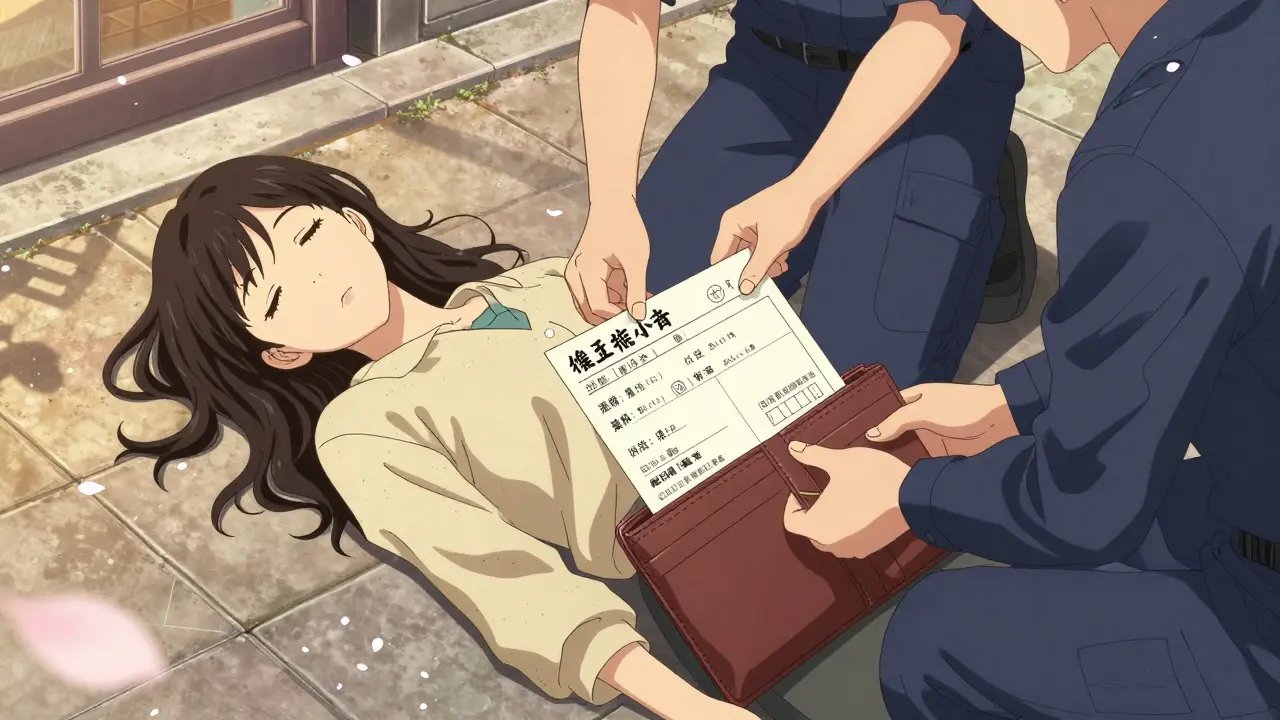
Imagine you fall and hit your head. You’re dazed. You can’t remember your name, let alone what pills you took this morning. Paramedics arrive. They need to know: Are you on blood thinners? Do you have a severe allergy to penicillin? Is your insulin dose 10 units or 20? If they guess wrong, they could give you a drug that stops your heart.
This isn’t hypothetical. A 2020 study in the Annals of Internal Medicine showed patients who brought an up-to-date medication list to the hospital had 37% fewer errors in their treatment. In one real case, a nurse in Philadelphia recognized a patient’s wallet card listed warfarin - a blood thinner - and stopped emergency antibiotics that would have caused fatal bleeding. That card was updated just two days before the accident.
But here’s the problem: only 38% of adults keep their medication list current. The rest? They forget. They lose it. Or worse - they write down what they think they take, not what they actually take.
What to Include on Your Emergency Medication List
A good emergency card isn’t just a scribbled note. It needs to be clear, complete, and easy for someone else to read - even if they’re not a doctor.
Here’s exactly what to list, based on guidelines from the CDC, FDA, and leading hospitals:
- Prescription drugs: Generic name, brand name (if different), strength, how often you take it, and why (e.g., “Lisinopril 10mg - for high blood pressure”).
- Over-the-counter meds: Tylenol, ibuprofen, antacids, sleep aids - even if you think they’re “harmless.”
- Vitamins and supplements: Vitamin D, fish oil, magnesium, melatonin. These can interact with prescriptions just like real drugs.
- Herbal products: St. John’s wort, ginkgo, garlic pills. Many people don’t realize these affect blood clotting and anesthesia.
- Allergies and reactions: Not just “penicillin allergy.” Write “rash and swelling after penicillin” or “anaphylaxis after aspirin.”
- Discontinued meds: If you stopped something because of side effects, note it. “Stopped metformin due to stomach cramps - June 2023.”
- Emergency contacts: Name, phone, relationship. At least two people, one local and one out-of-town.
- Medical conditions: Diabetes, heart disease, kidney failure, epilepsy - anything that changes how you’re treated.
- Blood type: Optional, but helpful if you need a transfusion.
For older adults or those with multiple conditions, add your code status - whether you want CPR if your heart stops. This isn’t morbid. It’s about control.
Paper vs. Digital: Which One Works Better?
You have two main choices: paper or phone. Each has pros and cons.
Paper cards are simple. You can print a free template from the CDC or FDA, or buy one for under $5 on Etsy. Keep it in your wallet, purse, or taped to the inside of your medicine cabinet. The CDC recommends using pencil - that way, you can erase and update it when your dosage changes. No batteries. No signal. No lock screen.
But paper can be lost. Forgotten. Outdated. A 2021 study found only 18% of emergency patients had a paper list on them - even though 78% of those who did had it used by medics.
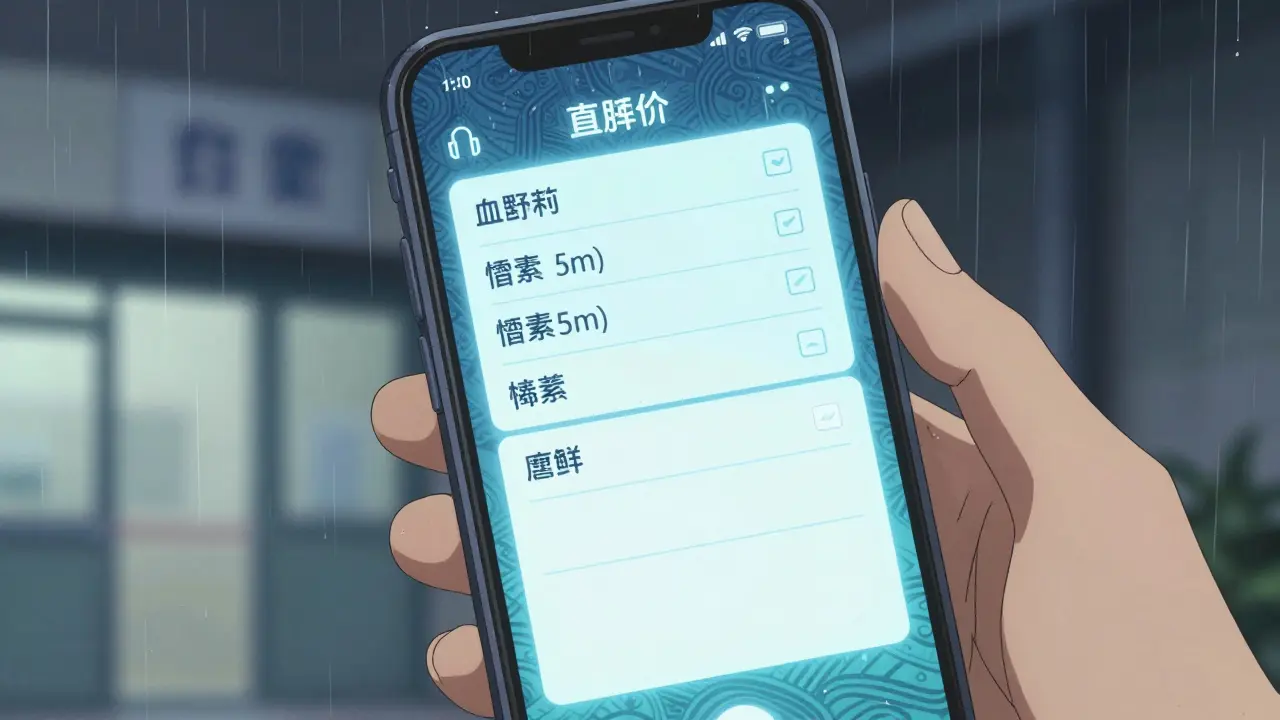
Digital options are more convenient for most people now. Apple’s Medical ID in the Health app (iOS 8 and later) and Android’s Emergency Information feature (Android 5.0+) let you store your list so it’s visible even when your phone is locked. Just tap “Emergency” on the lock screen, then “Medical ID.”
Here’s the catch: 92% of people own smartphones, but only 32% of unconscious patients with phones had their Medical ID accessed by first responders. Why? Phones break. Batteries die. People forget to turn it on. Or they fill it out once and never update it.
The smartest move? Do both. Keep a paper copy in your wallet and set up your phone’s Medical ID. That way, you cover every scenario.
How to Build Your List - Step by Step
Don’t try to do this in your head. Sit down with your meds and follow these steps:
- Gather everything. Pull out all pill bottles, supplement boxes, and prescription bags. Include anything you’ve taken in the last 30 days.
- Write down each one. Use the checklist above. Don’t skip anything. If you’re unsure of the generic name, check the bottle or call your pharmacist.
- Use simple language. Write “Take one tablet by mouth every morning with food” instead of “PO q.d. with meals.”
- Update it every time you change something. New prescription? Cross out the old one. Stopped a pill? Write “Discontinued - 1/5/2026.”
- Share it. Give a copy to your primary doctor, pharmacist, and at least one family member. If you live alone, leave one with your neighbor.
- Review it at every appointment. Your pharmacist can catch errors. Your doctor can spot interactions. Don’t skip this step.
It takes 15 to 20 minutes the first time. After that, updates take 2 to 3 minutes. That’s less time than scrolling through social media.
Common Mistakes - And How to Avoid Them
Most people mess up in the same ways:
- Writing brand names only. “I take Lipitor.” But if you’re in a hospital, they might give you atorvastatin - the generic. Write both: “Lipitor (atorvastatin) 20mg.”
- Forgetting supplements. “I don’t take any vitamins.” But you do - you take ginkgo for memory and turmeric for joints. Those count.
- Using vague language. “Take as needed.” What does that mean? “Take 1 tablet if pain is above 5/10, max 2 per day.”
- Not updating after hospital visits. You get discharged with a new med. You forget to add it to your list. That’s how errors happen.
- Leaving it in your car or on your dresser. If you’re found unconscious on the street, they won’t find it. Keep it on your person.
One of the biggest dangers? An outdated list. Dr. David Mendelson of JAMA wrote that an inaccurate list can be more dangerous than no list at all. Why? Because responders might trust it - and make a fatal mistake.
Who Should Have One - And Who Needs It Most
You might think this is only for seniors. But it’s for anyone taking more than one medication - no matter their age.
These groups benefit the most:
- People over 65 - 89% take at least one prescription.
- Those on five or more drugs - polypharmacy increases risk dramatically.
- Patients with chronic conditions - diabetes, heart failure, epilepsy.
- People with allergies - especially to antibiotics or NSAIDs.
- Those who use herbal remedies or supplements - many doctors don’t ask about these.
- Parents of young children - kids’ weights change fast. Dosing must be exact.
If you’re caring for someone else - a parent, partner, or child - help them make their list. Keep a copy for yourself. You might be the one who needs to hand it to paramedics.
Where to Get a Template - Free and Reliable
You don’t need to buy anything. Here are the best free, trusted templates:
- Centers for Disease Control and Prevention (CDC): Their “My Medications List” is simple, clear, and designed for older adults. Available on cdc.gov.
- U.S. Food and Drug Administration (FDA): Their “My Medicines” form includes space for allergies and emergency contacts. Updated in 2022.
- Children’s Hospital of Philadelphia: Best for parents. Includes weight in kilograms and liquid dosing instructions.
- CVS Pharmacy: Offers a printable wallet card you can fill out online.
Commercial templates on Etsy offer nicer designs, but they’re not more accurate. Stick with government sources - they’re medically reviewed.
Final Tip: Make It a Habit
Think of your emergency medication list like your seatbelt. You don’t wear it because you expect a crash. You wear it because you know crashes happen - and you want to be ready.
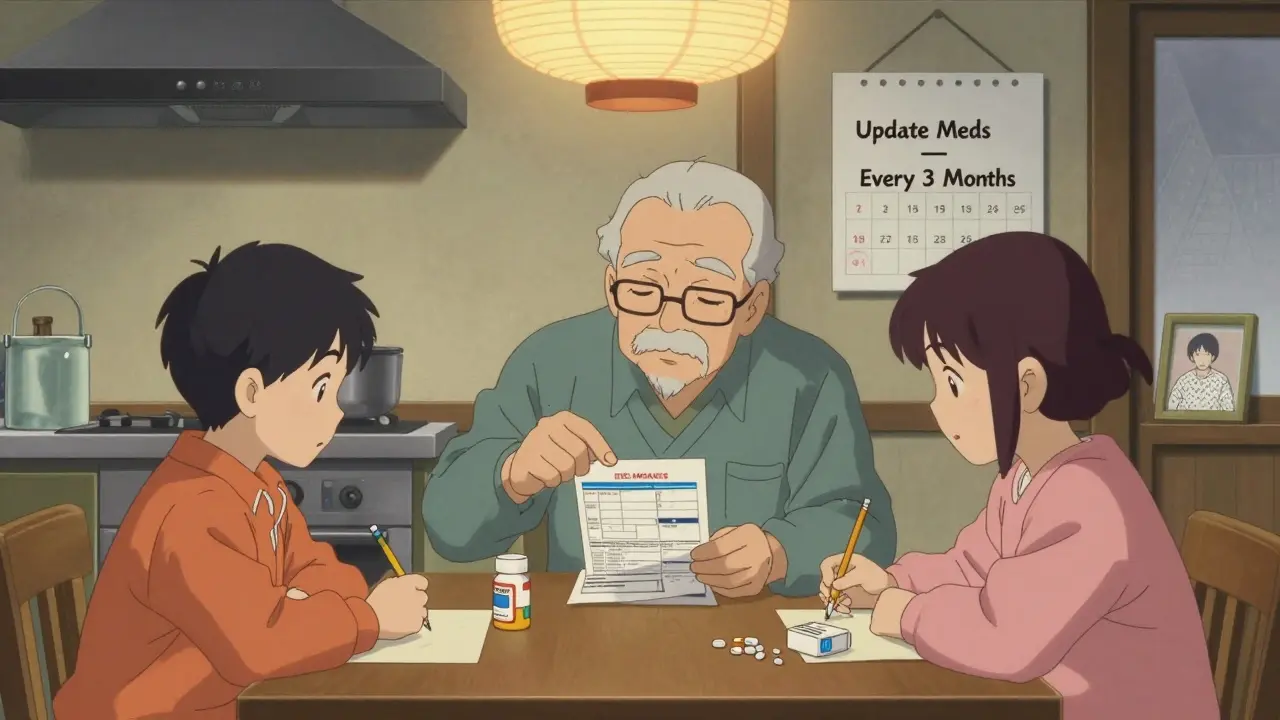
Set a reminder on your phone: “Update meds - every 3 months.” Or tie it to your doctor visits. Every time you see your pharmacist, ask: “Is this list still right?”
The goal isn’t perfection. It’s readiness. One card. One update. One moment when it could mean the difference between life and death.
Do I need to list vitamins and supplements on my emergency medication list?
Yes. Vitamins, herbal products, and supplements can interact with prescription drugs just like real medications. For example, St. John’s wort can reduce the effectiveness of blood thinners, and garlic supplements can increase bleeding risk during surgery. Emergency responders need to know everything you’re taking - even if you think it’s harmless.
What if I forget to update my list after changing my meds?
An outdated list can be dangerous. If you take a new drug and don’t add it, responders might give you something that interacts badly. The CDC recommends updating your list every time you make a change - even if it’s just stopping a pill. Set a phone reminder for every 3 months, or tie it to your pharmacy visits. Your pharmacist can help you verify what’s current.
Can I just rely on my phone’s Medical ID instead of a paper card?
It’s better than nothing, but not enough. Phones can die, break, or be locked. Emergency responders might not know how to access your Medical ID. The safest approach is to carry a paper copy in your wallet and have your phone set up too. That way, you cover both scenarios - whether you’re found with your phone or without it.
Should I include my blood type on the list?
It’s optional, but helpful. If you need a blood transfusion during an emergency, knowing your blood type can save valuable time. If you don’t know your blood type, get it tested at a local clinic or during your next physical. Add it to your list if you can.
Who should I give a copy of my emergency card to?
Give copies to your primary doctor, pharmacist, and at least two trusted people - like a spouse, sibling, or close friend. If you live alone, leave one with a neighbor. Also, keep a copy in your car and with your important documents. The more places it is, the more likely someone will have it when you need it.
Ian Long
January 9, 2026 AT 23:44I used to think this was for old folks until my buddy got rushed in after a bike crash-didn’t even know he was on blood thinners. Turned out his pharmacy had updated his script but he never told anyone. Paramedics almost gave him aspirin. Scary stuff. I printed mine out last week and taped it to my fridge. Now I update it every time I get a new script. No excuses.
Heather Wilson
January 11, 2026 AT 02:41This post is dangerously oversimplified. You assume everyone has access to printers, smartphones, or stable internet. What about the homeless? The elderly without family? The undocumented immigrants afraid to go to pharmacies? This isn't a life-saving tool-it's a privilege checklist disguised as public health advice. And don't get me started on the FDA's 'trusted templates'-they're written by bureaucrats who've never held a pill bottle in their life.
Micheal Murdoch
January 13, 2026 AT 01:46There’s something deeply human about this. We’re taught to plan for fires and earthquakes, but not for the quiet, sudden moments when our bodies betray us. I made my list after my mom had a stroke and couldn’t tell them what meds she was on. Took me 20 minutes. Now I keep it in my wallet, my phone, and my car glovebox. I even gave copies to my coworkers. It’s not about being prepared-it’s about refusing to let fear win. And yeah, it’s okay if it’s messy. Just make sure it’s there.
Also-St. John’s wort? Yeah, I forgot that one for years. Turns out it kills the effectiveness of my antidepressant. Don’t be like me.
Patty Walters
January 14, 2026 AT 22:33just made mine real quick-i forgot i was still taking that ginkgo biloba from 2021 lmao. also added my mom’s number as emergency contact bc she’s the only one who remembers if i took my blood pressure pill. ps: i wrote ‘not allergic to penicillin’ instead of ‘no reaction’ bc i dont wanna sound like a robot. 🙃
tali murah
January 15, 2026 AT 23:07Oh, so now we’re all supposed to be medical administrators? Let me guess-next they’ll require us to memorize our own lab results and carry a laminated flowchart of drug interactions in our purse. How quaint. You know what saves lives? Emergency rooms. Not your little paper card that gets lost between your gym shorts and expired coupons. This is performative safety. It makes you feel responsible while absolving the system of real accountability.
Jenci Spradlin
January 16, 2026 AT 19:43my pharmacist printed me a card last week and i put it in my wallet right next to my insurance card. also added my insulin dose-i used to write ‘10’ but now i write ‘10 units subcutaneous before breakfast’ so no one guesses wrong. also included my ‘no code’ status bc i don’t wanna be revived if i go. simple. done.
Maggie Noe
January 17, 2026 AT 23:56just updated mine with my new antidepressant and my CBD gummies 🌿. also added ‘do not intubate if seizure’ bc i had one last year and the ER doc didn’t know i was on topiramate. my phone’s Medical ID is turned on but i still keep the paper copy in my bra. yes, i said bra. if you’re unconscious on the street, they’re gonna search your pockets-better make sure it’s somewhere they won’t miss. 😘
Gregory Clayton
January 19, 2026 AT 01:19Why are we being told to do this like it’s some patriotic duty? I’m not a walking pharmacy. If I pass out, let the damn doctors figure it out. I pay taxes for this shit. Stop making us into our own medical assistants. This isn’t America anymore-it’s a control freak’s checklist with extra steps.
Catherine Scutt
January 20, 2026 AT 20:04So you’re telling me I need to track every vitamin I’ve ever taken since college? Even the ones I bought on impulse and never finished? I have a 3-year-old. I barely remember where I put my keys. This is unrealistic. And now I’m supposed to give copies to neighbors? What if they’re creepy? What if they lose it? This feels like guilt-tripping people into over-preparation for a scenario that’s statistically rare.
Darren McGuff
January 21, 2026 AT 09:50I’ve been a paramedic in London for 18 years. Paper lists? Rare. Phone IDs? Often locked or outdated. The ones who survive? The ones who have someone who knows their meds. I once had a guy who had 11 prescriptions. No list. No phone. But his sister showed up 10 minutes later with a handwritten note on a napkin-correctly updated. That’s the real hack: have one person who knows you. Not a card. Not an app. A person.
Ashley Kronenwetter
January 22, 2026 AT 03:53While the intent of this guide is commendable, the practical implementation remains inconsistent across socioeconomic strata. The assumption that individuals possess the technological literacy to navigate digital health platforms, or the material resources to acquire printed templates, undermines the universality of the proposed solution. A more equitable approach would involve institutional integration-pharmacies auto-generating updated lists upon prescription refills, or EHR systems pushing notifications to patients. Technology should serve the patient, not burden them with administrative labor.
Aron Veldhuizen
January 23, 2026 AT 04:35Let’s be honest-this entire system is a scam designed to make you feel like you’re in control while the real problem-pharmaceutical overprescription, lack of doctor communication, and insurance-driven polypharmacy-remains untouched. You think a laminated card stops a doctor from prescribing you another drug that interacts with your 12 others? No. It just makes you feel like a good little patient. The real emergency isn’t your missing meds list-it’s a healthcare system that treats you like a walking prescription list, not a human being.