
When a life-saving drug runs out, hospitals don’t just wait for more to arrive. In the U.S., the FDA steps in with a quiet but powerful tool: extending the expiration dates of existing stock. This isn’t a loophole. It’s a carefully regulated move designed to keep patients alive when supply chains break down.
Why expiration dates get extended
Expiration dates on drugs aren’t arbitrary. They’re based on stability testing-how long a medication stays safe and effective under normal storage conditions. But those tests are done before a drug hits the market. Once it’s in warehouses, the FDA can allow manufacturers to prove the drug still works beyond that date. This only happens when there’s a shortage. The FDA defines a shortage as when demand exceeds supply. And right now, that’s happening more often than you might think. As of late 2024, there were over 340 drugs on the FDA’s shortage list with approved expiration date extensions. That’s not a small number. It’s a lifeline. The most common drugs getting extensions? Propofol for anesthesia, epinephrine for allergic reactions, and IV fluids like saline. These aren’t optional meds. They’re used in emergency rooms, ICUs, and operating theaters every day. If they disappear, people die.How the FDA approves extensions
Manufacturers don’t just slap a new date on a bottle. They submit real stability data to the FDA-data showing the drug still has the right strength, purity, and identity months or even years after its original expiration date. The FDA reviews every submission. They check for chemical breakdown, microbial growth, and physical changes. If the data holds up, they approve an extension. Most commonly, that’s one year. But some cases go further. In October 2024, the FDA allowed certain Baxter IV solutions to be used up to 24 months after manufacture, not just the original 12-18 months. It’s not automatic. Only drugs labeled as “critical” qualify. That means no extensions for vitamin supplements or migraine pills. It’s reserved for medications with no good alternatives. Think: chemotherapy drugs, antibiotics for resistant infections, or heart medications.What’s in the FDA’s official list
The FDA publishes a searchable, daily-updated list of drugs with extended expiration dates. It’s not a general list of all shortages. It’s only the ones with approved date extensions. Each entry includes the exact lot number, NDC code, original expiration date, and the new extended date. For example:- Meperidine hydrochloride injection (Hospira, NDC 0409-1178-30, Lot HN8657): extended from Sept 30, 2025 to Jan 30, 2026
- Ethiodized oil injection (Guerbet, NDC 67684-1901-2, Lot 24LF701A): extended from Dec 31, 2025 to Mar 31, 2026
- Dantrolene sodium injection (Eagle Pharmaceuticals): extended 6-9 months depending on lot
No relabeling required
Here’s something surprising: the FDA doesn’t require manufacturers to repackage or relabel these drugs. That means a vial with an original expiration date of 2024 might still be in use in 2026-if it’s on the approved lot list. Hospitals and pharmacies have to track this manually. Pharmacists must cross-check the lot number on the bottle with the FDA’s list before giving it to a patient. There’s no barcode scan that auto-updates the date. No system in most hospitals flags this automatically. It’s a manual, error-prone process. The FDA’s message is clear: if new stock arrives, use that instead. The extended-date products should be phased out. But in the middle of a shortage, that’s not always possible.Who decides what gets extended?
The FDA doesn’t act alone. They rely on manufacturers to report potential shortages early. Thanks to the Food and Drug Administration Safety and Innovation Act (FDASIA) of 2012, companies must notify the FDA of any manufacturing interruption that could lead to a shortage-even if it’s temporary. That early warning lets the FDA get ahead of the problem. Instead of waiting until a drug vanishes from shelves, they can start reviewing stability data months in advance. Another key law, the Project BioShield Reauthorization Act (PAHPRA) of 2013, gives the FDA special authority to extend expiration dates for medical countermeasures-drugs stockpiled for bioterrorism, pandemics, or radiation emergencies. In July 2024, Tamiflu and Relenza got extended dates after the HHS Secretary declared a public health emergency related to flu outbreaks.
What this means for patients and providers
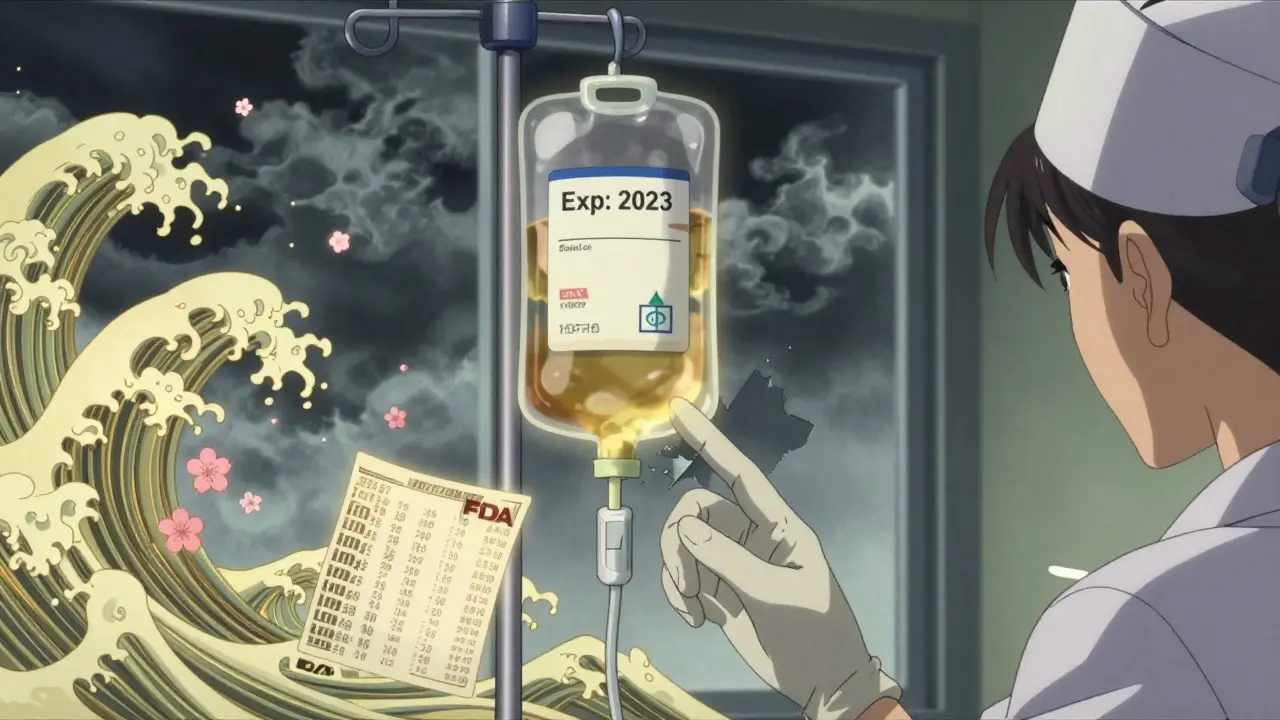
For patients, this system means a higher chance of getting the right treatment when it’s needed. For doctors and nurses, it means extra work-and extra risk. A nurse might have a vial of epinephrine labeled “expires 2023” but approved for use until 2025. If they don’t check the FDA list, they might throw it out. Or worse, they might give a patient a vial that’s truly expired and unsafe. The American Medical Association and the American Hospital Association both direct providers to the FDA’s official database. They warn: never assume. Always verify the lot number. There’s also a psychological burden. Providers feel guilty when they have to tell a patient, “We don’t have your usual medication.” Even with extensions, the anxiety of shortages lingers.It’s a band-aid, not a fix
Expiration date extensions are temporary. They’re not meant to replace better manufacturing, more competition, or diversified supply chains. They’re a stopgap. The real problem? Too many critical drugs are made by just one or two factories. If a single plant shuts down for quality issues-or if raw materials get stuck in a port-the whole country feels it. The FDA tries to fix this by working with companies to fix production issues, speeding up inspections, and helping new manufacturers enter the market. But progress is slow. Global supply chains are fragile. And many drugs are so complex to make that only a handful of companies can produce them. As pandemic-related disruptions fade, some shortages have cleared. But new ones keep popping up. In December 2024, the FDA added empty IV bags to its medical device shortage list. That’s not a drug-but it’s just as vital. No bag? No IV fluids. No fluids? No survival for many ICU patients.What’s next?
The FDA says it will keep using expiration date extensions as long as shortages persist. It’s a proven tool. In 2024 alone, over 100 new extensions were approved. That’s more than in any previous year. But experts agree: the system can’t keep up forever. Without investment in domestic manufacturing, better inventory tracking, and more competition, we’ll keep seeing the same cycle-shortage, extension, panic, temporary relief, repeat. For now, the FDA’s extension program is one of the few things standing between patients and a medical crisis. It’s not perfect. But when there’s no other option, it’s the best one we’ve got.Are drugs with extended expiration dates safe?
Yes, if they’re on the FDA’s approved list. The FDA only approves extensions after reviewing real stability data showing the drug still meets strict standards for strength, purity, and safety. These aren’t guesses-they’re science-backed decisions. But safety only applies to the specific lot numbers listed. Never assume an entire product line is extended.
Can I use a drug past its original expiration date if it’s not on the FDA list?
No. Only drugs with FDA-approved extensions are safe to use beyond their labeled date. Using any other expired medication is risky and not recommended. The FDA does not endorse or approve extensions for drugs not listed in their official database.
How do I check if my hospital is using extended-date drugs?
Ask your pharmacy department. They should have access to the FDA’s searchable drug shortage database and track approved lot numbers. Hospitals are required to verify each lot against the FDA’s list before administering any drug with an extended expiration date. If you’re unsure, request to see the documentation.
Why doesn’t the FDA just make more of these drugs?
Making drugs isn’t like printing more paper. Many critical medications require complex, highly regulated manufacturing processes. Only a few factories worldwide can produce them. Building new facilities takes years and millions of dollars. The FDA can’t just order more-it has to work with existing manufacturers to fix problems, which often takes time.
Do other countries do this too?
Some do, but the U.S. system is among the most transparent and widely used. The European Medicines Agency and Health Canada have similar programs, but they’re less public and less frequently applied. The FDA’s daily-updated public database makes it unique in scope and accessibility.
Meina Taiwo
December 21, 2025 AT 20:31Extended expiration dates are science-backed, not magic. The FDA requires real stability data-chemical integrity, microbial limits, potency retention. This isn’t guesswork. It’s pharmacology.
Hannah Taylor
December 21, 2025 AT 20:55lol so the gov just lets pharma companies stretch dates cuz they’re lazy? next they’ll say your aspirin from 2018 is still good. trust the system? yeah right.
Jon Paramore
December 22, 2025 AT 16:03Lot-level tracking is the critical control point here. Without NDC and lot number verification, you’re gambling with IV meds. Most hospitals still use paper logs or Excel sheets. No HL7 integration. No EHR auto-flagging. It’s a compliance nightmare waiting to happen.
Cara C
December 24, 2025 AT 05:27It’s wild how this system works under the radar. Nurses and pharmacists are doing extra work to keep people alive, and most folks have no idea. Kudos to them. And thanks to the FDA for having a practical, science-driven backup plan.
Jay lawch
December 24, 2025 AT 21:56Let’s be real-this isn’t about safety. It’s about corporate profit masking as public health. The same companies that make these drugs also lobby against generic competition. They design supply chains to be brittle so they can charge more. The FDA? Just the enabler. The whole system is rigged to keep prices high and consumers dependent. No one wants to admit it, but this is capitalism in its most grotesque form.
Sandy Crux
December 25, 2025 AT 06:07...and yet, one must ask: is this not a tacit admission of systemic failure? The FDA, an institution ostensibly charged with safeguarding public health, now functions as a damage-control entity for pharmaceutical oligopolies. The very notion that a vial of epinephrine-critical, life-sustaining-is permitted to remain in circulation beyond its labeled date, without repackaging, without regulatory re-issuance, is not merely alarming-it is an affront to pharmaceutical governance as a discipline.
Peggy Adams
December 27, 2025 AT 03:54so if i find a bag of saline in my basement from 2021 with the right lot number... am i supposed to just use it? what if i’m in a survival situation? the fda doesn’t care about me, does it?
Christina Weber
December 28, 2025 AT 02:06It’s unacceptable that hospitals rely on manual cross-referencing of FDA spreadsheets to determine whether a life-saving drug is still safe to administer. This isn’t 1999. We have QR codes, blockchain ledgers, and AI-driven inventory systems. The fact that we’re still using paper logs and phone calls to verify expiration extensions is a national disgrace. Someone should be fired for this.
mukesh matav
December 29, 2025 AT 07:08Interesting read. I didn’t know the FDA had this process. It’s good they’re using science instead of panic. But I wonder how many people actually know their meds have been extended. Maybe the system works, but awareness is low.
Swapneel Mehta
December 31, 2025 AT 05:28This is actually one of the few things the FDA does right. It’s not flashy, but it saves lives without needing new factories or billion-dollar investments. The real win? They’re transparent about it. You can look up every lot. That’s more than most governments do. Hope they keep it going.