Key Takeaways
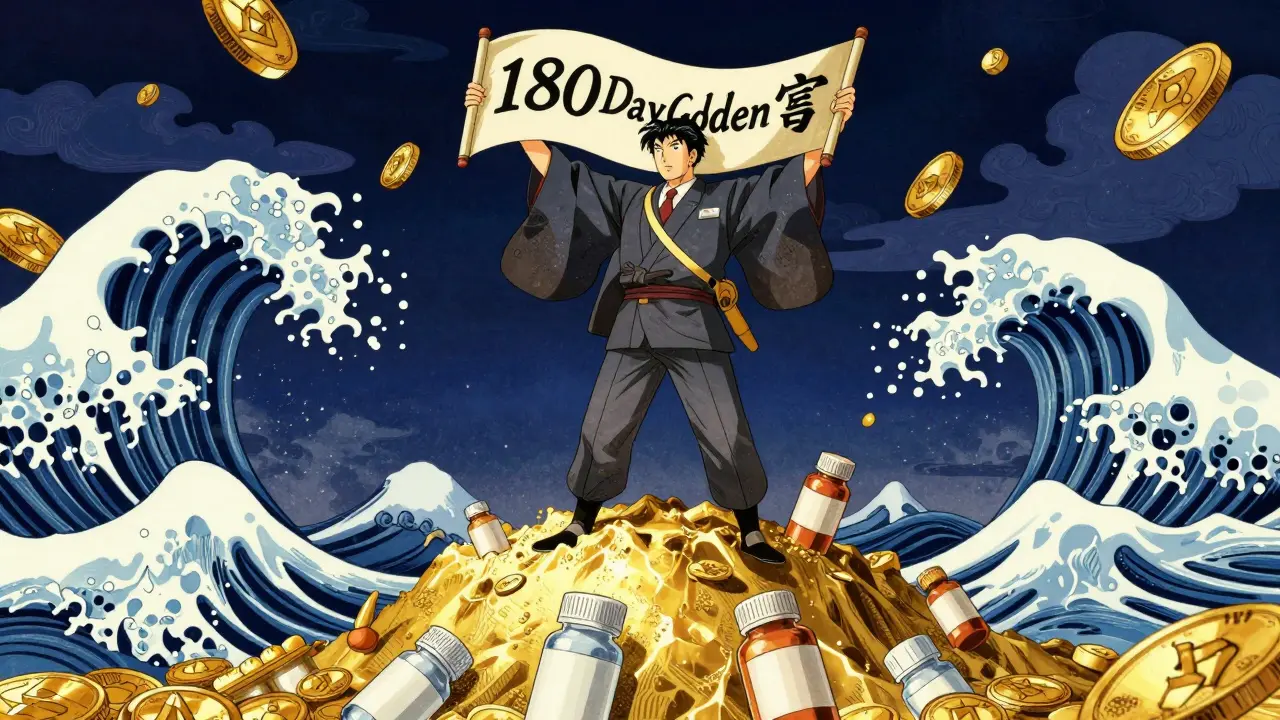
- The first generic entrant gets a 180-day head start (exclusivity) to recover legal costs.
- Prices plummet as more competitors enter, often stabilizing at 17% of the brand price with 5+ players.
- Brand companies often fight back by launching their own "authorized generics" to steal market share.
- Entry timing is a gamble involving PBM contracts, manufacturing capacity, and patent settlements.
The First Mover: The 180-Day Golden Window
In the US, the Hatch-Waxman Act is the 1984 law that created the modern generic drug industry by balancing patent protection with the need for affordable medicine. Under this system, the first company to successfully challenge a brand's patent doesn't just enter the market; they get a prize. This is the 180-day marketing exclusivity period.
Why give one company a six-month head start? Because fighting a pharmaceutical giant in court is expensive-often costing between $5 million and $10 million. The 180-day window allows the first generic to capture 70-80% of the market and price their product at 70-90% of the original brand's cost. It's a high-margin sprint designed to make the risk of litigation worth it.
The Price Cliff: How More Competitors Crash the Value
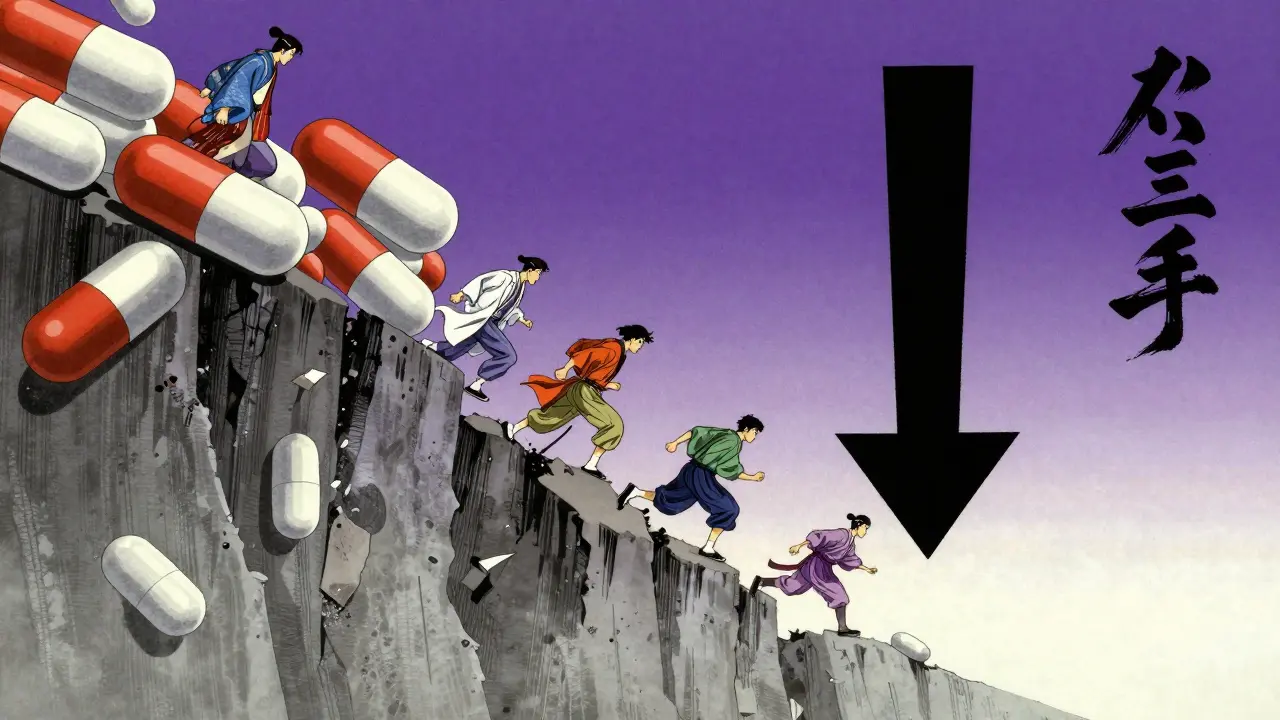
Once that exclusivity window slams shut, the market enters a phase of rapid erosion. This is where the patent timeline shifts from a monopoly to a commodity war. The price doesn't just dip; it craters. Data from the FDA shows a very predictable slide: with one generic, prices stay around 83% of the brand price. Once a second competitor arrives, that drops to 66%. By the time five or more players are in the game, prices typically stabilize at a meager 17% of the original brand cost.
Look at the case of Crestor (rosuvastatin). In a market worth $2.1 billion, the price plummeted from $320 per month for the brand to just $10 per month within 18 months of multiple generics entering. The steepest decline usually happens between the second and third entrants, where the market realizes the drug is now a commodity and the bidding war turns aggressive.
| Number of Generic Competitors | Average Price (% of Brand Price) | Market Phase |
|---|---|---|
| 1 (Exclusive) | 70-90% | Recovery Phase |
| 2 | 66% | Early Erosion |
| 3 | 49% | Rapid Decline |
| 4 | 38% | Commoditization |
| 5+ | ~17% | Price Floor |
The Sneaky Strategy: Authorized Generics
Brand companies aren't just sitting around watching their profits vanish. They use a tactic called the Authorized Generic (or AG). An Authorized Generic is the original brand-name drug sold without the brand label, often through a subsidiary, to compete with generics.
The timing here is brutal. Brand companies often launch an AG on the exact same day the first generic enters the market. This effectively kills the first generic's monopoly. When a brand does this, the first generic's market share can drop from 80% down to 40-50%, slashing their expected revenue by nearly half. Merck did this with Januvia (sitagliptin) in 2019, capturing 32% of the market within six months just by releasing their own version of the drug as a generic.
How Latecomers Actually Get In
If you aren't the first person through the door, how do you make money? Subsequent entrants can't rely on high prices, so they play a different game. First, they have a cost advantage. Since the first generic already did the hard work of patent challenges and bioequivalence studies, later players can reduce their development costs by 30-40%.
However, the battle shifts from the lab to the boardroom. In the US, Pharmacy Benefit Managers (PBMs) hold the keys. Many PBMs use "winner-take-all" contracts, meaning they give 100% of the formulary placement to one manufacturer. This creates a "second first-mover advantage." If you're the first of the late group to secure a PBM contract, you can grab 80-90% of the remaining market share regardless of when the FDA actually approved your drug.
Many companies also use Contract Manufacturing Organizations (CMOs) to avoid building their own factories. About 78% of later entrants rely on CMOs, compared to only 45% of first entrants. This lowers the barrier to entry but creates a new risk: supply chain fragility. When a single CMO has a quality issue, it can trigger shortages for multiple generic brands at once.
Not All Drugs Are Created Equal: Small Molecules vs. Biosimilars
It's important to distinguish between a simple pill and a complex biologic. The rules for Biosimilars are very different. Biosimilars are highly similar versions of biological medicines, which are derived from living organisms and are much more complex to manufacture than chemical drugs.
Because biosimilars cost a fortune to develop-between $100 million and $250 million-the price erosion is much slower. Even with four or more biosimilar competitors, prices usually stay around 50-55% of the brand price. Compare that to the 17% floor for simple generics, and you can see why companies fight so hard to develop "complex generics" rather than just copying a basic molecule.
The Dark Side of Rapid Entry: Shortages and Instability
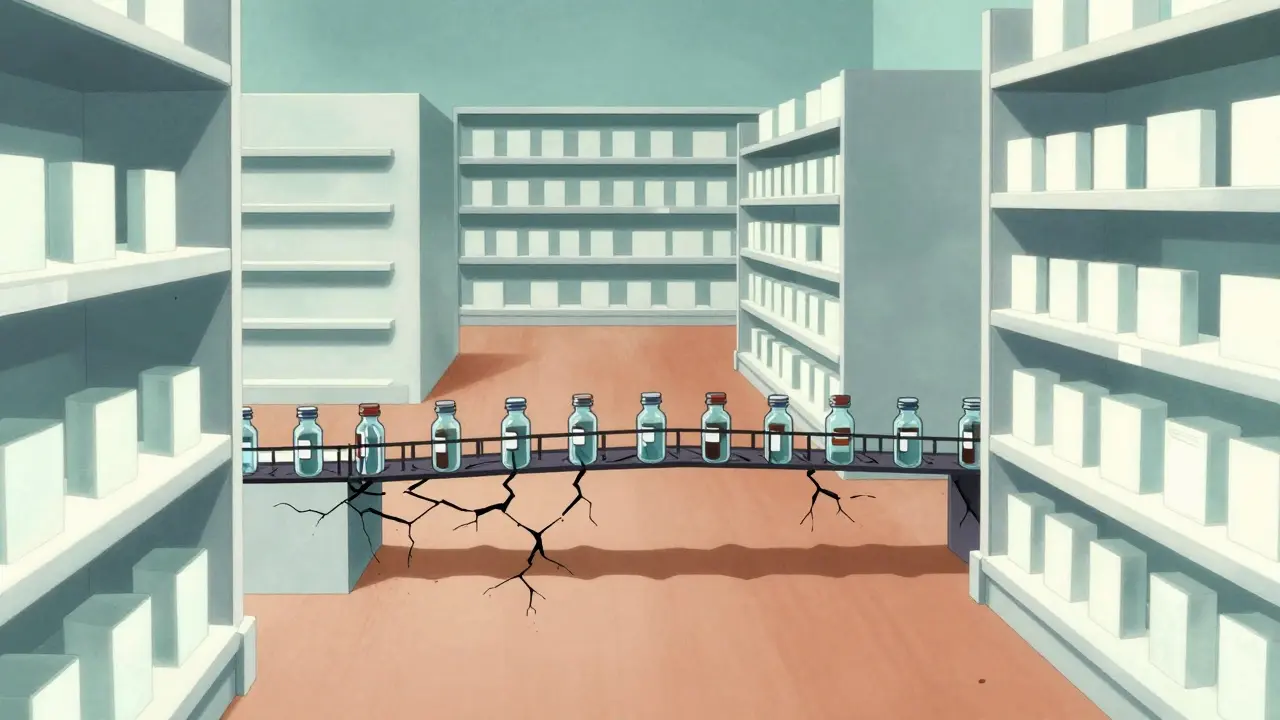
You'd think more competition is always better, but there's a tipping point. When too many companies enter a simple generic market, the price drops so low that it's no longer profitable to make the drug. This leads to a "race to the bottom." Manufacturers start cutting corners or exiting the market entirely.
The results are worrying. Around 37% of generic markets experience shortages within 18 months of multiple generic entry. This is a massive jump from the 8% shortage rate seen during the first generic's exclusivity period. We're seeing a weird paradox where the drive for the lowest possible price is actually making the drug supply less reliable.
Why does the first generic get 180 days of exclusivity?
The 180-day exclusivity period is a reward for the company that takes the legal and financial risk of challenging a brand-name drug's patent. Since patent litigation can cost millions of dollars, this window allows them to sell the drug at a premium price (70-90% of the brand price) to recoup those costs before the market becomes flooded with other competitors.
What is an authorized generic and why do brands use them?
An authorized generic is the original brand-name drug sold without the brand name. Brand companies launch them to protect their revenue streams. By entering the generic market themselves, they compete directly with the first generic entrant, often cutting the competitor's market share in half and maintaining a slice of the generic profit pool.
How do prices change as more generics enter the market?
Prices drop significantly with each new entrant. Typically, one generic keeps prices at 83% of the brand; two competitors drop it to 66%; and three competitors bring it down to 49%. Once five or more manufacturers are competing, prices usually hit a floor at about 17% of the original brand price.
Do biosimilars follow the same price drop as generics?
No, biosimilars have a much slower price decline. Because they are significantly more expensive to develop and manufacture (costing $100-250 million), they maintain higher prices. Even with four or more competitors, biosimilar prices usually remain around 50-55% of the reference product's price.
What is the CREATES Act and how does it help subsequent entrants?
The CREATES Act is a law designed to stop brand companies from blocking generic competitors by refusing to provide drug samples for bioequivalence testing. It has drastically reduced the time it takes for subsequent entrants to get the samples they need-dropping the average wait from 18.7 months to just 4.3 months.
Next Steps for Industry Observers
If you're tracking a specific drug's patent timeline, keep an eye on the "Orange Book" to see who has filed ANDAs (Abbreviated New Drug Applications). If you see a flurry of filings, expect the "Phase 2" price crash to happen shortly after the 180-day mark. For those in the healthcare sector, the real indicator of stability isn't how many generics are approved, but how many different manufacturing sites are producing them; reliance on a single CMO is usually a red flag for upcoming shortages.
Aubrey Johnson
May 1, 2026 AT 23:14The analysis is basic. Anyone with a modicum of industry knowledge knows that PBMs are the actual puppet masters here. The focus on the Hatch-Waxman Act is quaint, but it ignores the systemic failure of the US payment model. It is simply embarrassing that this needs to be explained in such simple terms for the masses.
Trish Perry
May 3, 2026 AT 14:33It is kind of a paradox, right? We want the lowest price possible for our meds, but when we actually get it, we risk the whole supply chain collapsing because nobody wants to make a drug that barely pays the electric bill. It feels like we are trading long-term stability for short-term savings. I wonder if there is a middle ground where the price floor is high enough to keep factories running but low enough to be accessible. Maybe a sliding scale based on the complexity of the molecule would work better than this race to the bottom. It just seems like the current model rewards the most aggressive cutter of corners rather than the most reliable manufacturer. In the end, a cheap drug is useless if it is out of stock.
Abhishek Charan
May 4, 2026 AT 14:35Actually, the 'price floor' is a myth!!! 🙄 The volatility is far worse than presented here, and the biosimilar market is just as rigged as the small molecules!!! People love to pretend it is a fair fight, but the legal gymnastics are just a game of hide and seek with the FDA!!! 🤡
Kali Murray
May 5, 2026 AT 07:52so true about the shortages 😭 nothing worse than the pharmacy saying they are out of stock because the price dropped too low 📉 just feels like a mess honestly ✨
Kat G
May 6, 2026 AT 11:37The information about authorized generics is very helpful. It explains why the price does not always drop as fast as one might expect.
Jenna Riordan
May 7, 2026 AT 17:32I bet the people writing these laws are getting paid by the companies they are regulating. It is too convenient that there is a 'golden window' for the first mover. I want to know exactly which lobbyists pushed for the 180-day rule.
Steve Grayson
May 7, 2026 AT 21:30I agree that the biosimilar section is the most important part. The higher cost of entry definitely changes the dynamic compared to basic generics.