
Imagine a patient looking at a pill that is blue and round, then suddenly being handed a white, oval tablet. Even if the medicine is the same, that visual shift can trigger an immediate wave of anxiety. This is where nurses step in. While pharmacists handle the dispensing, nurses are the ones at the bedside, managing the moment of administration. They are the primary bridge between a clinical prescription and a patient's willingness to actually swallow the pill.
The challenge is real: according to FDA data, about 68% of patients believe generics are less effective than brand-name drugs. When a patient asks, "Is this generic as good as the brand?" they aren't just asking about chemistry; they are asking if their health is being compromised to save money. Effective generic medication counseling transforms this skepticism into confidence, directly impacting how well patients stick to their treatment plans.
| Feature | Nursing Perspective | Pharmacist Perspective |
|---|---|---|
| Timing | During administration (point of care) | During dispensing (pharmacy counter) |
| Session Length | Short, frequent touchpoints (3-5 mins) | Longer, single session (8-12 mins) |
| Core Strength | Addressing immediate administration fears | Deep dive into pharmacology and dosing |
| Patient Relationship | Longitudinal, bedside trust | Transactional, professional expertise |
The Core of Therapeutic Equivalence
To counsel a patient effectively, nurses first rely on the concept of Therapeutic Equivalence, which is the requirement that a generic drug performs the same way in the body as the brand-name version. For a drug to be approved, it must meet strict FDA standards for bioequivalence, meaning its pharmacokinetic profile must fall within 80-125% of the brand-name drug. In plain English, it does the same job, at the same strength, in the same amount of time.
Nurses often use the FDA Orange Book as a gold-standard reference. By showing patients that a drug is officially rated as therapeutically equivalent, nurses can move the conversation from "I think this works" to "The government has verified this works." This evidence-based approach is a core competency now required by the American Association of Colleges of Nursing (AACN), ensuring that new graduates can explain these technical standards without using confusing jargon.
Handling the "Visual Shock" and Patient Anxiety
One of the biggest hurdles in nursing is the visual discontinuity. When a pill changes color or shape, patients often assume the medicine has changed. Expert nurses, including those following the QSEN (Quality and Safety Education for Nurses) initiative, argue that addressing this visually is non-negotiable. If a nurse ignores the change in appearance, the patient may stop taking the medication entirely, fearing they are receiving the wrong drug.
This is particularly critical for Narrow Therapeutic Index (NTI) drugs-medications like warfarin where a tiny change in dosage or efficacy can lead to serious complications. In these cases, nurses spend significantly more time validating the patient's fear and explaining why a specific manufacturer was chosen, preventing a potential crisis through targeted education.
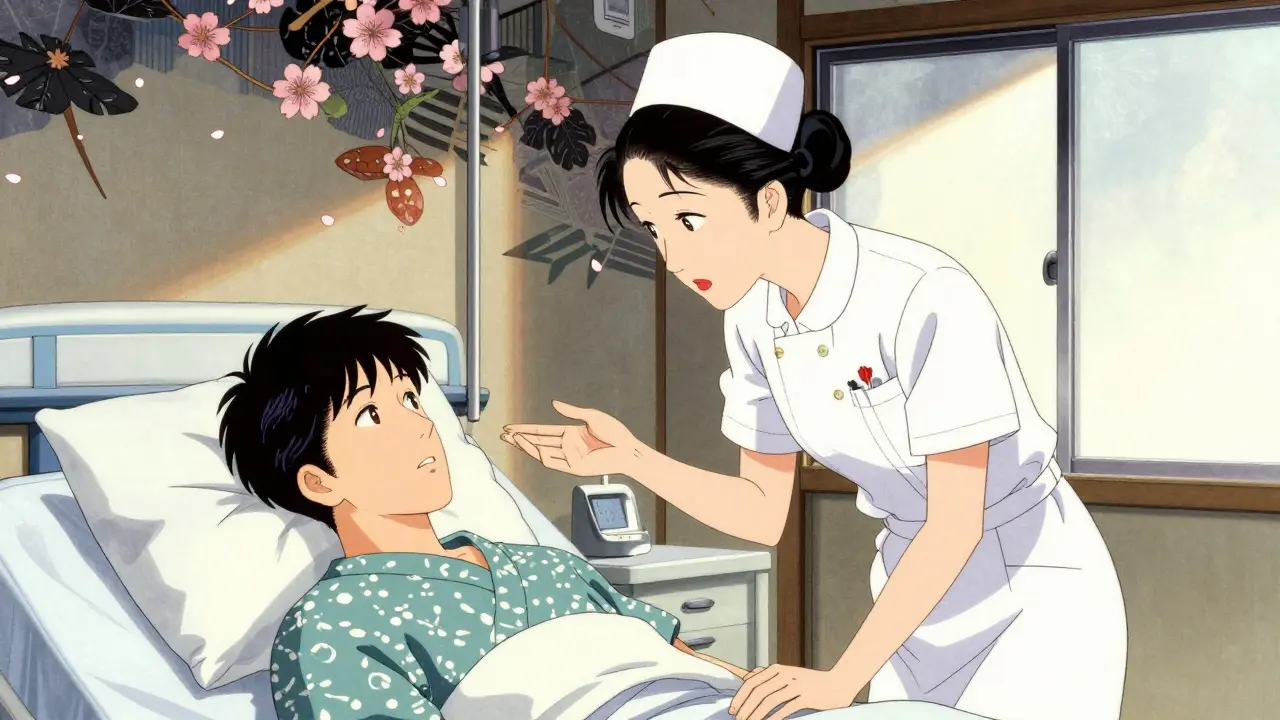
Step-by-Step Nursing Counseling Protocol
Effective counseling isn't just a casual chat; it's a structured process. Many high-performing hospitals follow the Institute for Safe Medication Practices (ISMP) 5-step framework to ensure nothing is missed:
- Pre-counseling Assessment (2 mins): Gauge what the patient already knows. Do they trust generics, or are they nervous?
- Plain-Language Explanation (3 mins): Explain bioequivalence. Avoid words like "pharmacokinetics" and instead say, "The active ingredient is identical to the brand name."
- Visual Address (2 mins): Explicitly point out the difference in color or shape so the patient isn't surprised when they see the pill.
- Teach-Back Verification (2 mins): Ask the patient to explain the switch back to the nurse. This confirms they actually understand the equivalence.
- Documentation (1 min): Record the discussion in the EHR (Electronic Health Record) to ensure the rest of the care team is aware.
When this process is ignored, the consequences can be severe. A documented case in the American Journal of Health-System Pharmacy showed a patient who stopped taking levothyroxine after a generic switch because their concerns weren't addressed, leading to a hospitalization for a myxedema crisis. This underscores that counseling is a safety intervention, not just a courtesy.
Overcoming Workflow Challenges
If counseling is so important, why isn't it always perfect? The reality of modern healthcare is that time is a luxury. In high-census emergency departments, the 3-5 minute counseling window often shrinks to under two minutes. Furthermore, a staggering 41% of new graduate nurses report they didn't receive enough training on how to handle these conversations during their schooling.
To fight this, healthcare systems are turning to technology. Some are using AI-powered tools that give nurses instant access to FDA data at the bedside. Others, like the Mayo Clinic, have piloted "Generic Medication Passports"-visual guides that help patients track their substitutions. These tools reduce the cognitive load on the nurse and provide the patient with a tangible reference they can take home.

The Broader Impact on Medication Adherence
When nurses provide consistent, empathetic counseling, the numbers tell a compelling story. Studies show that nursing-led interventions can improve medication adherence by as much as 37%. This happens because nurses build a longitudinal relationship with the patient. Unlike a pharmacist who sees a patient for a few minutes at a counter, a nurse sees the patient's daily struggle and recovery.
This trust allows nurses to contextualize generic substitutions within a broader regimen. Instead of talking about one pill, they talk about the patient's overall health journey. As we move toward a future with more Biosimilars-complex generic versions of biologic drugs-this relationship-based counseling will become even more vital. These medications are more complex than standard generics and will require an even higher level of nursing expertise to ensure patients feel safe using them.
Why do some patients think generic drugs are less effective?
Most of this skepticism stems from the "visual discontinuity"-the fact that generics often look, smell, or taste different from brand names. Additionally, a lack of clear communication about FDA bioequivalence standards leads many to believe that "cheaper" means "lower quality," despite the active ingredients being identical.
What is the 'teach-back' method in generic counseling?
The teach-back method is a communication technique where the nurse asks the patient to explain the information they just learned in their own words. For example, "Just to make sure I explained this clearly, can you tell me why this new white pill is the same as your old blue one?" This ensures the patient hasn't just nodded along but actually comprehends the therapeutic equivalence.
Do all generic drugs have the exact same effect as brands?
Yes, for the vast majority. FDA requirements mandate that generics must be bioequivalent, meaning they deliver the same amount of active ingredient into the bloodstream at the same rate. However, for Narrow Therapeutic Index (NTI) drugs, some clinicians monitor patients more closely during a switch because very small variations can be more noticeable.
How does nursing counseling differ from pharmacist counseling?
Pharmacists focus on the technicalities of dispensing and long-term usage at the point of purchase. Nurses focus on the point of administration. Nurses are often more effective at addressing the immediate anxiety a patient feels when they see a different pill in their medication cup, leveraging their bedside relationship to build trust.
What is the FDA Orange Book?
The Orange Book is the official FDA publication that lists all approved drug products with therapeutic equivalence evaluations. Nurses use it to verify that a generic substitution is officially recognized as equivalent to the brand-name drug, providing an authoritative source to ease patient concerns.
Next Steps for Healthcare Providers
For nurses looking to improve their counseling, start by integrating a standard script approved by your facility's pharmacy and therapeutics committee. This ensures consistency across shifts. If you are in a high-stress environment like an ICU or ED, focus on the "Visual Address"-simply mentioning the color change before the patient notices it can prevent a 15-minute anxiety-driven conversation later.
Hospital administrators should prioritize the integration of generic counseling fields within EHR templates (like Epic or Cerner). When documentation is mandatory and streamlined, it ensures that no patient falls through the cracks during the transition from acute care to home-based recovery.
dwight koyner
April 8, 2026 AT 00:21The distinction between the point of dispensing and the point of administration is a critical one. In clinical practice, the psychological impact of a visual change in medication can lead to a significant decrease in patient adherence, regardless of the drug's chemical efficacy. It is imperative that nurses continue to advocate for structured education protocols to ensure patient safety and peace of mind.
Ethan Davis
April 9, 2026 AT 17:49Who actually believes the FDA? They are basically a wing of the pharmaceutical industry. They tell you the generic is the same, but they don't mention the fillers or the cheap factories in other countries making these things. It's all about profit margins for the hospitals and big pharma.
Benjamin cusden
April 10, 2026 AT 08:02While the author attempts to simplify these concepts for a general audience, the obsession with "visual shock" is somewhat reductive. A patient with a basic understanding of pharmacology should not be so easily swayed by the pigment of a tablet. The real issue here is the systemic failure of patient education at the primary care level, which leaves nurses to clean up the intellectual mess at the bedside.
jack hunter
April 11, 2026 AT 16:21The whole idea of "trust" in a medical setting is a joke anyway. We are just biological machines being tweaked by chemmistry. Whether the pill is blue or white doesnt matter because the apathetic void of the healthcare system consumes us all regardless of the brand name. Its all just a facade of care to hide the industrialization of sufferring.
Jamar Taylor
April 13, 2026 AT 04:33This is such a great way to look at the bedside relationship! Nurses really are the unsung heroes who make the medicine actually work by giving the patient confidence. Keep pushing these protocols and keep supporting each other out there!
Jitesh Mohun
April 13, 2026 AT 16:19you guys need to stop whining about time and just get the job done properly
nursing is about the patient not the clock so quit making excuses about your workload and use the teach back method every single time because thats how you actually save lives and stop mistakes from happening in the ward
Jay Vernon
April 13, 2026 AT 21:38I agree that trust is super important! 💊😊 It's nice when nurses take a second to explain things simply. ❤️
Stephen Luce
April 15, 2026 AT 17:03I can really relate to the part about the visual shift. I've seen so many patients get genuinely scared when their meds change look, and just listening to them for a minute makes a world of difference. It's not just about the science, it's about making them feel heard. It's tough when the wards are busy, but that little bit of empathy is what they remember most. When you acknowledge the fear, the anxiety usually drops way faster than if you just quote the FDA. I think we often forget that the patient is scared, not just confused. It takes a lot of patience to walk someone through that feeling. We have to be the calm in their storm. Even if it's just for two minutes, that's the only time they have to feel safe. It's a heavy load for nurses to carry, but it's the most rewarding part of the job. I've noticed that when we take that extra step, the patients are much more likely to trust us with other health concerns too. It opens a door for better care overall. The visual address is just the tip of the iceberg. It's really about the human connection. We're not just handing out pills; we're managing fear. That's why the longitudinal relationship mentioned is so key. It's the difference between a patient who feels like a number and one who feels like a person. We should all strive to keep that human element alive despite the technology. It's what makes nursing a calling and not just a job. Let's keep focusing on the heart of care.