
Preparing a child for surgery or a medical procedure isn’t just about scheduling the appointment-it’s about managing fear, ensuring safety, and making sure the meds work exactly as they should. Many parents walk into the hospital feeling overwhelmed, unsure what to feed their child, when to give the medicine, or why their toddler is suddenly screaming at the sight of a nurse. The truth is, pediatric pre-op medications are one of the most effective tools we have to reduce trauma, prevent complications, and get the procedure done smoothly. But getting it right requires clear, specific steps-not guesswork.
Understand Why Pre-Op Meds Are Different for Kids
Children aren’t small adults. Their bodies process medicine faster, their airways are more sensitive, and their minds react differently to stress. A 5-year-old might panic at the thought of an IV, while a 12-year-old might worry about waking up during surgery. That’s why pre-op meds are tailored to age, anxiety level, and medical history-not just weight.Studies from the Royal Children’s Hospital in Melbourne show that using the right sedative before surgery cuts postoperative behavioral problems-like nightmares, clinginess, or bedwetting-by 37%. At Children’s Hospital of Philadelphia, hospitals using standardized protocols saw 28% fewer anesthesia complications. These aren’t minor improvements. They’re life-changing for families.
One key difference from adult protocols? Kids need higher doses of midazolam per kilogram because they metabolize it faster. An adult might get 5 mg total. A 20 kg child might need 10-14 mg. That’s not a mistake-it’s science.
Follow the Fasting Rules Exactly
The biggest mistake families make? Misunderstanding what “nothing by mouth” really means. It’s not just no food-it’s about what, when, and how long.Here’s what works based on Texas Children’s Hospital and ASA guidelines (2023):
- Clear liquids (water, Pedialyte, apple juice, Sprite/7-Up without pulp): Allowed up to 2 hours before arrival.
- Breast milk: Allowed up to 4 hours before.
- Formula or cow’s milk: Allowed up to 6 hours before.
- Solid food: Nothing after midnight for children over 12 months.
Why such short fasting times? Kids empty their stomachs faster than adults. Adults wait 4 hours for clear liquids. Kids only need 2. Pushing past these limits increases the risk of vomiting and aspiration-something that can turn a routine procedure into an emergency.
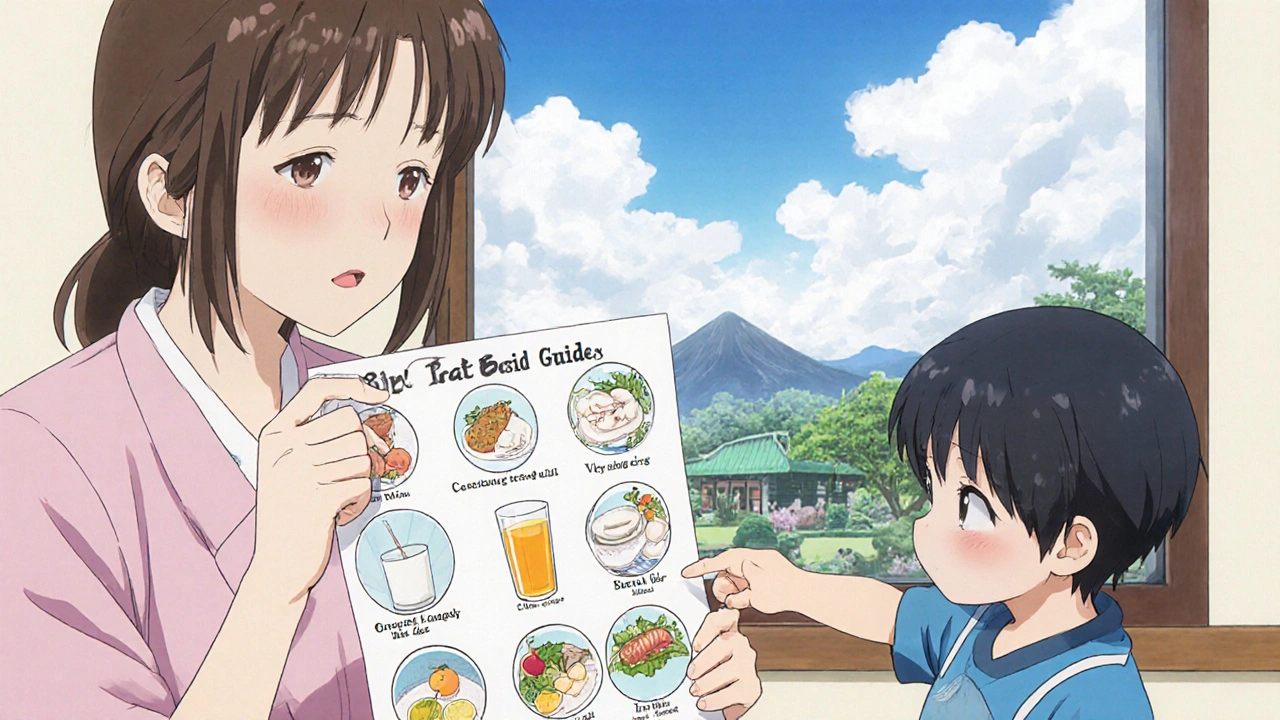
Parents often get confused about what counts as a “clear liquid.” Orange juice? No-it has pulp. Milkshakes? No. Gatorade? Yes, if it’s clear. A 2022 Texas Children’s focus group found 28% of parents were unsure, and 15% gave their child orange juice thinking it was okay. That’s why hospitals now give printed lists with pictures.
Know Which Pre-Op Medications Are Used and When
The most common pre-op meds for kids are oral or intranasal midazolam, and sometimes intramuscular ketamine. Each has a role.Oral midazolam is the gold standard. Dosed at 0.5-0.7 mg per kg (max 20 mg), it’s given 20-30 minutes before the procedure. It calms the child, reduces memory of the event, and makes separation from parents easier. In clinical use, it drops anxiety scores by over 60% on the Modified Yale Preoperative Anxiety Scale.
Intranasal midazolam is used when a child won’t swallow pills. Dosed at 0.2 mg/kg (max 10 mg), it works just as fast but can cause nasal irritation in about 12% of cases. Some kids sneeze or cry, but most settle down within minutes.
Ketamine is reserved for highly anxious children, those with developmental delays, or when other meds fail. Given as a shot (4-6 mg/kg), it kicks in 3-5 minutes. It doesn’t make kids sleep-it makes them detached, calm, and unbothered by what’s happening. Parents often worry about “dissociation,” but it’s not hallucination. It’s safety. The downside? About 8-15% of kids experience emergence delirium-crying, thrashing, or confusion after waking. That’s why hospitals keep them under observation for at least 30 minutes after.
Never give these meds without medical direction. Overdosing can cause breathing trouble. Underdosing means the child stays terrified-and the procedure gets delayed or canceled.
Don’t Stop Critical Medications Without Asking
This is where things go wrong more often than you think. Parents assume “nothing by mouth” means “no meds.” That’s dangerous.Children on these medications should continue them with a sip of water on the day of surgery:
- Antiepileptics (like levetiracetam or valproic acid)
- H2 blockers or PPIs (like famotidine or omeprazole) to reduce stomach acid and prevent aspiration
- Bronchodilators (like albuterol) for kids with asthma-this is non-negotiable. CHOP data shows a 40% drop in bronchospasm when these are given on time.
According to ASA error reports, 32% of pre-op medication mistakes involve stopping antiepileptic drugs. That can trigger seizures during anesthesia. The AAFP 2022 guidelines are crystal clear: unless the anesthesiologist says otherwise, give these meds as usual.
Special Cases: Autism, Obesity, and Chronic Conditions
Not every child fits the standard protocol. Some need extra planning.Autism spectrum disorder: These kids often can’t tolerate unexpected touch or loud noises. At RCH Melbourne, 40% required modified protocols. One common fix: giving clonidine (4 mcg/kg) 4 hours before the procedure to reduce agitation. Some hospitals use visual schedules, quiet rooms, and parental presence throughout.
Obesity: Standard midazolam doses don’t work as well in overweight children. A 2023 multicenter trial found 35% of obese kids needed 20% higher doses. CHOP’s 2025 update now recommends weight-based dosing adjusted for BMI.
GLP-1 agonists (like semaglutide for type 2 diabetes): These drugs slow stomach emptying. The ASA updated its guidance in June 2023: stop semaglutide 1 week before surgery and exenatide 3 days before. Skipping this step increases aspiration risk.
What Happens Right Before the Procedure
The hour before surgery is critical. Here’s what you should expect:- One nurse checks your child’s ID, allergies, and fasting time.
- A second nurse confirms the pre-op med was given and records the time.
- Parents stay with the child until the anesthesiologist arrives.
- Monitoring starts: pulse oximeter on the finger, blood pressure cuff on the arm, ECG leads on the chest for high-risk kids.
Some hospitals use mobile apps now to walk families through the checklist. Others still use paper forms. Either way, ask: “Is my child’s medication documented? Is the dose correct?”
At CHOP, 94% of asthmatic kids get their inhaler on time. At smaller hospitals? Only 78%. The difference? Systems. Hospitals with electronic checklists cut errors by 45%.
What to Do If Your Child Is Scared or Non-Compliant
If your child refuses to swallow the pill or screams when you try to give nasal spray, don’t force it. Tell the nurse. They have options.Some hospitals use distraction techniques: tablets with games, bubble blowers, or even animated cartoons on goggles. Others use a “comfort hold” where a parent wraps the child snugly while the nurse administers the med. For toddlers, sometimes the best move is to wait and try again later.
Never lie to your child. Saying “it’s just water” or “it won’t hurt” breaks trust. Instead, say: “This medicine will help you feel calm and sleepy so the doctors can fix your tooth without you feeling anything.”

Common Mistakes and How to Avoid Them
Here’s what goes wrong-and how to prevent it:- Wrong dose: Always double-check the mg/kg calculation. Use a calculator app designed for pediatric meds.
- Wrong timing: Give midazolam 25 minutes before arrival-not 10. Too early, it wears off. Too late, it doesn’t kick in.
- Stopping asthma meds: This is the #1 preventable cause of breathing problems in the OR.
- Ignoring mental health: Kids with anxiety disorders need earlier intervention. Ask for a child life specialist.
According to ASA data, 17% of hospitals have at least one pre-op medication error every month. Most are preventable. Ask questions. Write things down. Bring a list of all meds to the hospital.
What Comes After the Procedure
The work doesn’t end when your child wakes up. Post-op anxiety can last days. Some kids cry more, cling tighter, or regress in sleep or toilet training.That’s normal. But you can help:
- Let your child sleep next to you if possible.
- Offer familiar toys, blankets, or books.
- Don’t rush back to school or daycare. Give them 24-48 hours to reset.
- Call the clinic if behavior lasts more than 3 days or includes nightmares, refusal to eat, or fear of medical settings.
Studies show that parents who receive a post-op guide-like the one from the 2019 Pediatrics journal-report 8.7 out of 10 satisfaction. Those who don’t? Only 6.2.
Can I give my child a snack before the pre-op medicine?
No. Any food-even crackers or yogurt-counts as a solid and must be avoided after midnight. The pre-op medicine works best on an empty stomach. Giving food too close to the procedure increases the risk of vomiting during anesthesia, which can be life-threatening.
Is midazolam safe for toddlers?
Yes, when given in the correct dose. Midazolam is the most studied pre-op sedative for children and has been used safely for over 30 years. Dosing is based on weight, not age. A 15 kg toddler gets 7.5-10.5 mg total, divided into two doses if needed. Side effects like drowsiness or mild breathing slowing are monitored closely by trained staff.
Why can’t I give my child orange juice before surgery?
Orange juice contains pulp and is not considered a clear liquid. Only liquids you can see through-like water, apple juice, or Pedialyte-are allowed. Pulp slows stomach emptying and increases aspiration risk. Even if it looks clear, if it has bits in it, it’s not safe.
What if my child has asthma? Do they still get their inhaler?
Yes. Asthma medications like albuterol should be given exactly as scheduled, even on the day of surgery. Skipping them can cause bronchospasm during anesthesia, which is a medical emergency. Hospitals track this closely-CHOP saw a 40% drop in breathing issues when parents followed this rule.
Can I bring my child’s favorite toy to the operating room?
Usually, yes-but only until the moment they’re taken into the OR. Most hospitals let kids hold a stuffed animal or blanket while the pre-op medicine is given. Once they’re sedated, the item is taken off for safety. Ask your hospital’s policy ahead of time.
What if my child is on seizure medication? Should I skip it?
Never skip seizure meds without explicit instructions from the anesthesiologist. Stopping them can trigger a seizure during or after surgery. The AAFP guidelines say to give them with a sip of water on the day of the procedure. This is one of the most common-and preventable-medication errors in pediatric care.
Next Steps for Parents
Start preparing 24-48 hours before the procedure. Here’s your simple checklist:- Write down all medications your child takes daily.
- Call the hospital and ask: “What are your exact fasting rules?”
- Confirm which pre-op med will be given and when.
- Plan how you’ll give the medicine (pill? nasal spray?) and practice with water.
- Prepare a comfort item for your child to hold.
- Get a copy of the post-op care guide-if they don’t offer one, ask.
When done right, pre-op meds turn a scary experience into a quiet, calm transition. Your child won’t remember the needle. They’ll remember you were there. And that’s what matters most.
Mike Rothschild
November 27, 2025 AT 15:14Just got back from my daughter's adenoidectomy. This guide saved us. Gave the midazolam at 25 mins before arrival like it said. She was calm, hugged me, and walked to the OR holding her stuffed bear. No screaming. No tears. Just quiet. The nurse even complimented us on how prepared we were.
Ron Prince
November 29, 2025 AT 01:34Why are we giving toddlers sedatives like they’re drunk college kids? This is just pharmaceutical overreach. Back in my day we held them down and said ‘be a man’
King Splinter
November 30, 2025 AT 16:19Look I get it, everyone’s scared of their kid crying but let’s be real here - the whole pre-op med thing is just a way for hospitals to make the staff’s job easier so they don’t have to deal with a screaming 4-year-old. I mean, if your kid is that anxious maybe you should’ve raised them better. Also why does everything have to be ‘evidence-based’ now? I once gave my kid a lollipop before surgery and he slept like a baby. No meds needed. Just sugar and discipline.
Kristy Sanchez
December 2, 2025 AT 13:34Oh wow so now we’re medicating kids to make them compliant? How revolutionary. Next they’ll be giving them antidepressants before piano recitals. At least back in the 90s we let kids be kids - scared, screaming, messy emotions and all. Now we chemically mute them like broken appliances. I’m not judging. I’m just… observing the slow death of childhood.
Michael Friend
December 3, 2025 AT 17:22THIS is why hospitals are so messed up. They turn every single thing into a protocol. What about the kid who hates pills? What about the mom who’s terrified herself? You can’t just hand out a checklist and call it care. The system is broken. And now they want us to trust a 2023 guideline like it’s the Ten Commandments. Newsflash: guidelines are written by people who’ve never held a screaming toddler while a nurse tries to squirt medicine up their nose.
Jerrod Davis
December 4, 2025 AT 02:39While the content presented herein is methodologically sound and aligned with contemporary clinical standards, one must nonetheless observe that the proliferation of such procedural documentation may inadvertently engender a culture of performative compliance among caregivers, wherein adherence to checklist items supersedes intuitive parental judgment. The emotional labor of pediatric preoperative preparation remains underacknowledged in institutional frameworks.
Dominic Fuchs
December 4, 2025 AT 05:12Interesting how we’ve turned a natural human response - fear - into a medical problem to be solved with pills. I get the science. I really do. But there’s something sad about a world where a child’s tears are treated like a dosing error. Maybe we need less medicine and more presence. Not every wound needs a bandage. Sometimes it just needs a hug and a quiet voice saying ‘I’m right here’
Asbury (Ash) Taylor
December 5, 2025 AT 16:44This is exactly the kind of clear, compassionate guidance families need. I’m a nurse in a rural ER and I see parents panic every week because they don’t know what’s safe to give. You’ve taken the fear out of the checklist. Thank you for making this so practical. I’m printing this out for our pediatric unit tomorrow.
Kenneth Lewis
December 5, 2025 AT 21:21wait so orange juice is bad but gatorade is ok? lol i thought both were juice. also i gave my kid a popsicle 3 hours before and he was fine. maybe the rules are just made up? 🤷♂️
Jim Daly
December 7, 2025 AT 13:55why do they even have these rules? i mean my cousin’s kid had surgery and they just gave him a candy bar before and he was chill. everyone just freaks out over nothing. also why do they say midnight? what if your surgery is at 8am? why not just say 12 hours before? why make it so confusing?
Tionne Myles-Smith
December 8, 2025 AT 10:00This is so helpful. My son has autism and we were terrified. We used the visual schedule idea and gave him clonidine like you said. He held my hand the whole time. Didn’t cry. Didn’t fight. We cried. But it was good tears. Thank you for seeing us.
Leigh Guerra-Paz
December 9, 2025 AT 17:31Oh my gosh, thank you so much for this!! I’ve been so overwhelmed trying to figure out what to feed my daughter before her tonsillectomy - I thought apple juice was fine, but I didn’t realize pulp was the issue!! I’m printing this out and taping it to the fridge. Also, the part about not lying to your kid? That hit me right in the chest. I’ve said ‘it’s just water’ before… I’m going to change that. You’re right - we need to be honest, gentle, and clear. This guide feels like a warm blanket in a cold hospital hallway.
Mike Rothschild
December 10, 2025 AT 10:34Thanks for the clonidine tip - we used it for my son with ADHD. He was calm before the nasal spray even started. The nurse said it was the smoothest pre-op she’d seen in months.