When you take a pill for HIV, malaria, or cancer, you might not think about the laws that made it affordable-or blocked it entirely. But behind every generic drug is a battle over patents, trade deals, and who gets to live. The TRIPS agreement is the invisible hand shaping this fight. Created in 1995 under the World Trade Organization (WTO), it forced over 160 countries to adopt strict patent rules for medicines. For pharmaceutical companies, it meant guaranteed profits. For millions in low-income countries, it meant waiting years-or never getting life-saving drugs at all.
What TRIPS Changed for Generic Drugs
Before TRIPS, many developing countries didn’t even allow product patents on drugs. India, for example, could make cheap versions of HIV medicines because it only protected the process of making them, not the final product. Generic manufacturers could tweak the recipe slightly and produce the same medicine legally. That’s how India became the pharmacy of the developing world, supplying 80% of HIV drugs to Africa by the early 2000s. TRIPS changed all that. It required every WTO member to grant 20-year product patents from the date of filing. No more loopholes. No more shortcuts. If a drug was patented anywhere, it had to be protected everywhere. The result? In countries like Brazil and South Africa, prices for patented drugs jumped 200-300% overnight. A single year’s supply of antiretroviral therapy, which cost $10,000 per patient in 2000, stayed out of reach for most.Compulsory Licensing: The Legal Loophole
TRIPS didn’t completely shut the door. Article 31 lets governments issue compulsory licenses-allowing local companies to make generic versions without the patent holder’s permission. But there’s a catch: the license can only be used to supply the domestic market. So if a country like Malawi needs 100,000 doses of a patented drug but can’t make it themselves, they can’t import it from India, even if India has the capacity. This rule was a disaster for public health. Countries without drug factories were stuck. Even when they tried to use compulsory licensing, they faced political pressure. Thailand issued a license for the HIV drug efavirenz in 2006. The U.S. government responded by threatening trade sanctions. Brazil did the same with the antiviral lopinavir/ritonavir in 2007-and was labeled a “rogue state” by pharmaceutical lobbyists.The Doha Declaration and the Failed Fix
In 2001, after global outcry over AIDS deaths, the WTO issued the Doha Declaration. It said public health trumps patents. Countries could use compulsory licensing to fight epidemics. But it didn’t fix the import problem. So in 2005, the WTO created the “Paragraph 6 Solution”-a legal pathway for countries to import generics from others. Sounds simple, right? It wasn’t. The system required three separate government approvals: one for the importing country, one for the exporting country, and one for the WTO. Paperwork took over a year. Only two countries ever used it: Rwanda imported 260,000 doses of antiretroviral drugs from Canada in 2007. That’s it. By 2016, only one shipment of malaria medicine had been sent under this rule. The system was designed to fail.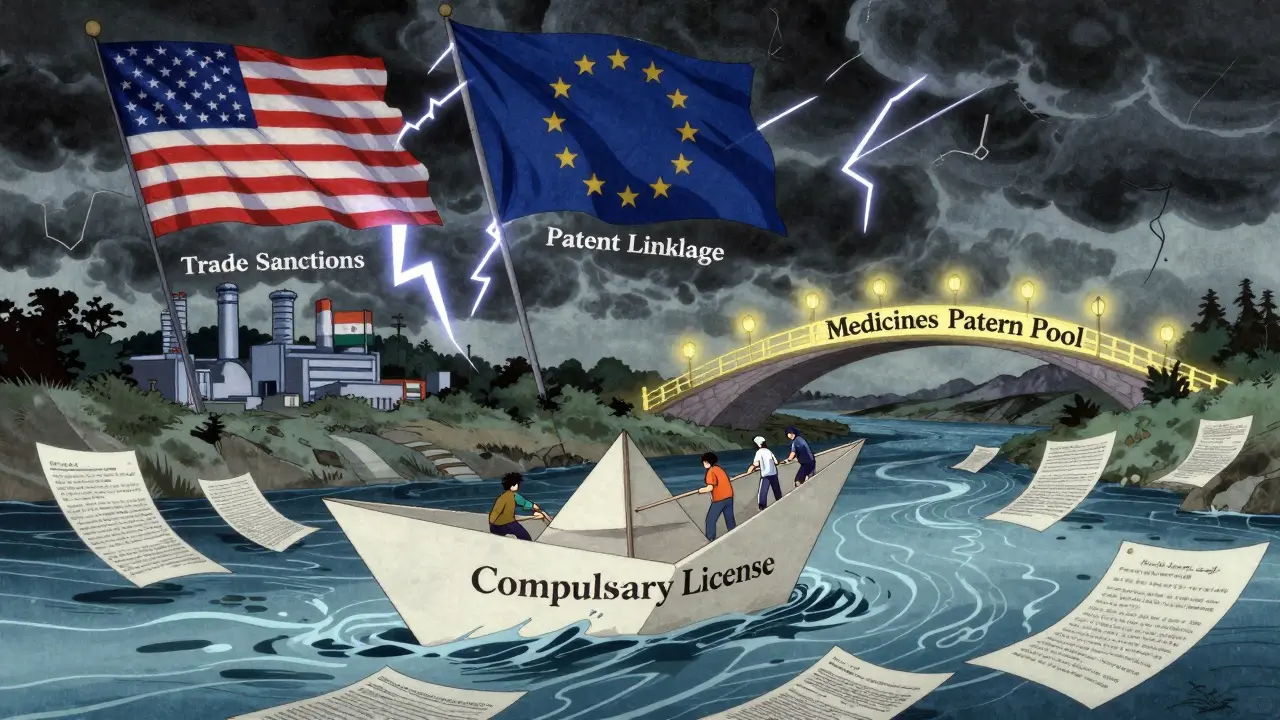
TRIPS Plus: The Hidden Rules
Even when countries followed TRIPS, they were pressured into doing more. The U.S., EU, and Switzerland started slipping stricter rules into bilateral trade deals. These are called “TRIPS Plus” provisions. They include:- Extended patent terms beyond 20 years
- Data exclusivity-blocking regulators from using originator drug data for 5-10 years, even after patents expire
- Patent linkage-preventing generic approval until all patents are resolved, even if they’re weak or fake
- Restrictions on compulsory licensing for anything but national emergencies
Who Wins? Who Loses?
Pharmaceutical companies say strong patents are needed to fund innovation. And yes, 73% of new drugs since 2000 came from companies in countries with strict IP laws. But here’s the twist: 80% of those drugs treat conditions that affect rich countries. Between 1975 and 1997, only 13 of 1,223 new drugs were for tropical diseases like sleeping sickness or leishmaniasis. These diseases kill hundreds of thousands each year-but they don’t make money. Meanwhile, in low-income countries, 65% report delays in getting generic medicines because of patent rules that go beyond TRIPS. The Access to Medicine Foundation found that even when a drug’s patent expires, regulators can’t approve generics because of bureaucratic hurdles, fear of lawsuits, or pressure from foreign governments. The result? A two-tier system. In the U.S., a generic version of a cancer drug might cost $500. In Nigeria, it might cost $5,000-or simply not exist.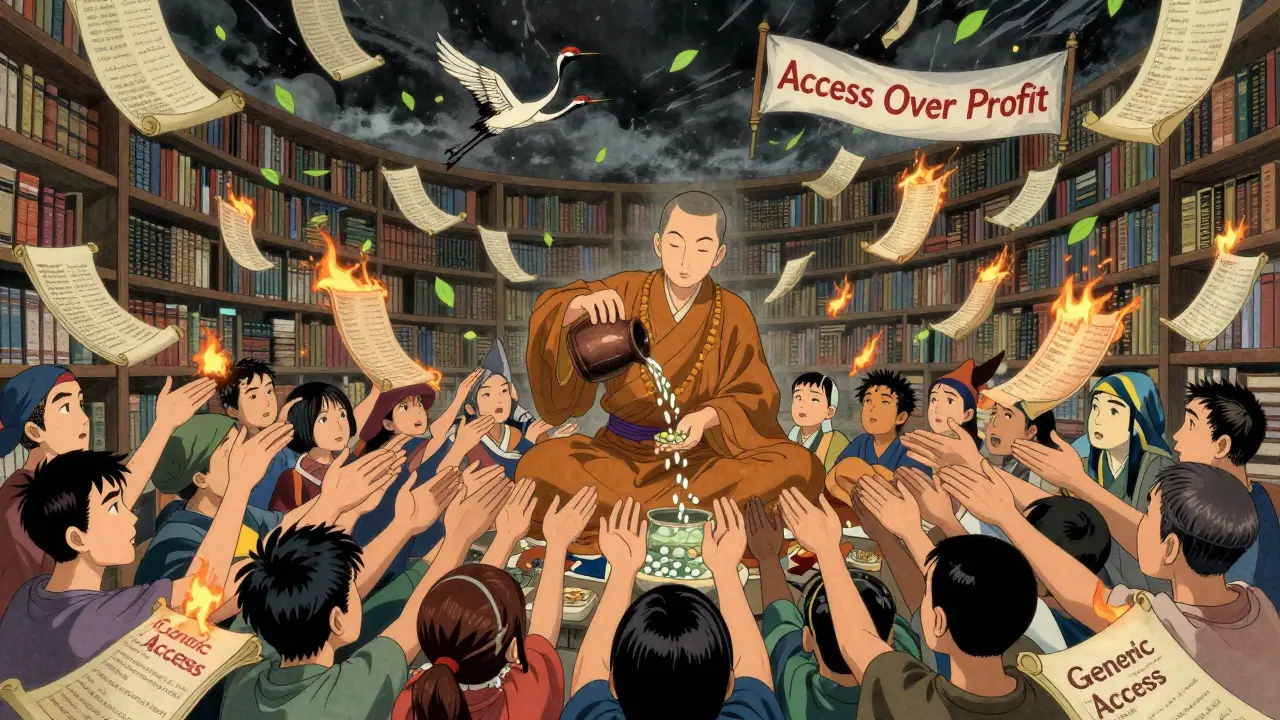
The COVID-19 Test: A Glimmer of Change?
When the pandemic hit, India and South Africa proposed a temporary waiver of TRIPS rules for vaccines, tests, and treatments. Over 100 countries supported it. The EU, U.S., and Switzerland held out. They argued it would hurt innovation. But the real reason? They didn’t want to set a precedent. In June 2022, the WTO finally agreed to a limited waiver-for vaccines only. No tests. No treatments. No generics. And even that waiver had so many conditions, only a handful of countries could use it. It was a symbolic gesture, not a solution.What’s Working? The Medicines Patent Pool
While governments bickered, the Medicines Patent Pool quietly built a workaround. Founded in 2010, it’s a nonprofit that negotiates voluntary licenses with drug companies. Instead of fighting patents, it gets companies to license their technology to generic manufacturers. So far, it’s covered 16 HIV drugs, 6 hepatitis C drugs, and 4 tuberculosis treatments. By 2022, it had reached 17.4 million people. It’s not perfect. It relies on drugmakers’ goodwill. But it shows that cooperation is possible. And it’s why antiretroviral prices dropped from $10,000 to $75 per patient per year. That’s the power of generics-when the rules allow them.The Future of Generic Access
The battle isn’t over. TRIPS still stands. TRIPS Plus rules are spreading. And every year, new drugs come out-patented, expensive, and out of reach. Without reform, the gap will widen. New cancer drugs, Alzheimer’s treatments, and antibiotics will be locked behind patents for decades in poor countries. But change is possible. Countries like Brazil and India still use compulsory licensing. The Medicines Patent Pool keeps growing. And public pressure worked before-it forced the Doha Declaration. It forced the U.S. to back down from suing South Africa in 2001. The question isn’t whether patents should exist. It’s whether they should block life-saving medicine. The answer should be obvious. But the system was never built to save lives. It was built to protect profits.What is the TRIPS agreement and why does it matter for generic drugs?
The TRIPS Agreement, established by the WTO in 1995, sets global minimum standards for intellectual property protection, including 20-year patents on pharmaceuticals. Before TRIPS, many developing countries could produce generic versions of drugs using alternative manufacturing methods. TRIPS ended that flexibility, requiring all member countries to recognize product patents. This drastically reduced access to affordable medicines in low-income nations, as generic manufacturers could no longer legally produce cheaper versions of patented drugs.
Can countries still make generic drugs under TRIPS?
Yes, but with heavy restrictions. Article 31 of TRIPS allows compulsory licensing-where a government permits a local company to produce a patented drug without the patent holder’s consent. However, the license must be mostly for domestic use, blocking imports from countries with surplus generic production. This made it nearly impossible for countries without manufacturing capacity to access affordable medicines. Even then, governments face political pressure and threats of trade sanctions when they use this right.
What is TRIPS Plus and how does it affect generic access?
TRIPS Plus refers to stricter intellectual property rules added to bilateral trade agreements beyond what TRIPS requires. These include extended patent terms, data exclusivity (blocking regulators from using originator drug data for 5-10 years), and patent linkage (preventing generic approval until all patents are resolved). As of 2020, 85% of U.S. trade deals included TRIPS Plus provisions. These rules delay generic entry even after patents expire, effectively extending monopolies by 15-25 years and keeping drug prices high.
Why didn’t the WTO’s 2005 Paragraph 6 Solution work?
The Paragraph 6 Solution was meant to let countries import generics made under compulsory license from other nations. But it required three separate government approvals: the importing country, the exporting country, and the WTO. The process took over a year, involved complex paperwork, and carried political risks. Only two shipments ever occurred: Rwanda imported antiretrovirals from Canada in 2007, and one malaria drug was shipped in 2016. The system was too bureaucratic to be practical, making it a symbolic rather than functional tool.
How did India become the pharmacy of the developing world before TRIPS?
Before TRIPS, India only granted process patents-not product patents-for pharmaceuticals. This meant companies could legally produce the same drug using a different manufacturing method. India’s generic manufacturers exploited this loophole to produce low-cost versions of HIV, hepatitis, and cancer drugs. By the early 2000s, India supplied 80% of HIV medicines to Africa. After TRIPS forced India to switch to product patents in 2005, prices for patented drugs jumped 300-500%, and generic production slowed significantly.
Do strong patents lead to more medical innovation?
Pharmaceutical companies argue that strong patents fund innovation, and 73% of new drugs since 2000 came from countries with strict IP laws. But most of those drugs treat conditions affecting wealthy nations. Between 1975 and 1997, only 13 of 1,223 new drugs were for tropical diseases like malaria or sleeping sickness-diseases that kill hundreds of thousands annually. The system incentivizes profitable drugs, not necessary ones. Meanwhile, generic competition has driven down prices for HIV drugs from $10,000 to $75 per patient per year-showing that access, not patents, drives public health outcomes.
What role does the Medicines Patent Pool play today?
The Medicines Patent Pool is a nonprofit that negotiates voluntary licenses with drugmakers to allow generic manufacturers to produce and distribute their drugs in low- and middle-income countries. Since 2010, it has covered 16 HIV drugs, 6 hepatitis C medicines, and 4 tuberculosis treatments, reaching over 17 million patients. Unlike compulsory licensing, it doesn’t require legal battles-it relies on cooperation. While it’s not a cure-all, it’s one of the few working models that balances innovation with access.
Charlotte Dacre
February 14, 2026 AT 11:53Virginia Kimball
February 15, 2026 AT 03:44Erica Banatao Darilag
February 15, 2026 AT 19:40Kapil Verma
February 17, 2026 AT 02:31Josiah Demara
February 17, 2026 AT 19:20Daniel Dover
February 19, 2026 AT 01:10Betty Kirby
February 19, 2026 AT 10:39Kaye Alcaraz
February 20, 2026 AT 23:00Chiruvella Pardha Krishna
February 22, 2026 AT 17:04Mandeep Singh
February 23, 2026 AT 20:49Joe Grushkin
February 24, 2026 AT 03:56Esha Pathak
February 25, 2026 AT 17:01Michael Page
February 26, 2026 AT 21:57Sarah Barrett
February 27, 2026 AT 15:54