Naloxone Co-Prescribing Risk Calculator
Assess Your Naloxone Eligibility
0
Your Risk Assessment
Based on CDC 2023 guidelines
Enter your details to see eligibility
Every year, thousands of people in the U.S. die from opioid overdoses - often because no one nearby knew how to respond in time. But there’s a simple, proven tool that can reverse an overdose in minutes: naloxone. And when prescribed alongside opioids, it doesn’t just add a safety net - it saves lives.
Why Naloxone Is Prescribed With Opioids
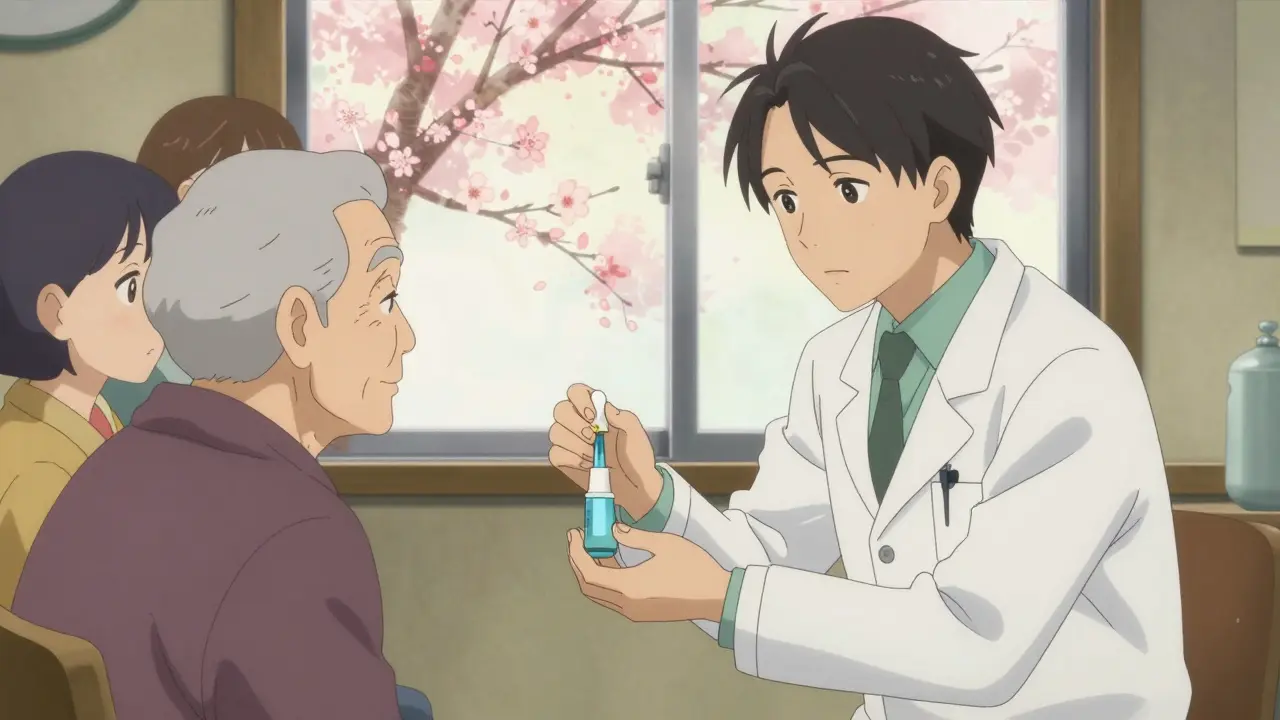
When doctors prescribe opioids for chronic pain, they’re not just treating discomfort. They’re giving patients a drug that slows breathing. At high doses, or when mixed with alcohol or benzodiazepines, that effect can turn deadly. Naloxone flips the switch. It’s an opioid blocker that kicks other opioids off brain receptors, restoring normal breathing within 2 to 5 minutes. The CDC made this clear in 2016: if you’re on 50 morphine milligram equivalents (MME) a day or more, you’re at significantly higher risk. That’s about 10 pills of 5mg oxycodone daily. But risk doesn’t stop there. People with sleep apnea, a history of substance use, mental health conditions, or those recently released from prison are also at high risk - even if their dose is lower. Co-prescribing naloxone means giving patients a nasal spray or injection they can keep on hand. It’s not a prediction they’ll overdose. It’s a backup plan - like a fire extinguisher in the kitchen.Who Should Get Naloxone With Their Opioids
Not every opioid patient needs naloxone. But many more should than currently get it. Here’s who qualifies:- Patients on 50 MME or more per day
- Those taking benzodiazepines (like Xanax or Valium) at the same time
- People with a past overdose or substance use disorder
- Individuals with COPD, sleep apnea, or other breathing issues
- Patients recently released from jail or prison - their tolerance drops fast
- Anyone who’s had a non-fatal overdose in the past year
How Naloxone Works - And What It Can’t Do
Naloxone doesn’t cure addiction. It doesn’t relieve pain. It doesn’t make you feel good. It only does one thing: reverses opioid overdose. That’s why it’s so safe. Even if someone takes it by accident, it won’t hurt them - unless they’re allergic. The most common form today is Narcan® nasal spray. You just point it into one nostril and press. No needles. No training needed. Family members, friends, even teenagers can use it. There’s also a higher-dose version called Kloxxado™, which works better for fentanyl overdoses - the kind now driving most deaths. Injectable naloxone is still used in hospitals and by EMS teams, but for home use, nasal sprays are the standard. They’re stable at room temperature, easy to carry, and don’t require refrigeration.Real Impact: Numbers That Matter
A 2019 study of nearly 2,000 patients found something striking: those who got naloxone with their opioids had 47% fewer emergency room visits and 63% fewer hospital stays for overdose. That’s not theory - that’s real people avoiding ICU beds, ventilators, and long recoveries. In rural Kentucky, one clinic started systematically offering naloxone to all patients on high-dose opioids. Within two years, family members used the spray to reverse 17 overdoses. In Ohio, a mother kept the spray after her doctor prescribed it with her oxycodone. When her 16-year-old son accidentally took her pills, she used it. He woke up in 3 minutes. The data is clear: naloxone saves lives. And when it’s available, people use it.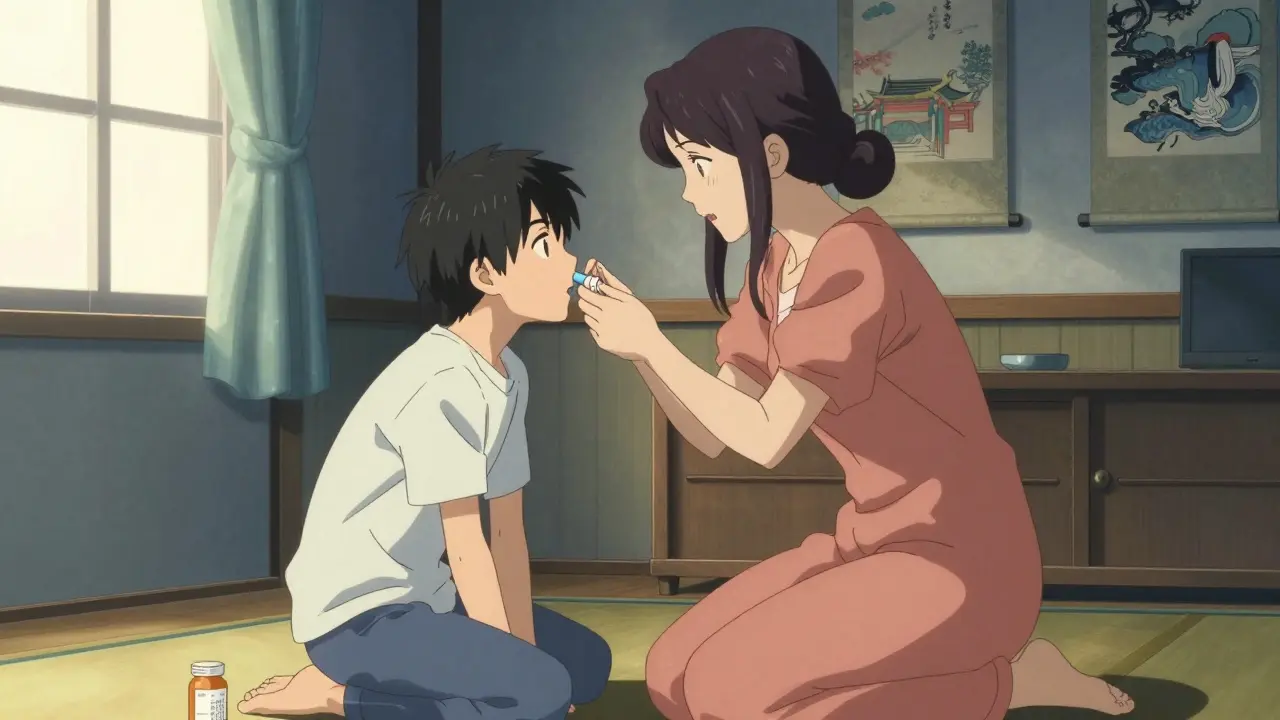
Why So Many Patients Refuse It
Despite the evidence, many patients say no. Why? Some feel judged. They think, “If my doctor is giving me naloxone, they must think I’m going to overdose.” Others worry about stigma - that carrying it makes them look like a drug user. One provider in a Reddit thread said 60% of patients refuse, even when they’re on high doses. But here’s what patients don’t realize: naloxone isn’t about suspicion. It’s about responsibility. It’s the same logic as giving an EpiPen to someone with allergies. You don’t hope they never get exposed - you prepare. Providers are learning to reframe it. Instead of saying, “You need this because you’re at risk,” they say, “This is for your family, your kids, your partner - in case someone else finds you unresponsive.” That shifts the focus from blame to care.Cost, Access, and Insurance
Naloxone used to cost $150 a kit. Now, thanks to generic versions and the SUPPORT Act of 2018, most insurance plans cover it with $0 copay. Generic nasal sprays cost as little as $25 at Walmart, CVS, or Walgreens. Medicare and Medicaid now cover naloxone without restrictions. Pharmacies in cities usually stock it. But in rural areas, only 42% do - compared to 85% in urban areas. That gap kills people. Some states are stepping in. New York requires naloxone to be offered to every patient prescribed opioids. California sets the bar at 90 MME. But in 26 states, there’s no law - so it’s up to the doctor’s discretion. That’s inconsistent. And dangerous.How Providers Can Do It Right
Getting naloxone into patients’ hands isn’t hard - it just takes a few minutes. Here’s how:- Check the PDMP. Look up the patient’s opioid history. Are they on high doses? Are they getting prescriptions from multiple doctors?
- Assess risk. Ask about sleep apnea, mental health, past overdoses, or substance use. Don’t skip this step.
- Explain it simply. Use the S.L.A.M. method: Signs of overdose, Life-saving steps, Administer naloxone, Monitor until help arrives.
- Give it to them. Don’t just write a prescription - hand them the spray. Show them how to use it. Let them practice.
- Teach the family. Encourage patients to keep it where loved ones can find it - not locked in a cabinet.
What Experts Are Saying
Dr. Deborah Dowell, who led the CDC’s opioid guidelines, called naloxone co-prescribing “a harm reduction approach that acknowledges the reality of opioid therapy.” The American Medical Association says it’s now a standard of care. The National Institute on Drug Abuse found that for every 10% increase in naloxone distribution, opioid deaths drop by 1.2%. But not everyone agrees. Some worry that offering naloxone might make doctors less likely to reduce opioid doses. Dr. Jane Ballantyne warned that it could normalize high-dose prescribing. But the data doesn’t support that fear. Studies show patients who get naloxone are more likely to talk about their pain and their fears - not less.The Future of Naloxone Access
The FDA approved the first generic naloxone nasal spray in 2023. Prices dropped 40%. The Biden administration is spending $500 million in 2024 to get more kits into homes, community centers, and pharmacies. A new long-acting naloxone is in Phase III trials. If approved in 2025, it could last for weeks - meaning one dose could protect someone for a full month. That’s huge for people who struggle to remember to refill prescriptions. Meanwhile, the DEA now lets pharmacists dispense up to 50 naloxone doses under federal standing orders - no prescription needed. That’s a game-changer for people who don’t see a doctor regularly.What You Can Do Today
If you’re on opioids - even just a few pills a week - ask your doctor: “Should I have naloxone?” If you’re a family member of someone on opioids, ask them: “Do you have it? Can I learn how to use it?” If you’re a provider, don’t wait for the law. Don’t wait for perfect conditions. Start today. One spray, one conversation, one life saved.Naloxone isn’t magic. But it’s one of the few tools in medicine that works every time - if you use it.
Ben Kono
January 10, 2026 AT 21:13Naloxone should be as easy to get as aspirin why is this even a debate
Cassie Widders
January 10, 2026 AT 22:10I live in a small town in Scotland and we started handing out naloxone kits at the pharmacy last year. No one asked questions. People just took them. One guy said he kept it in his truck because his brother OD’d last winter. Simple. Effective. No drama.
Windie Wilson
January 11, 2026 AT 18:59So let me get this straight - we’re giving out overdose reversal kits like free samples at Costco but still acting shocked when people die from pills they got from a doctor? 🤦♀️
Darryl Perry
January 12, 2026 AT 22:40The data is clear. The guidelines are clear. The only obstacle is institutional inertia and stigma masquerading as medical caution. This is not a gray area. It is a moral imperative.
Rinky Tandon
January 14, 2026 AT 07:22Let me be crystal clear - this isn't about harm reduction, it's about enabling. Naloxone is a Band-Aid on a hemorrhage. You don't solve the opioid crisis by handing out reversal agents while continuing to prescribe opioids at 90 MME. You solve it by cutting off the supply at the source. The CDC is complicit in this charade. This is harm facilitation disguised as compassion. And don't get me started on the pharma lobby pushing this as a profit center - Narcan® is a billion-dollar product now. Who benefits? Not the patient. Not the family. The shareholders.
It's not about access. It's about accountability. If you're prescribing opioids like candy, you're not a doctor - you're a distributor. And naloxone is just the liability insurance for your negligence.
Why not just make fentanyl test strips mandatory? Why not require mandatory addiction counseling before any opioid script? Why not regulate prescribers like we regulate gun dealers? Because it's easier to slap a nasal spray in someone's hand than to confront the systemic rot.
And yes, I've seen the studies. I've read the data. But correlation isn't causation. More naloxone doesn't mean fewer overdoses - it just means more overdoses are survivable. And that's a win for the system, not for the person.
We're treating symptoms while the disease spreads. This isn't medicine. It's triage without a plan. And we're all pretending it's enough.
Konika Choudhury
January 15, 2026 AT 10:56Why are we letting Americans treat addiction like a vending machine problem Just give them the spray and move on No one in India would ever think this way We fix problems not patch them
Daniel Pate
January 16, 2026 AT 11:44There's a philosophical tension here that rarely gets addressed. Naloxone is a tool of radical acceptance - it says, 'We see you, we know you're at risk, and we're not going to wait for you to hit rock bottom before we offer you a rope.' But that clashes with the dominant cultural narrative that recovery must be earned through suffering. We want people to 'deserve' survival. But addiction doesn't care about merit. Naloxone refuses to play that game. It's not a reward. It's a refusal to let someone die because we're uncomfortable with their choices.
And yet, we still treat the person who overdoses as if they failed. We shame them for needing the spray. We assume they're 'using more' because they have it. But the data shows the opposite. Having naloxone reduces risky behavior. It creates space for conversation. It humanizes the patient. It says: 'You are worth saving, even if you're not ready to be saved.'
That's not medicine. That's theology. And maybe that's why it works.
Jose Mecanico
January 17, 2026 AT 09:22My sister got naloxone with her pain meds after her hip surgery. She didn't use it. But her husband did - when her cousin overdosed at their house. He didn't panic. He just pressed the spray. Said it felt like doing the right thing. That's the quiet power of this. It's not about you. It's about who's next to you when things go wrong.
Monica Puglia
January 18, 2026 AT 02:53My dad’s on opioids for back pain. I asked his doctor for naloxone. He said ‘We don’t usually offer it unless you’re on high doses.’ I said ‘But he’s 72, has sleep apnea, and takes Xanax for anxiety.’ Silence. Then: ‘You’re right. Let me write you one.’
He gave it to me with a little card that said ‘Press here. Call 911. Stay with them.’
I keep it in his wallet. With his meds. And his glasses.
❤️