
When you’re in pain, the instinct is simple: find something that takes it away fast. For years, that meant opioids. But the cost has become too high-addiction, overdose, side effects that ruin more than just the pain. Today, doctors aren’t just looking for alternatives. They’re building whole new systems to manage pain without ever touching an opioid. And it’s working.
Why We Need Non-Opioid Pain Management
One in five U.S. adults with chronic pain still gets an opioid prescription. That’s over 25 million people. And while prescriptions have dropped since 2016, the damage lingers. The CDC reports that 0.7% of chronic pain patients develop opioid use disorder every year. That’s not a small number-it’s tens of thousands of people each year, hooked on pills meant to help.
Opioids don’t just risk addiction. They cause constipation in 40-95% of users. They slow breathing in half to most patients. They lose effectiveness over time, forcing people to take more just to feel the same relief. Meanwhile, non-opioid options are proving they can match-or even beat-opioid pain relief without those dangers.
The CDC’s 2022 guidelines made it official: for subacute and chronic pain, nonpharmacologic and nonopioid pharmacologic treatments should come first. Not as a last resort. Not as a backup. As the starting point.
What Is Multimodal Pain Management?
Multimodal pain management isn’t one thing. It’s a team. It’s combining different methods-some pills, some movements, some mental tools-to attack pain from every angle. Think of it like fixing a leaky roof. You don’t just patch one hole. You check the shingles, the gutters, the flashing, the attic insulation. Pain works the same way. It’s not just one nerve firing. It’s nerves, muscles, inflammation, stress, even sleep-all playing a part.
By using two or more non-opioid approaches together, you get better results than any single treatment alone. A 2023 survey found that 73% of pain specialists now use multimodal strategies as their first move. That’s up from just 42% in 2018. The shift isn’t just opinion-it’s data.
Nonpharmacologic Strategies That Actually Work
You don’t need a prescription to start managing pain better. Many of the most effective tools are free or low-cost.
- Exercise: Aerobic activity like walking or cycling for 30-45 minutes, 3-5 days a week, reduces chronic low back pain by 30-50% in 60-70% of people. Aquatic therapy in warm water (32-35°C) is especially gentle on joints and helps with arthritis.
- Yoga and Tai Chi: Two to three sessions a week, 60-90 minutes each, improve mobility, reduce pain, and lower stress. Studies show they’re as effective as physical therapy for knee osteoarthritis.
- Cognitive Behavioral Therapy (CBT): Eight to twelve weekly sessions help retrain how your brain processes pain. It doesn’t erase the sensation-but it stops it from controlling your life. People using CBT report better sleep, less anxiety, and reduced pain intensity.
- Acupuncture: Twelve sessions over 4-8 weeks, with needles left in for 20-30 minutes, can cut chronic pain by 30-40%. The risk of serious side effects? Just 0.14 per 10,000 treatments.
- Heat and Ice: For acute injuries, ice for 15-20 minutes every 2-3 hours during the first 48-72 hours reduces swelling. After that, moist heat at 40-45°C helps relax tight muscles.
And here’s the kicker: group aerobics cost $10-20 per session. Individual physical therapy? $100-150. Research shows the group version works just as well for low back pain. You don’t need to spend a fortune to get results.
Nonopioid Medications: What’s on the Shelf
When pills are needed, there are plenty of safe, effective options.
- NSAIDs: Ibuprofen (400-800 mg every 6-8 hours) and naproxen (375-500 mg twice daily) fight inflammation. Topical diclofenac gel applied four times a day works well for joint pain without stomach risks.
- Acetaminophen: Up to 4,000 mg daily is safe for most people. It doesn’t reduce inflammation, but it’s great for headaches, muscle aches, and mild arthritis. Just don’t mix it with alcohol.
- Antidepressants: Amitriptyline (10-100 mg at night) helps with nerve pain, fibromyalgia, and chronic headaches. It’s not for depression-it’s for pain signaling.
- Triptans: For migraines, drugs like sumatriptan can give complete pain relief in 40-70% of people within two hours.
There are risks, yes. Long-term NSAID use can cause stomach bleeding in 1-2% of people. Acetaminophen can harm the liver if you go over 4,000 mg. But these risks are far lower than opioid addiction-and they’re manageable with monitoring.

The Big Breakthrough: Suzetrigine (Journavx)
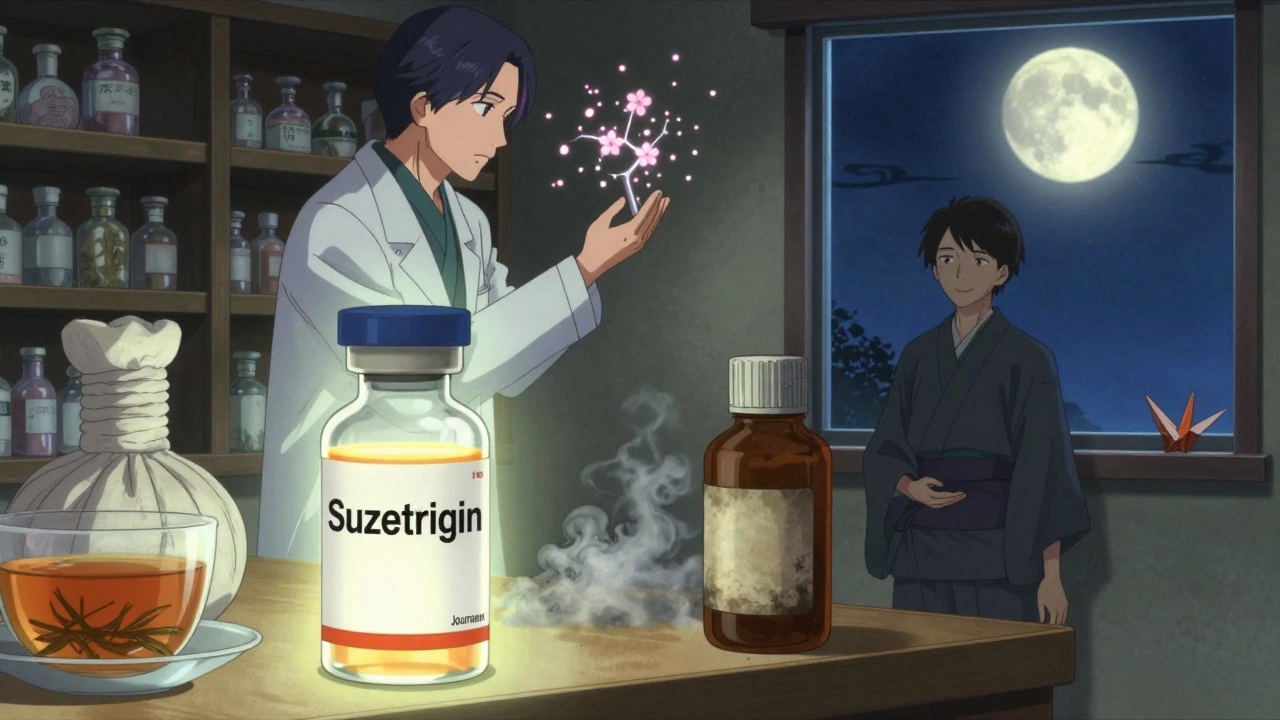
In August 2023, the FDA approved something no one had seen in 25 years: a brand-new class of non-opioid painkiller. It’s called suzetrigine, sold as Journavx.
Unlike opioids, it doesn’t touch brain receptors. Instead, it blocks a specific sodium channel (NaV1.8) that only fires in painful nerves. That means it stops pain signals without causing drowsiness, constipation, or addiction. Clinical trials showed it worked as well as opioids for moderate to severe acute pain-like after surgery or a broken bone-but with none of the dangerous side effects.
FDA official Jacqueline Corrigan-Curay called it a "public health milestone." And it’s just the beginning.
What’s Coming Next
Researchers aren’t slowing down. At UT Health San Antonio, scientists developed CP612-a compound that reduces nerve pain from chemotherapy and even eases opioid withdrawal symptoms-without being addictive. It’s in early human testing.
Duke University’s team, funded by the NIH HEAL Initiative, is working on an ENT1 inhibitor. In animal models, it doesn’t just block pain-it gets stronger with repeated use. That’s the opposite of opioids, which need higher doses over time. They’ve filed a patent and plan to start human trials in 2-3 years.
The FDA is actively encouraging this work. Their 2023 draft guidance pushes for faster development of non-opioid drugs, with clear rules on how to design trials that prove real benefit-like reducing the need for opioids altogether.
Who Benefits Most?
These strategies shine in specific areas:
- Chronic low back pain: Exercise + CBT cuts pain by 30-50% in most people.
- Osteoarthritis: Topical NSAIDs reduce pain by 20-40%. Weight loss and walking help even more.
- Migraines: Triptans, magnesium, riboflavin, and CBT together can cut attack frequency by half.
- Post-surgical pain: Combining acetaminophen, NSAIDs, and nerve blocks reduces opioid use by 50-70%.
But they’re less effective for sudden, severe trauma-like a major car accident. In those cases, opioids may still be needed briefly. The goal isn’t to eliminate opioids forever. It’s to use them as rarely as possible.
Challenges and Real Talk
Not everyone sticks with these methods. Only 40-60% of people stick to exercise programs long-term. CBT requires time and mental energy. Acupuncture needs multiple visits. It’s not a quick fix.
And some experts warn: we can’t replace one crisis with another. Overprescribing NSAIDs, gabapentin, or even new drugs like suzetrigine could create new side effect epidemics. The key is balance. Use the right tool for the right pain. Monitor. Adjust. Don’t assume more is better.
Dr. Jane Ballantyne, a leading pain specialist, puts it plainly: "We must avoid creating a new crisis of overprescribing non-opioid medications with their own serious side effects."
Where to Start
If you’re managing chronic pain right now, here’s a simple plan:
- Stop assuming opioids are the only option. Ask your doctor: "What non-opioid strategies have worked for others like me?"
- Try one physical method: Walk 20 minutes a day, three times a week. Use a heating pad for 15 minutes after.
- Add one mental tool: Download a free mindfulness app and do 10 minutes a day for two weeks.
- Ask about topical NSAIDs or acetaminophen before swallowing pills.
- If pain persists, ask for a referral to physical therapy, CBT, or acupuncture.
You don’t need to do everything at once. Start with one thing. Do it for a month. Then add another. Pain management isn’t a race. It’s a habit.
Final Thought
The future of pain care isn’t about stronger drugs. It’s about smarter, safer, and more human approaches. We’re not just avoiding opioids-we’re rebuilding how we think about pain. With exercise, therapy, new medicines, and better science, relief is possible without the risk. And that’s not just progress. It’s a promise.
Can non-opioid treatments really work as well as opioids?
Yes-for many types of pain, they do. For chronic low back pain, osteoarthritis, and migraines, combinations of exercise, CBT, and non-opioid medications reduce pain by 30-50% in most people. For acute pain like after surgery, the new drug suzetrigine (Journavx) works just as well as opioids but without addiction or breathing risks. Opioids may still be needed briefly in severe trauma, but for long-term pain, non-opioid strategies are often more effective and far safer.
What’s the cheapest effective non-opioid pain treatment?
Walking is one of the most cost-effective options. Just 30 minutes a day, five days a week, reduces chronic pain and improves function. Group exercise classes cost $10-20 per session-far less than physical therapy-and studies show they’re just as effective for low back pain. Heat packs, ice, and over-the-counter acetaminophen are also low-cost tools with proven results.
Are NSAIDs safe for long-term use?
NSAIDs like ibuprofen and naproxen are generally safe for short-term use. For long-term use, the risk of stomach bleeding is 1-2% per year. To reduce risk, use the lowest effective dose, avoid alcohol, and consider topical NSAIDs (like diclofenac gel), which have much lower systemic exposure. Talk to your doctor if you have kidney disease, high blood pressure, or a history of ulcers.
Is acupuncture just a placebo?
No. Multiple high-quality studies show acupuncture provides real pain relief beyond placebo, especially for chronic low back pain, knee osteoarthritis, and headaches. The mechanism isn’t fully understood, but it appears to affect nerve signaling and brain pain-processing centers. The risk of serious side effects is extremely low-0.14 per 10,000 treatments.
What’s the new drug suzetrigine, and is it available?
Suzetrigine (brand name Journavx) is the first new non-opioid painkiller approved by the FDA in 25 years. It works by blocking pain signals in nerves without affecting the brain’s reward system, so it doesn’t cause addiction or respiratory depression. It’s approved for moderate to severe acute pain and is available by prescription. It’s not meant for chronic pain yet, but research is ongoing.
Can I use non-opioid methods if I’m already on opioids?
Yes, and you should. Many people successfully reduce or stop opioids by adding non-opioid treatments like CBT, exercise, or topical NSAIDs. Never stop opioids suddenly-work with your doctor to taper safely while introducing safer alternatives. Studies show combining these approaches reduces opioid doses by 50-70% in most cases.
Why aren’t more doctors using these methods?
Many doctors were trained to treat pain with pills. Time, insurance limits, and lack of access to therapists or acupuncturists make multimodal care harder to deliver. But that’s changing. Since 2022, guidelines have pushed hard for non-opioid first-line care. More clinics now offer integrated pain programs. If your doctor doesn’t mention these options, ask. Your pain deserves better than just a pill.
Rupa DasGupta
December 5, 2025 AT 00:53Juliet Morgan
December 5, 2025 AT 06:40Katie Allan
December 7, 2025 AT 04:16Mark Ziegenbein
December 8, 2025 AT 02:09Krishan Patel
December 8, 2025 AT 15:00Deborah Jacobs
December 9, 2025 AT 06:19Stephanie Bodde
December 10, 2025 AT 08:28Philip Kristy Wijaya
December 11, 2025 AT 01:40Laura Saye
December 12, 2025 AT 16:08ashlie perry
December 13, 2025 AT 11:25