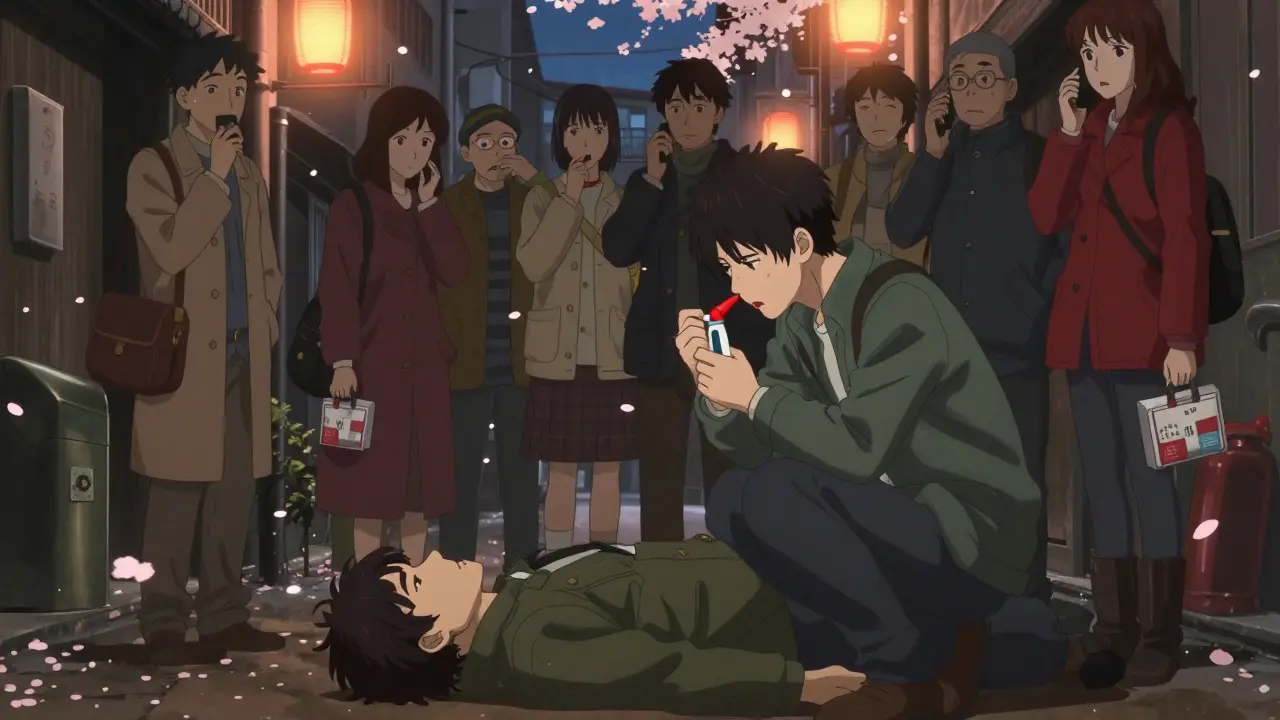
Every year in the U.S., more than 100,000 people die from opioid overdoses. Most of these deaths are preventable. The key? Knowing how to act fast-and having naloxone on hand. It’s not magic. It’s medicine. And it’s easier to use than you think.
What Naloxone Does-and Doesn’t Do
Naloxone is a drug that reverses opioid overdoses. It doesn’t cure addiction. It doesn’t help with alcohol, benzodiazepines, or stimulants. It only works on opioids: heroin, fentanyl, oxycodone, morphine, and others. When someone stops breathing because their brain is overwhelmed by opioids, naloxone rushes in and kicks those drugs off the receptors. Breathing starts again. In 3 to 5 minutes, if given correctly.
It’s not dangerous to give naloxone to someone who isn’t overdosing. If there are no opioids in their system, it does nothing. That’s why it’s safe for anyone to use-even someone with no medical training. In 2023, the FDA approved the first over-the-counter naloxone nasal spray, Narcan. You can now buy it at pharmacies without a prescription in every state.
How It Works: The Science Behind the Spray
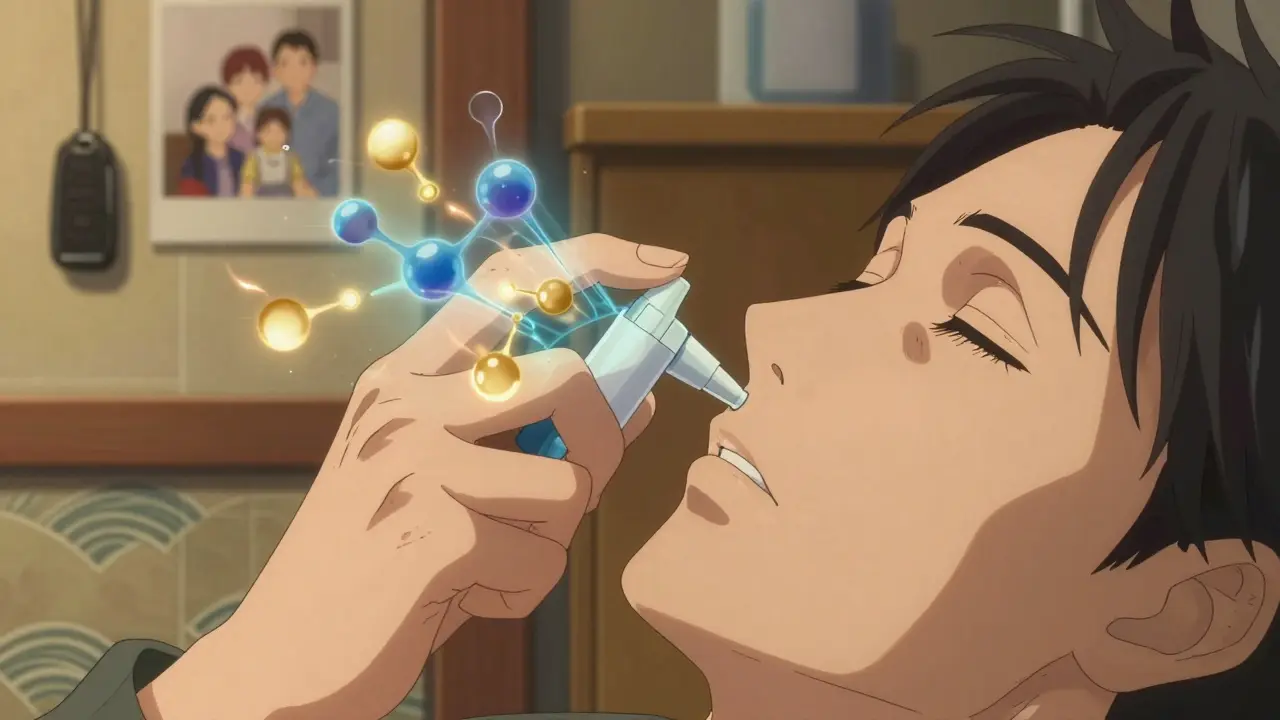
Naloxone works like a key that fits better than the original lock. Opioids bind tightly to receptors in the brain that control breathing. Naloxone has an even stronger grip. It pushes the opioids away, flips the switch back on, and lets oxygen flow again. But here’s the catch: naloxone doesn’t stay in your system long. Its effects last only 30 to 90 minutes. Fentanyl, however, can stick around for hours. That’s why many overdoses need more than one dose.
According to CDC data from 2022, 40% of fentanyl overdoses required two or more doses of naloxone. If you give one spray and the person doesn’t wake up within 3 to 5 minutes, give another. Keep giving doses every 2 to 3 minutes until help arrives. The new 8 mg nasal spray, approved in April 2024, was designed specifically for these stronger opioids.
Studies show naloxone reverses overdoses successfully in 85% of cases when given by bystanders using the nasal spray. Injectables work just as well, but most people panic during an emergency. The spray is simpler. You don’t need a needle. You don’t need to find a vein. Just point, press, and breathe.
Recognizing an Opioid Overdose
Not every unconscious person is overdosing. So how do you know?
- They’re unresponsive-no reaction to shaking or shouting
- Their breathing is slow, shallow, or has stopped
- Their lips or fingernails turn blue or gray
- Pupils are pinpoints (very small)
If you see these signs, assume it’s an opioid overdose-even if you’re not sure. Don’t wait. Don’t hesitate. Give naloxone. Then call 911. The biggest mistake people make? Waiting too long. A 2022 study in Addiction found that survival rates drop from 95% to 65% if naloxone is given after 5 minutes. Time is oxygen.
Safe Storage: Keep It Accessible, Not Hidden
Storing naloxone in a locked cabinet or buried in a drawer defeats the whole purpose. If you live with someone who uses opioids-or if you’re at risk yourself-keep naloxone where you can grab it in seconds. A front pocket. A kitchen drawer. The glove compartment of your car. The bathroom cabinet. It doesn’t need refrigeration. It’s stable at room temperature for up to 24 months.
Check the expiration date. Most kits expire in 2 years. Don’t wait until it’s expired to replace it. If you’re on a tight budget, many community health centers, pharmacies, and harm reduction programs give naloxone away for free. In Bristol, the local NHS outreach teams offer free kits with training. Ask for them.
Also, keep the instructions with it. The Narcan box has clear pictures: tilt head back, insert nozzle, press plunger. Practice once with an expired kit. It takes 90 seconds. You’ll be ready when it matters.
What Happens After You Give It
After naloxone works, the person will wake up. But they might be angry, scared, or in pain. That’s withdrawal. Naloxone doesn’t just reverse the overdose-it pulls the opioids out fast. That triggers sudden withdrawal: nausea, vomiting, sweating, shaking, crying. It’s not dangerous, but it’s intense. People sometimes panic and run away.
Here’s what to do:
- Stay with them. Don’t leave them alone.
- Put them in the recovery position: on their side, one leg bent, head tilted back. This keeps their airway open if they vomit.
- Call 911. Even if they seem fine, they need medical care. Opioids can come back into their system after naloxone wears off.
- Don’t try to talk them out of it. Just be calm. Say: “You’re safe. Help is coming.”
Reddit users on r/OpiatesRecovery report that after 87 successful reversals, the most common mistake wasn’t giving too little naloxone-it was leaving too soon. “I gave the spray, he sat up, I thought he was fine. He collapsed again 20 minutes later,” wrote one user. “I didn’t know it could come back.”
Who Should Have Naloxone?
You don’t need to be a doctor or a first responder. If any of these apply to you or someone you know, keep naloxone nearby:
- You or someone you live with takes prescription opioids
- You know someone who uses heroin or street drugs
- You work in social services, housing, or community outreach
- You’re a parent, sibling, or friend of someone with substance use issues
- You’re in recovery yourself and worry about relapse
Even if you don’t think you need it, keep one. You never know when you’ll be the one who saves a life. In communities where naloxone is widely available, overdose deaths have dropped by up to 14%, according to NIDA. That’s not a guess. That’s data.
What About Nalmefene? Is It Better?
There’s another drug called nalmefene. It lasts longer-up to 11 hours. That’s good for fentanyl. But it’s not yet approved in the U.S. for overdose reversal. It’s still in trials. Naloxone is the gold standard. It’s proven. It’s available. It’s cheap. It works.
Don’t wait for something better. Use what’s here. Right now. Today.
Common Myths Debunked
- Myth: Giving naloxone encourages drug use. Fact: Studies show it doesn’t increase use. People who carry naloxone are more likely to seek help for themselves or others.
- Myth: It’s too expensive. Fact: The retail price is $130-$150, but free kits are widely available through health departments, pharmacies, and nonprofits. Ask.
- Myth: I’ll mess up the spray. Fact: 85% of people get it right after one 15-minute training. The instructions are picture-based. You can’t really fail.
- Myth: Only addicts need it. Fact: Opioid overdoses happen to people on prescriptions, too. One in five overdose deaths in 2022 involved someone taking prescribed painkillers.
Next Steps: What to Do Right Now
Here’s your action plan:
- Find a free naloxone kit near you. Search “free naloxone [your city]” or call your local health department.
- Get two kits. Keep one at home, one in your bag or car.
- Watch the 3-minute training video on the NIDA website. It’s free and no sign-up needed.
- Teach one person how to use it. A partner. A neighbor. A coworker.
- Check the expiration date every 6 months. Replace it if it’s close.
There’s no shame in carrying naloxone. There’s no risk in having it. There’s only one real danger: not having it when someone needs it.
Can naloxone be used on children or elderly people?
Yes. Naloxone is safe for all ages. It doesn’t matter if someone is 18 or 80. If they’re overdosing on opioids, naloxone can save them. Dosing is the same for adults and children. The nasal spray is designed for all ages. There’s no lower limit.
What if I give naloxone and nothing happens?
If there’s no response after 3-5 minutes, give another dose. If you still see no improvement, the person may not be overdosing on opioids. But don’t stop. Call 911. Start CPR if they’re not breathing. Naloxone won’t hurt them if it’s not needed-but it might save them if it is.
Can I carry naloxone on a plane?
Yes. The TSA allows naloxone in carry-on and checked bags. You don’t need a prescription. Keep it in its original packaging with the instructions. If asked, you can say it’s for opioid overdose reversal. No further explanation is required.
Does naloxone expire? What if I use an expired one?
Yes, it expires-usually after 2 years. But if it’s expired and you have no other option, use it anyway. Studies show expired naloxone still has 70-80% of its potency. Better to use an old one than nothing. Replace it as soon as you can.
Is naloxone addictive?
No. Naloxone has no psychoactive effects. It doesn’t produce euphoria or cravings. It doesn’t alter mood. It simply blocks opioids. You can’t get high on it. You can’t become dependent on it.
How do I dispose of used naloxone?
Used naloxone kits should be thrown in the trash. Do not flush them. Some pharmacies offer sharps disposal bins for injectable kits. If you used a nasal spray, just put the whole device in the regular trash. If you’re unsure, call your local pharmacy-they’ll tell you how to dispose of it safely.
Raushan Richardson
December 28, 2025 AT 00:36I kept a naloxone kit in my purse after my cousin overdosed last year. Didn’t think I’d ever need it. Then I used it on a stranger at a bus stop. He woke up coughing, looked at me like I was a ghost, and said ‘I’m sorry.’ We sat there for 20 minutes until the ambulance came. He’s clean now. Naloxone doesn’t fix everything-but it buys you time. And sometimes, that’s all you need.
Robyn Hays
December 28, 2025 AT 17:16Let’s be real-this isn’t just about medicine, it’s about humanity. Naloxone is the quiet hero no one talks about until someone’s life depends on it. I’ve handed out free kits at community fairs, and the look on people’s faces when they realize they can carry a life-saving tool in their pocket? Priceless. It’s not about judgment. It’s about showing up. Even if you’re not a doctor, even if you’ve never held a syringe-you can still be the reason someone breathes tomorrow.
John Barron
December 30, 2025 AT 01:32While I appreciate the sentiment, I must point out that the CDC’s 2022 data cited here is statistically incomplete due to underreporting in rural counties where opioid overdose deaths are disproportionately high but under-documented. Furthermore, the assertion that naloxone has an 85% success rate when administered by bystanders conflates efficacy with accessibility. The true success rate, when accounting for delayed EMS response and polydrug use (e.g., fentanyl + benzodiazepines), drops to approximately 68%. Also, the claim that naloxone is ‘safe for anyone’ ignores the potential for precipitated withdrawal in opioid-dependent individuals, which can lead to violent agitation and secondary injury. This is not a trivial intervention-it requires context, not just a spray.
Anna Weitz
December 31, 2025 AT 13:43They say naloxone saves lives but what about the lives it ruins after? People wake up screaming and angry and then they go right back to using because no one gives a damn about the pain. You hand someone a spray and walk away like you’re a saint. Nah. You’re just delaying the inevitable. The system doesn’t care. The cops don’t care. The doctors don’t care. All they care about is checking a box. Naloxone is just a bandaid on a gunshot wound and we’re all pretending it’s a cure
Jane Lucas
January 1, 2026 AT 21:44i had a friend who OD’d last winter. i gave him the spray. he sat up and started crying. we didnt say much. just sat there. i still think about it. i keep two kits now. one in my coat, one in my car. dont overthink it. just have it. its not hard. its just… important
Miriam Piro
January 3, 2026 AT 13:29Let me tell you something they don’t want you to know… the government is pushing naloxone because they’re trying to normalize addiction. Think about it. Why make it so easy to get? Why give it out for free? They’re not trying to save lives-they’re trying to make you think it’s okay to use. They want you to believe that if you OD, someone will just spray you back to life. That’s not compassion. That’s control. And don’t even get me started on the pharmaceutical companies behind Narcan. They’re making millions. Meanwhile, real treatment? Still hard to get. This is a distraction. A shiny object to keep us from seeing the real problem: the system that keeps people addicted.
Caitlin Foster
January 5, 2026 AT 08:01Okay. But. Let’s. Be. Real. 🙄 You think you’re a hero because you bought a nasal spray? Congrats. You’re not a superhero. You’re just… prepared. And honestly? If you’re not teaching someone else how to use it? You’re doing it wrong. And if you’re storing it in a drawer like it’s a spare key? You’re a menace. Put it in your pocket. In your glovebox. In your kid’s backpack. If you’re not ready to save a life-you’re part of the problem. Also. Please. Stop. Saying. ‘It’s not magic.’ It’s literally magic. It’s the only thing that brings someone back from the dead. So. Stop. Underestimating. It.
Todd Scott
January 6, 2026 AT 15:43From a global public health perspective, the U.S. model of naloxone distribution is uniquely effective because it decouples harm reduction from criminalization. In countries like Portugal or Canada, similar programs exist but are often embedded within broader social services. Here, the over-the-counter model-while imperfect-has created unprecedented accessibility. What’s fascinating is the cultural shift: naloxone kits are now being distributed in libraries, churches, and even barbershops. This isn’t just medicine-it’s social infrastructure. And the data is clear: communities with high distribution rates see not only lower overdose deaths, but increased engagement with treatment programs. The key isn’t just the spray-it’s the normalization of care. We’re seeing a quiet revolution where saving a life is no longer seen as a medical act, but as a civic one.