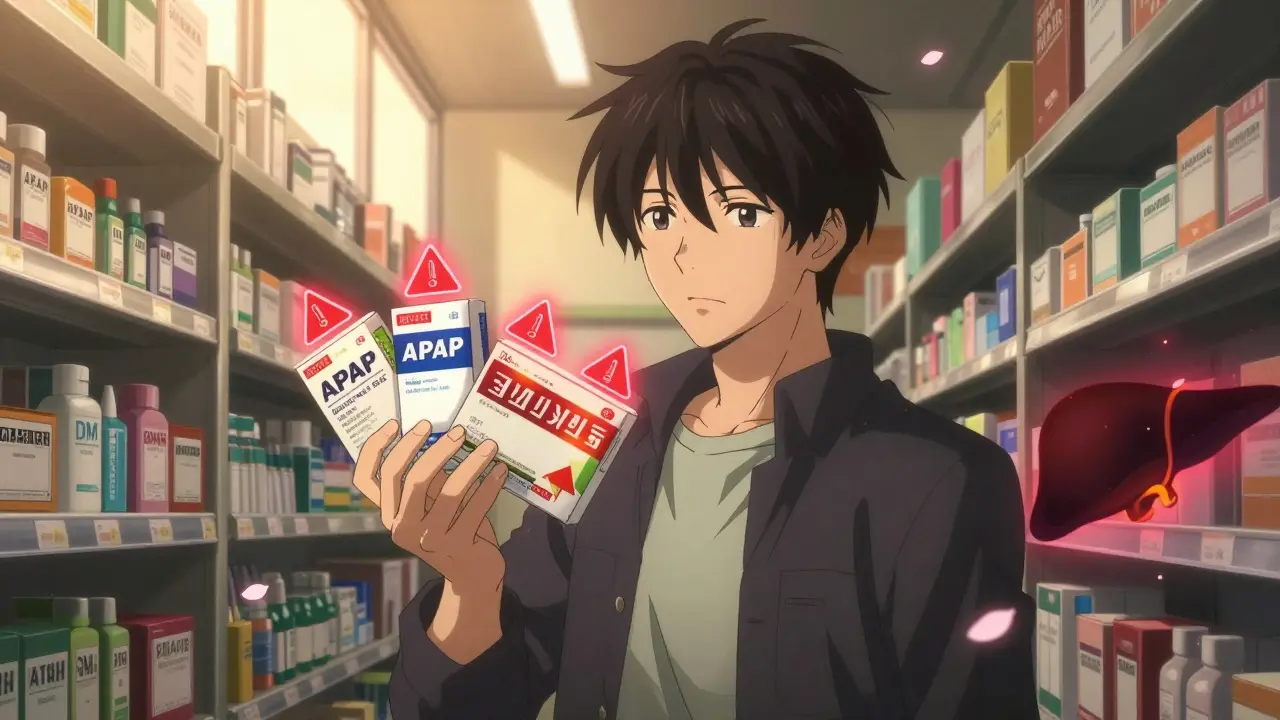
Every cold season, millions of people reach for those colorful boxes of OTC cold and flu remedies. They promise relief from fever, cough, congestion, and aches-all in one pill or liquid. But here’s the harsh truth: acetaminophen is hiding in more than half of them. And if you’re taking more than one product, you might be putting your liver at serious risk.
What’s Actually in Your Cold Medicine?
Most OTC cold and flu combinations contain three to five active ingredients. Each one targets a different symptom. But you won’t always know what’s in there unless you read the label. The Drug Facts panel on the back is your only reliable source. Here’s what you’ll typically find:- Acetaminophen (also called APAP or paracetamol): For fever and pain. Found in 73% of combination products.
- Dextromethorphan (often labeled as DM): For cough suppression.
- Phenylephrine: A nasal decongestant. But recent FDA data shows it doesn’t work well at the standard 10mg dose.
- Chlorpheniramine or doxylamine: Antihistamines that help with runny nose and sneezing-and make you sleepy.
- Ibuprofen: An alternative to acetaminophen for pain and fever, found in some products like Advil Multi-Symptom Cold & Flu.
Some products mix these differently. DayQuil has dextromethorphan and phenylephrine-no sleepiness. NyQuil adds doxylamine, which knocks you out. Tylenol Cold & Flu Nighttime uses chlorpheniramine instead. And here’s the kicker: acetaminophen is in almost every single one.
Why Double Dosing Is a Silent Threat
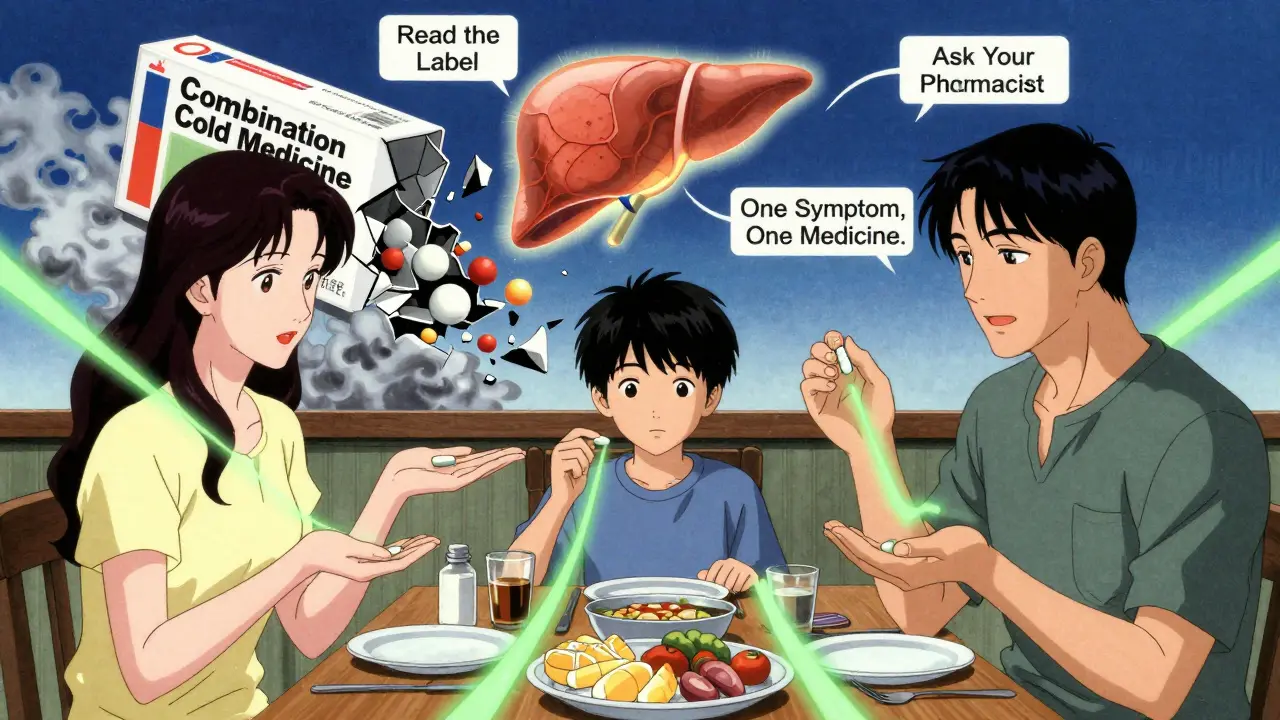
People don’t realize they’re doubling up because they think: “I’m taking one for the cough, one for the fever, one for the congestion.” But if both contain acetaminophen, you’re stacking doses. The FDA says the max safe daily dose is 4,000mg. That’s just eight 500mg pills. But many combination products have 325mg per tablet or caplet. Take two of those, then take regular Tylenol for a headache? You’ve hit 975mg in one go. Do that three times? You’re over the limit.In 2022, poison control centers in the U.S. logged over 14,000 cases of acetaminophen overdose from OTC cold meds alone. Liver damage isn’t always obvious. You might feel fine for a day or two, then suddenly get nauseous, yellow-eyed, and confused. By then, it’s too late. The damage is done.
And it’s not just acetaminophen. Taking two products with phenylephrine can spike your blood pressure. Mixing antihistamines like doxylamine and diphenhydramine (Benadryl) can leave you groggy all day-or worse, cause confusion and falls in older adults.
Who’s Most at Risk?
Younger adults are the biggest users. A 2023 Kaiser Family Foundation survey found 68% of people aged 18-34 prefer combination products. They like the convenience. But they’re also the least likely to read labels. Meanwhile, older adults (65+) are more cautious, with only 49% using combos-mostly because they’re already on other medications and know the risks.People with liver issues, heavy drinkers, or those taking prescription meds like statins or antidepressants are at higher risk. Acetaminophen can interact with alcohol and certain drugs, making liver damage more likely even at lower doses.
And here’s something most don’t know: phenylephrine is being pulled. In November 2024, the FDA proposed removing it from the OTC monograph because studies show it doesn’t work as a decongestant at the doses sold in stores. That means next year, you’ll see products reformulated-some with guaifenesin instead. But until then, you’re still buying something that doesn’t work… and might be dangerous if combined.

Single vs. Combination: What’s Better?
Pharmacists know the answer. A 2022 Pharmacy Times survey found 68% of pharmacists recommend single-ingredient products over combos. Why? Precision. If you only have a fever, take acetaminophen. If you only have a stuffy nose, try a saline spray or a standalone decongestant like pseudoephedrine (sold behind the counter). No extra chemicals. No hidden ingredients.Combination products make sense only if you have three or more symptoms at once. If you’re just coughing and have no fever? Skip the acetaminophen. If you’re congested but not sneezing? Skip the antihistamine. You’re not helping yourself-you’re just adding risk.
And here’s the reality: sales of single-ingredient acetaminophen rose 12.7% last year. Meanwhile, combo sales grew by just 2.3%. People are starting to catch on.
How to Avoid Double Dosing: 5 Simple Rules
- Read the Drug Facts label every time. Don’t assume. Look for the active ingredients. If it says “acetaminophen 325mg,” write it down.
- Never take two products with the same ingredient. If one has acetaminophen, don’t take regular Tylenol. Same with dextromethorphan or phenylephrine.
- Know your abbreviations. APAP = acetaminophen. DM = dextromethorphan. PE = phenylephrine. Doxylamine isn’t always labeled clearly.
- Use the same brand for the same symptom. If you take Tylenol Cold & Flu, stick with it. Don’t switch to Theraflu halfway through. They have different doses.
- Ask your pharmacist. They’re trained to catch these mistakes. Most will check your meds for free during cold season.
Many pharmacies offer free “Medication Checkup” tools. You list everything you’re taking-prescription, OTC, supplements-and they flag overlaps. It takes 8-10 minutes. Could save your liver.
What to Do If You’ve Already Overdosed
If you think you’ve taken too much acetaminophen-especially if you took more than 4,000mg in 24 hours-don’t wait. Call Poison Control at 1-800-222-1222. They’re free, confidential, and available 24/7. Don’t Google it. Don’t wait to see if you feel sick. Liver damage can be silent for hours.Also, keep a list of all your meds. Write down the names, doses, and how often you take them. Keep it in your wallet or phone. When you go to the pharmacy or ER, you’ll be glad you did.
What’s Changing in the Future?
The OTC cold market is shifting. With phenylephrine likely gone, companies are reformulating. Expect fewer ingredients per product-maybe three instead of four. Labels will get clearer. Some brands are testing blister packs with separate tablets for different symptoms so you can choose what you need.Workplaces are catching on too. Over 87% of Fortune 500 companies now stock only single-ingredient cold remedies in first aid kits. Liability is too high. And consumers? More are asking: “What’s in this?” Google searches for “cold medicine ingredients” jumped 47% in just one year.
It’s not about being paranoid. It’s about being informed. You don’t need a pharmacy degree to stay safe. You just need to pause. Read the label. Ask one question. And choose simplicity over convenience.
Can I take an OTC cold medicine and Tylenol at the same time?
No, not if the cold medicine already contains acetaminophen. Most combination cold and flu products include acetaminophen (sometimes listed as APAP or paracetamol). Taking extra Tylenol on top of that can easily push you over the 4,000mg daily limit, which can cause severe liver damage. Always check the active ingredients on the Drug Facts label before combining any medications.
Is phenylephrine still safe to use in cold medicines?
The FDA has proposed removing phenylephrine from OTC cold medicines because studies show it doesn’t work as a decongestant at the standard 10mg dose. While it’s still on shelves, experts advise avoiding it if possible. It may cause side effects like increased blood pressure without providing real relief. Look for products with pseudoephedrine (sold behind the counter) or consider non-medication options like nasal saline sprays.
Why do nighttime cold medicines make me so groggy the next day?
Nighttime formulas often contain doxylamine or chlorpheniramine-antihistamines that cause drowsiness. These ingredients can linger in your system for 12-24 hours. Even if you feel awake, your reaction time and alertness may still be impaired. If you need to drive, work, or operate machinery the next day, avoid nighttime cold medicines altogether.
Are there safer alternatives to combination cold medicines?
Yes. Instead of a combo product, use single-ingredient medications tailored to your symptoms. For fever or pain: acetaminophen or ibuprofen. For cough: dextromethorphan alone. For congestion: saline spray or pseudoephedrine. For runny nose: a plain antihistamine like loratadine (non-drowsy) or diphenhydramine (if you’re okay with sleepiness). This approach reduces side effects and eliminates the risk of accidental overdose.
How do I know if a product has acetaminophen if it’s not labeled clearly?
Look for the terms “acetaminophen,” “APAP,” or “paracetamol” in the active ingredients list. Some imported or generic products use “paracetamol” instead. If you’re unsure, check the manufacturer’s website or ask a pharmacist. Never guess. Even one extra 325mg tablet can push you over the daily safety limit when combined with other meds.
Pat Mun
February 12, 2026 AT 03:40I used to be one of those people who grabbed whatever cold medicine looked easiest at the drugstore. Then I woke up with a headache, nausea, and zero idea why. Turns out I was hitting 4,500mg of acetaminophen a day between DayQuil and Tylenol. My liver enzymes were through the roof. I didn't feel sick until it was almost too late. Now I read every label like it's a legal contract. If I don't see 'acetaminophen' spelled out, I don't touch it. Seriously, it's not worth the gamble. Your liver doesn't send you a warning text before it starts failing.
Neha Motiwala
February 12, 2026 AT 18:40They’re hiding this on purpose. Big Pharma knows people won’t read labels. That’s why they bury APAP in tiny print and slap ‘Nighttime Relief’ on the front like it’s magic. And don’t get me started on phenylephrine-it doesn’t work, but they keep selling it because it’s cheap to make. The FDA’s proposal? A joke. They’re still letting companies sell it until 2025. Meanwhile, people are dropping like flies. Someone’s making bank off our ignorance. And no one’s getting prosecuted.
athmaja biju
February 13, 2026 AT 00:42India does this better. We don’t have these combo packs. If you have fever, you take paracetamol. If you have cough, you take dextromethorphan. No one mixes them. Why? Because our doctors don’t let us. In America, you’re left to your own devices. You think you’re smart buying ‘multi-symptom’? You’re just signing a death warrant with your credit card. This is why Western medicine is falling apart. No discipline. No common sense.
Robert Petersen
February 14, 2026 AT 12:43Love this post. So many people don’t realize how easy it is to mess up. I work in a pharmacy and I see it every day. A guy comes in with three different bottles, all with acetaminophen, and says ‘I just wanted to feel better.’ I get it. You’re sick. You’re tired. You just want relief. But here’s the trick: pick one symptom to focus on first. If you’re not sure, ask. We don’t charge extra for helping you. Seriously, if you walk in with a cold, just say ‘I don’t know what I’m taking’ and we’ll sort it out. No judgment. Just care.
Craig Staszak
February 16, 2026 AT 02:32Been doing single-ingredient for years. One thing I learned: if you’re congested, pseudoephedrine behind the counter is way better than phenylephrine. You need to ask for it, show ID, but it works. And if you’re coughing, dextromethorphan alone does the job. No sleepiness. No liver risk. I keep a little list in my phone: symptom → med. Saves me time, money, and my kidneys. Also, never mix with alcohol. Even one beer with acetaminophen? Bad combo. Simple as that.
Alyssa Williams
February 16, 2026 AT 04:34my mom used to say 'if you dont know what its for dont take it' and shes 72 and still takes no otc meds unless she's got a doctor's note. i started doing the same. now i just use salt water nose spray, honey for cough, and rest. no pills. no stress. no surprises. also i write down every med i take on a sticky note and stick it on my mirror. it's weird but it works. you dont need a pharmacy degree to be smart.
Ernie Simsek
February 17, 2026 AT 15:17LMAO at people who think reading labels is ‘too much work.’ bro you’re literally risking liver failure because you didn’t want to squint at a 10-word list. here’s the truth: if you can’t read ‘acetaminophen’ or ‘APAP’ you shouldn’t be allowed near a medicine cabinet. also phenylephrine is a scam. it’s literally just sugar water with a fancy label. the FDA knows. you know. but the manufacturers? they’re laughing all the way to the bank. 🤡💊
Ojus Save
February 18, 2026 AT 17:50i had no idea phenylephrine was useless. i thought it worked because i felt better after taking it. turns out it was just the antihistamine making me sleepy. i switched to saline spray and now i feel way better. also i always forget what apap means. now i just google it before i buy anything. its easier than remembering.
alex clo
February 19, 2026 AT 16:49While the emphasis on label reading is well-placed, it’s worth noting that many consumers-particularly those with limited health literacy-struggle to interpret even basic pharmaceutical terminology. A 2021 study in the Journal of Patient Safety found that 41% of adults misidentified acetaminophen on OTC labels. This suggests that regulatory reform, not just individual vigilance, is necessary. Clearer labeling standards, standardized iconography, and mandatory pharmacist consultation for combination products could reduce harm at scale.