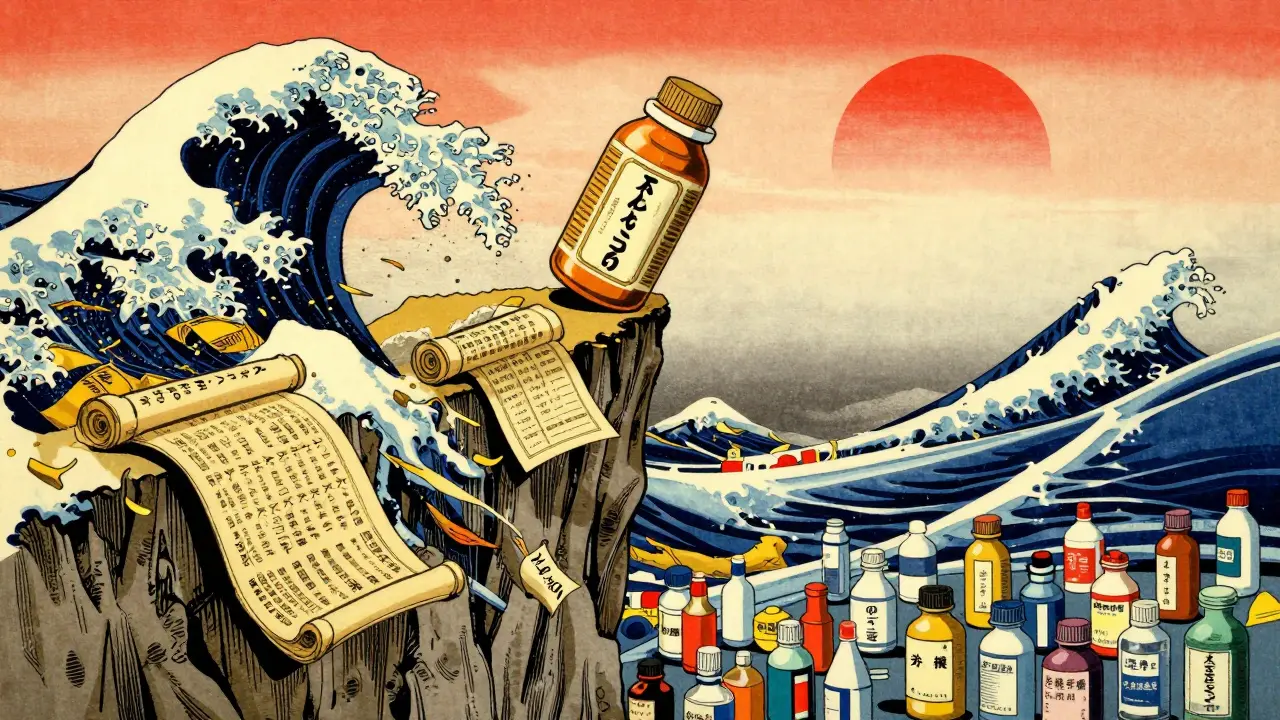
Imagine paying a premium for a life-saving medication for years, only to find out that a version costing 80% less has just hit the market. For many, this sounds like a win. But for the healthcare systems managing the switch and the patients relying on the drug, the transition isn't always a smooth ride. When a pharmaceutical company loses its patent expiry protection, it triggers a massive shift in the market known as the "Loss of Exclusivity" (LOE). While it's the primary driver for lower drug prices, it can also lead to pharmacy shortages, confusing insurance changes, and clinical anxiety.
We are currently facing what experts call "Patent Cliff 2.0." Between 2025 and 2029, the industry expects a staggering $90 billion in revenue loss for brand-name manufacturers as their patents expire. This isn't just a financial hit for big pharma; it's a logistical hurdle for everyone else. Whether you are a patient worried about your next refill or a hospital administrator trying to balance a budget, understanding how to navigate this window is the difference between seamless care and a medical headache.
The Basics: What Actually Happens During Patent Expiry?
At its core, a patent is a government-granted monopoly. In the US, the Hatch-Waxman Act is the 1984 law that created the modern framework for generic drug entry. While a patent technically lasts 20 years, the actual time a company has the market to itself is usually closer to 7 to 10 years because of the time spent in clinical trials and regulatory reviews.
Once that window closes, other companies can use an Abbreviated New Drug Application (ANDA) to launch generic versions. For simple, small-molecule drugs-like those used for blood pressure-the price drop is often immediate and drastic, sometimes falling by 90% within a year. However, for complex biologics, the process is different. These aren't "generics" but Biosimilars, which are highly similar but not identical copies of large-molecule biologic drugs. Because biologics are grown in living cells rather than mixed in a lab, they are harder to copy, meaning the price drops are slower and the transition for patients is more complex.
Why Some Drugs Stay Expensive Despite Expiry
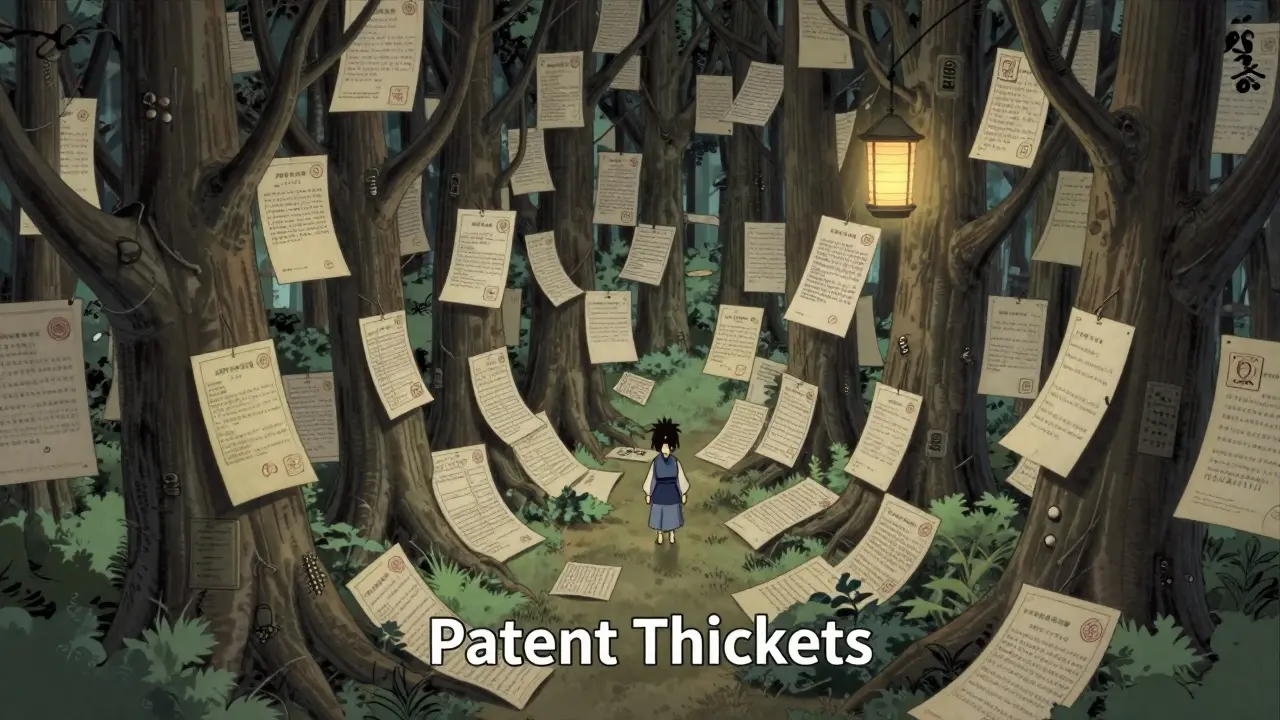
You might notice that some drugs seem to stay expensive long after their original patent date. This isn't an accident. Pharmaceutical companies use "life-cycle management" to keep their exclusivity. One common tactic is the creation of Patent Thickets, which are clusters of dozens of secondary patents covering minor changes to a drug, such as a new extended-release formula or a different tablet coating. By layering these patents, companies can block competitors for years.
Another controversial move is the "pay-for-delay" scheme, where a brand-name company pays a generic manufacturer to stay off the market for a set period. These tactics can cost the healthcare system billions in unnecessary spending. For patients, this means the "cheap version" they were promised might be delayed by several years, leaving them stuck with high co-pays.
| Feature | Small-Molecule Generics | Biosimilars |
|---|---|---|
| Price Reduction (Year 1) | 70-90% decrease | 20-40% decrease |
| Market Penetration | Very Fast (90%+ in 12 months) | Slower (approx. 38% in 2 years) |
| Manufacturing Complexity | Low (Chemical Synthesis) | High (Living Cell Cultures) |
| Regulatory Path | ANDA (Bioequivalence) | 351(k) Pathway (Similarity) |
Strategic Planning for Healthcare Systems
For a hospital or a health network, reacting to a patent expiry on the day it happens is a recipe for disaster. Proactive systems start planning at least 24 months before the LOE date. Why so early? Because the transition period is often volatile. Data shows that about 65% of hospital pharmacy directors experience temporary drug shortages in the first few months after a generic launches, as the supply chain struggles to keep up with the sudden surge in demand.
Successful systems typically build a cross-functional task force including pharmacists, finance officers, and clinicians. Their goal is to map out the "generic pipeline." They need to know not just when the patent expires, but how many competitors are entering the market. If only one generic company launches, the price won't drop nearly as much as if five companies compete.
Moreover, systems must update their formularies-the list of drugs they cover-well in advance. If a system switches to a generic overnight without clinical guidelines, they risk physician resistance. In one survey, 62% of doctors expressed concerns about the efficacy of therapeutic substitutions, meaning the medical staff needs to be educated on the bioequivalence of the new drug before it's mandated.
What Patients Should Do When Their Meds Go Generic
If you are taking a long-term medication and hear it is losing patent protection, don't just wait for the pharmacy to tell you. Be proactive to avoid "formulary shock," where your insurance suddenly stops covering the brand name and demands you switch to a generic you might not be comfortable with.
First, ask your doctor about bioequivalence. While the FDA requires generics to be essentially the same as the brand name, inactive ingredients (fillers and binders) can differ. For some patients, these differences can cause mild allergic reactions or changes in how the drug is absorbed. If you have a history of sensitivity to certain dyes or fillers, tell your doctor now so they can help you transition safely.
Second, check your insurance provider's updated formulary. Many patients experience confusion during a switch; in a CMS survey, 28% of Medicare beneficiaries reported confusion about therapeutic substitutions following an LOE event. By knowing the generic name ahead of time, you can ensure your prescription is written correctly and avoid a trip back to the doctor for a new script.
Finally, be aware of "Authorized Generics." This is when the original brand-name company launches its own generic version. These are often the safest bet for those worried about quality, as they are identical to the brand drug but sold under a generic label at a lower price.
Managing the Transition: A Timeline for Success
To avoid the chaos of the "patent cliff," both systems and patients should follow a structured timeline. Whether you're managing a clinic or a personal health regimen, timing is everything.
24 Months Before Expiry:
Systems should establish a monitoring committee. Patients should identify if their primary medication is on the upcoming expiry list through pharmacy databases or news updates.
12 Months Before Expiry:
Healthcare systems should finalize their pricing and rebate strategies. They need to determine if they will automatically switch all patients to generics or allow a phased transition. Patients should discuss potential alternatives with their providers to see if a new formulation (like an extended-release version) is actually a better clinical fit than the old brand.
6 Months Before Expiry:
This is the window for education. Systems should distribute materials to doctors and patients. Patients should confirm with their insurance that the coming generic will be on a lower cost-sharing tier.
Post-Expiry (0-6 Months):
Monitor for shortages. If the generic is unavailable, systems should have a "backup" brand-name contract to ensure patients don't miss doses. Patients should keep a close eye on any new side effects during the first few weeks of the switch.
Will my generic drug work exactly like the brand name?
Yes, for small-molecule drugs, the FDA requires generics to be bioequivalent, meaning they deliver the same amount of active ingredient to your bloodstream in the same amount of time. However, inactive ingredients can vary, which is why a small number of patients may experience different side effects.
Why are biosimilars more expensive than generics?
Biosimilars are made from living cells and are much more complex to produce than chemical generics. Because the manufacturing process is so expensive and the regulatory requirements for "similarity" are more stringent than "equivalence," the price drops are less dramatic.
What is a "patent thicket" and how does it affect me?
A patent thicket is when a company files many overlapping patents on one drug to block competition. For you, this means the drug stays expensive for longer, as generic companies must fight each individual patent in court before they can launch a cheaper version.
How can I tell if my drug's patent is about to expire?
You can check the FDA's "Orange Book," which lists all approved drugs and their patent expiration dates. Alternatively, your pharmacist can usually tell you if a generic version is expected to enter the market soon.
Should I switch to a generic immediately?
In most cases, yes, because the cost savings are significant. However, you should always consult your doctor first, especially for medications with a "narrow therapeutic index" (where a tiny change in dose can be dangerous), as they may prefer you stay on the brand for stability.
Next Steps and Troubleshooting
If you are a patient and find that your insurance has switched you to a generic that isn't working, don't panic. The first step is to document your symptoms and contact your doctor for a "medical necessity" waiver. This allows the doctor to tell the insurance company that the generic is not therapeutically equivalent for your specific body, often forcing the insurance to cover the brand name again.
For healthcare administrators, the biggest risk is a "supply gap." To solve this, diversify your suppliers. Don't rely on a single generic manufacturer. By contracting with two or three different vendors, you ensure that if one factory has a quality control issue, your patients don't end up without their medication during the critical first six months of a patent expiry transition.
Andrew Hanssen
April 30, 2026 AT 10:10Actually, the notion that a lower price is a universal win is fundamentally flawed. If the profit incentive is removed too aggressively, we simply stifle the innovation required for the next generation of drugs. One must wonder if we are sacrificing future cures for the sake of a few dollars saved on a current prescription. It is truly exhausting to watch everyone celebrate a "deal" without considering the systemic collapse of research and development that inevitably follows such a trajectory.
Robert Cowley
May 1, 2026 AT 15:28LMAO imagine actually trusting the "Authorized Generics" mentioned here. It's literally the same company just slapping a different label on the box to keep the cash flowing while pretending to be "accessible" 🙄. Absolute scam! The whole system is a joke and we're all just paying for the CEO's third yacht. What a disaster! 🤡
Prudence Wesson
May 2, 2026 AT 14:31The lack of rigor in how these transistions are managed is simply appallng...!! One must maintain a strict adherrence to the formulary or face total systemik failure...!! It is quite obvious that most patients are far too uneducated to handle their own health care without a guidde...!! Pathetic...!!
Sarah Mifsud
May 3, 2026 AT 15:37I've worked in pharamcy for a while and the supply gaps are real. I always tell my patients to keep a small buffer of their brand name if they can afford it just in case the generic launch is rocky. Its a good way to avoid that stressfull panic when the shelf is empty!
Divya Patel
May 4, 2026 AT 13:26There is a profound irony in how we view these "monopolies" as burdens...!! Perhaps we should see the patent as a temporary bridge between a spark of genius and the universal benefit of humanity...!! It is a cycle of creation and sharing that mirrors the very nature of life itself...!!
SWATI NAWANGE
May 5, 2026 AT 00:33The sheer simplicity of the "Orange Book" explanation is almost insulting to those of us who actually understand the complexities of intellectual property law. It is a quaint summary, I suppose, but it barely scratches the surface of the geopolitical maneuvering involved in drug pricing. One does not simply "check a database" and understand the market dynamics of a multi-billion dollar industry. It is truly a tragedy that the general public is fed such watered-down information.
Ken Baldridge
May 6, 2026 AT 23:21Man, just keep your head up! If you're feeling that clinical anxiety, just remember that the bioequivalence is there for a reason. It's all about that therapeutic window. Just sync up with your provider, optimize your regimen, and you'll be golden. We're all in this together, just ride the wave! 🌊
Leah Sentz
May 8, 2026 AT 14:58USA USA! 🇺🇸 We have the best meds in the world because we lead the way in research! I don't care about the price, I just want the best quality that only my country can provide! 🦅✨ Hope everyone is staying strong and keeping our healthcare great! ❤️🇺🇸
Halle Dagley
May 10, 2026 AT 14:14It is imperative that the United States maintain its dominance in pharmaceutical innovation regardless of the cost to the individual. The integrity of our national healthcare infrustructure must be preserved above all else. Any attempt to undercut the brand-name manufacturers is an affront to American ingenuity.
Christina Lancey
May 12, 2026 AT 07:41Just a little reminder for anyone feeling overwhelmed by these changes. You aren't alone, and there are always ways to get help with your co-pays if the transition is bumpy. Stay positive!