
Imagine this: you are taking a prescription for high blood pressure, and you decide to add a natural heart health supplement. You feel good about making a proactive choice for your wellness. But what if that natural pill actually cancels out your medication? This isn't a rare scenario. According to recent data, approximately 75% of adults in the U.S. use dietary supplements while taking prescription drugs. That is a massive number of people walking a tightrope without knowing where the safety net is.
The problem isn't just about feeling a bit off. We are talking about emergency room visits, treatment failures, and in some cases, life-threatening situations. The regulatory landscape for supplements is different from medicine, creating a gap where you, the consumer, often have to do the safety checks yourself. Before you pop that next pill, you need to know exactly what questions to ask to protect your health.
Why Natural Doesn't Always Mean Safe
There is a widespread belief that if something comes from a plant, it cannot hurt you. This assumption is dangerous. The FDA is the U.S. Food and Drug Administration, a federal agency responsible for protecting public health does not approve supplements for safety or effectiveness before they hit the shelves. Unlike pharmaceuticals, which undergo rigorous testing, supplements operate under the Dietary Supplement Health and Education Act of 1994. This law places the burden of proof on the FDA to prove a product is unsafe *after* it causes harm, rather than preventing harm before it happens.
As of 2023, there were an estimated 85,000 dietary supplement products on the market. With annual spending exceeding $50 billion, the industry is huge, but the data on interactions is sparse. Only about 3% of these supplements have documented interaction profiles. This means for the vast majority, we are guessing how they will behave inside your body when mixed with prescribed drugs. You cannot rely on the label to tell you the full story.
The 7 Critical Questions to Ask Yourself
Before combining a supplement with your medication, you need to run through a specific checklist. These aren't just general health tips; they are safety protocols derived from clinical data. Ask yourself these seven questions to assess the risk.
- Does this supplement affect my liver enzymes? Your liver uses specific enzymes, like Cytochrome P450 is a family of enzymes in the liver that metabolizes drugs and supplements, to break down medications. Some supplements speed this up, making your medicine wear off too fast. Others slow it down, causing toxic levels of the drug to build up.
- Could this create an additive effect? If you are taking a blood thinner, adding a supplement that also thins blood can lead to dangerous bleeding. It is like pressing the accelerator and the brake at the same time, but without the safety controls.
- Is there evidence this reduces my medication's effectiveness? Some supplements actively lower the concentration of drugs in your blood. For example, certain herbs can reduce the levels of HIV medication or birth control pills, leading to treatment failure.
- Has this supplement been studied with my specific medication? Most supplements have not been tested alongside specific prescription drugs. If there is no study, you are essentially a test subject in a personal experiment.
- What monitoring parameters should I track? If you do combine them, what numbers should you watch? For blood thinners, you monitor your INR. For heart meds, you watch your blood pressure. You need to know the baseline.
- Are there safer alternatives? Sometimes one type of herb has fewer interactions than another. For instance, American ginseng might be safer than Asian ginseng for certain drug users.
- What symptoms indicate a dangerous interaction? You need to know the warning signs. Are you feeling confused? Is your heart racing? Do you have unexplained bruising? These could be signs of trouble.
Healthcare providers often spend less than two minutes discussing supplement use during a standard appointment. This makes your self-education essential for your own safety.
The Dangerous Trio: High-Risk Supplements
Not all supplements carry the same weight of risk. Clinical consensus identifies specific products that require extreme caution. The American Academy of Family Physicians categorizes supplements into risk tiers, and three stand out as particularly hazardous when mixed with medicines.
First, there is St. John's Wort is an herbal supplement commonly used for depression that induces liver enzymes. This is widely considered the most dangerous over-the-counter supplement. It induces cytochrome P450 3A4, an enzyme that breaks down drugs. This action can reduce plasma concentrations of critical medications by 30-80%. For organ transplant patients, it can lower cyclosporine levels by 50-60%, risking organ rejection. It also decreases the effectiveness of HIV medications and oral contraceptives by up to 50%. If you are on any prescription, this herb is generally a hard no.
Second, consider Ginkgo Biloba is a tree extract often used for memory and circulation that affects blood clotting. It increases bleeding risk. When combined with Warfarin is a common anticoagulant medication used to prevent blood clots, it can elevate international normalized ratio (INR) levels significantly. In clinical observations, INR elevations of 2.5 to 3.5 were observed in 15% of cases where patients took both. This makes bleeding events much more likely.
Third, high doses of Vitamin E is a fat-soluble vitamin that acts as an antioxidant can be problematic. At doses exceeding 400 IU per day, it increases Warfarin's anticoagulant effect by 25-30%. This happens through the additive inhibition of vitamin K-dependent clotting factors. Many people take Vitamin E for heart health without realizing it amplifies the effect of blood thinners.
| Supplement | Risk Level | Primary Interaction Mechanism | Key Medication Conflict |
|---|---|---|---|
| St. John's Wort | High | Enzyme Induction | HIV meds, Birth Control, Immunosuppressants |
| Ginkgo Biloba | Moderate | Blood Thinning | Warfarin, Aspirin, NSAIDs |
| Vitamin E (High Dose) | Moderate | Additive Anticoagulant | Warfarin, Clopidogrel |
| Milk Thistle | Low | Enzyme Inhibition (Variable) | Some Statins, Chemotherapy |
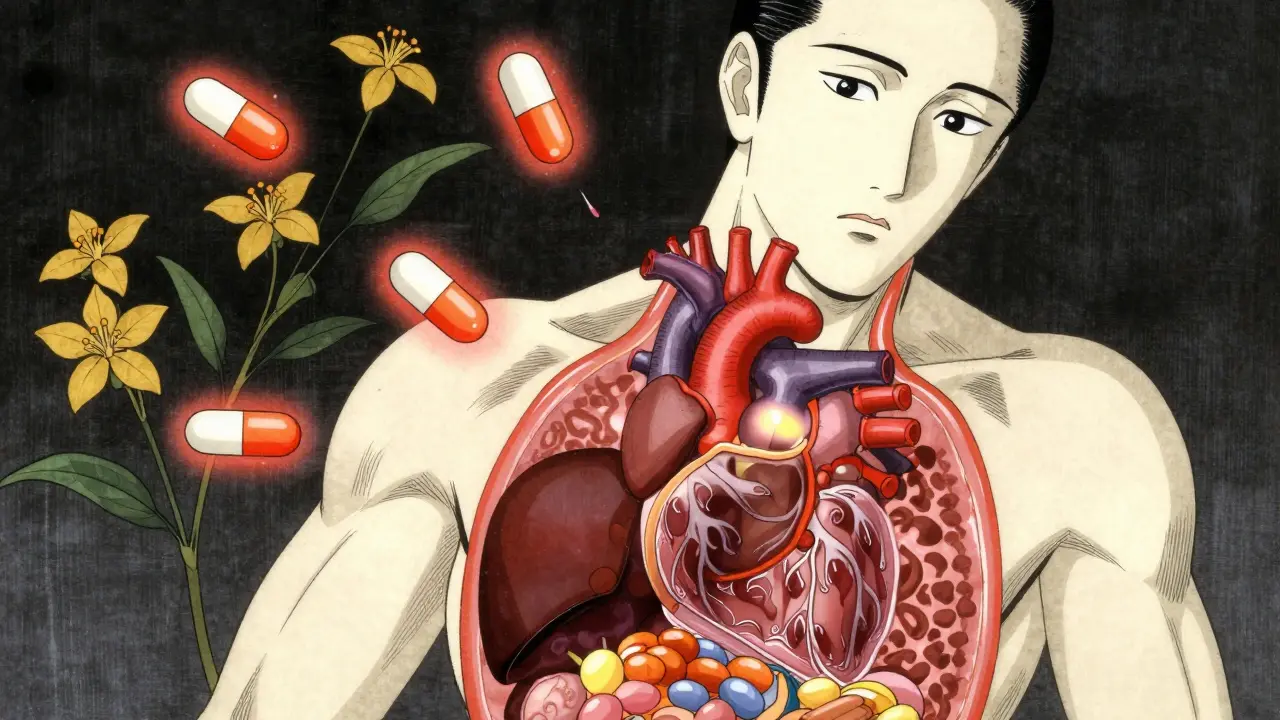
Preparing for Your Doctor Visit
You cannot rely on your doctor to remember every supplement you take if you don't tell them. Studies show that only 32% of primary care physicians systematically document supplement use in medical records. To bridge this gap, you need to prepare before you walk into the clinic.
Bring the actual bottles. Do not just say "I take a multivitamin." The label tells the doctor the exact ingredients and dosages. Sometimes supplements contain hidden ingredients not listed on the front label. Create a written list that includes the name of the supplement, the dosage, the frequency, and the reason you are taking it. This simple step can save lives. If your doctor says no to a supplement, ask why. Understanding the mechanism helps you make an informed choice rather than just following an order.
Spotting Trouble Early: Warning Signs
Even with precautions, interactions can happen. You need to know what to look for. One serious condition is Serotonin Syndrome is a potentially life-threatening reaction caused by too much serotonin in the body. This can occur if you combine supplements like St. John's Wort with antidepressants like SSRIs. Symptoms include confusion, rapid heart rate, high blood pressure, and muscle rigidity. If you feel these symptoms, seek emergency care immediately.
For those on blood thinners, watch for unusual bruising, bleeding gums, or blood in your urine. These are signs that your blood is too thin. For those on diabetes medication, watch for hypoglycemia signs like shaking or sweating, as some supplements can lower blood sugar too much. Your body often gives you signals before a crisis happens. Listen to them.
Where to Check Facts
Not all information online is reliable. You need authoritative sources. The FDA provides an "Information for Consumers on Using Dietary Supplements" guide that outlines a verification process. The National Institutes of Health has expanded the LiverTox database to include supplement-induced liver injury, which is a critical resource for checking liver safety.
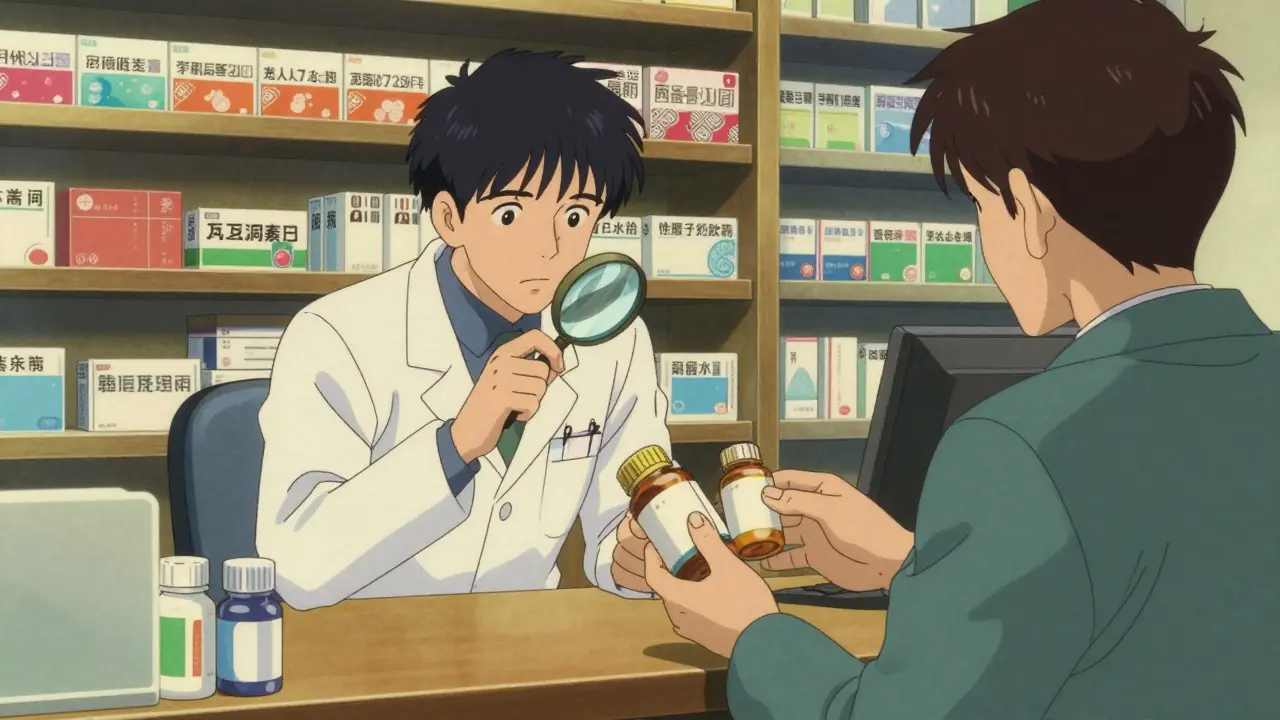
Pharmacists are often underutilized in this area. 89% of pharmacists now routinely screen for supplement-drug interactions during medication therapy management services. If you are unsure, take your list to a pharmacist. They have access to interaction databases that are more detailed than what is available to the general public. Do not rely on user reviews on retail sites as medical advice, as anecdotal evidence can be misleading.
Frequently Asked Questions
Can I take vitamins with my prescription medication?
It depends on the specific vitamin and medication. While basic multivitamins are often safe, high doses of specific vitamins like Vitamin E or Vitamin K can interfere with blood thinners and other drugs. Always check with your pharmacist before adding high-dose vitamins to your regimen.
Why is St. John's Wort considered dangerous?
St. John's Wort speeds up the liver enzymes that break down medications. This can cause your body to process drugs too quickly, lowering their effectiveness. It is known to interfere with birth control, HIV treatments, and transplant medications.
How long should I wait between taking supplements and medication?
Spacing them out can help reduce absorption interactions. A general rule is to wait at least two to four hours between taking a supplement and a prescription drug, but this does not prevent metabolic interactions caused by liver enzymes.
Do natural supplements need FDA approval?
No, supplements do not require pre-market approval from the FDA for safety or efficacy. They are regulated as food, not drugs. This means the manufacturer is responsible for ensuring safety, but the FDA does not test them before they are sold.
What are the signs of a supplement interaction?
Signs can include unusual bleeding, extreme fatigue, confusion, rapid heartbeat, muscle stiffness, or changes in blood pressure. If you experience these symptoms after starting a new supplement, stop taking it and contact your doctor immediately.
Taking charge of your health means understanding what you put into your body. The combination of supplements and medicines is common, but it requires vigilance. By asking the right questions and knowing the risks, you can use supplements safely without compromising your medical treatment. Your safety depends on your knowledge, so stay informed and speak up.
Jefferson Moratin
March 26, 2026 AT 05:55The intersection of pharmacology and natural remedies requires a disciplined approach. We must acknowledge the limitations of current regulatory oversight. Personal responsibility is the cornerstone of health management. Ignorance of the law does not excuse the consequences. Prudence dictates a thorough review of all ingested substances. It is a profound duty to understand the chemical interactions within our own bodies. The pursuit of wellness should never compromise the efficacy of prescribed treatments.
Raphael Schwartz
March 28, 2026 AT 04:09This is just basic stuff people ignre.
Stephen Alabi
March 29, 2026 AT 07:57While the article presents a compelling argument, one must consider the nuance of individual metabolic variances. The regulatory framework is often misunderstood by the general populace. It is not merely about compliance but about biological compatibility. The assumption that natural implies benign is a fallacy that persists despite evidence. We should scrutinize the data rather than accept the narrative at face value.
Blessing Ogboso
March 30, 2026 AT 16:39We often forget that our bodies are sacred temples that require our utmost respect and attention. It is truly heartbreaking when individuals ignore the warning signs that their own bodies are trying to send them. The wisdom found in nature is not always safe for everyone regardless of how organic it may appear. We must listen to the guidance of our medical professionals who have studied these interactions extensively. Trusting a label without verification is a dangerous gamble that could cost someone their life. Every person deserves to feel secure in their choices regarding their own health and wellness. Communication with doctors is the bridge to safety that we often fail to cross. We should not feel ashamed to ask for help when we are unsure about what we are consuming. The community must support each other in this journey toward better health outcomes for all. Ignorance is not bliss when it comes to health and the consequences can be severe. Knowledge empowers us to make better decisions that protect us from harm. We need to share these stories to save lives and prevent unnecessary suffering. Prevention is always better than a cure when dealing with medication interactions. Let us prioritize our well-being above all else in our daily lives. Together we can build a safer environment for everyone to thrive in.
Kevin Y.
March 31, 2026 AT 02:06Your perspective is incredibly valuable to the discussion we are having here today. We should all embrace this level of diligence in our personal health management. It is wonderful to see such thoughtful consideration being given to these critical safety protocols. Your words resonate deeply with the need for community awareness. Let us continue to support one another in making informed choices.
peter vencken
April 1, 2026 AT 11:36i took my meds to the pharmisist and he said no to the ginseng. its better to be safe then sorry. dont trust the internet reviews. always check with a pro.
Agbogla Bischof
April 2, 2026 AT 17:11You are absolutely right!!; The liver enzymes are critical!!!; We must check interactions???; Thank you for sharing this info!!!; Stay safe everyone!!!; It is vital to consult experts!!; Do not risk your health!!!
Katie Putbrese
April 3, 2026 AT 22:52It is morally wrong to rely on untested products without doing your homework. People need to stop being lazy with their health and take responsibility. This is a failure of personal accountability that we see too often. We cannot allow negligence to dictate our medical outcomes. Everyone must step up and protect themselves properly.
Caroline Dennis
April 4, 2026 AT 19:49Cytochrome P450 inhibition is the primary mechanism of concern in these scenarios. Bioavailability changes drastically with concurrent use of specific compounds. Pharmacokinetic profiles must be reviewed before initiating any new regimen. Metabolic pathways can be altered significantly by herbal constituents. Therapeutic indices become unpredictable without proper monitoring.
Mihir Patel
April 6, 2026 AT 14:30My heart was racing so bad after i took that herb. It was a nightmare for sure. I almost went to the hospital. The symptoms were scary and real. I will never do that again.
Kevin Siewe
April 8, 2026 AT 14:11I am glad you are okay now. Please take care of yourself moving forward. Your safety is the most important thing. Listen to your body and seek help when needed. We are here to support you.
Marissa Staples
April 8, 2026 AT 20:16Nature provides tools but also risks that we must acknowledge. We must walk the path with caution and respect for the unknown. Balance is key in maintaining our physical and mental well-being.
Chris Crosson
April 9, 2026 AT 01:00Always verify the ingredients list first. It is the only way to know for sure what you are putting into your system. Do not assume safety based on marketing claims alone.