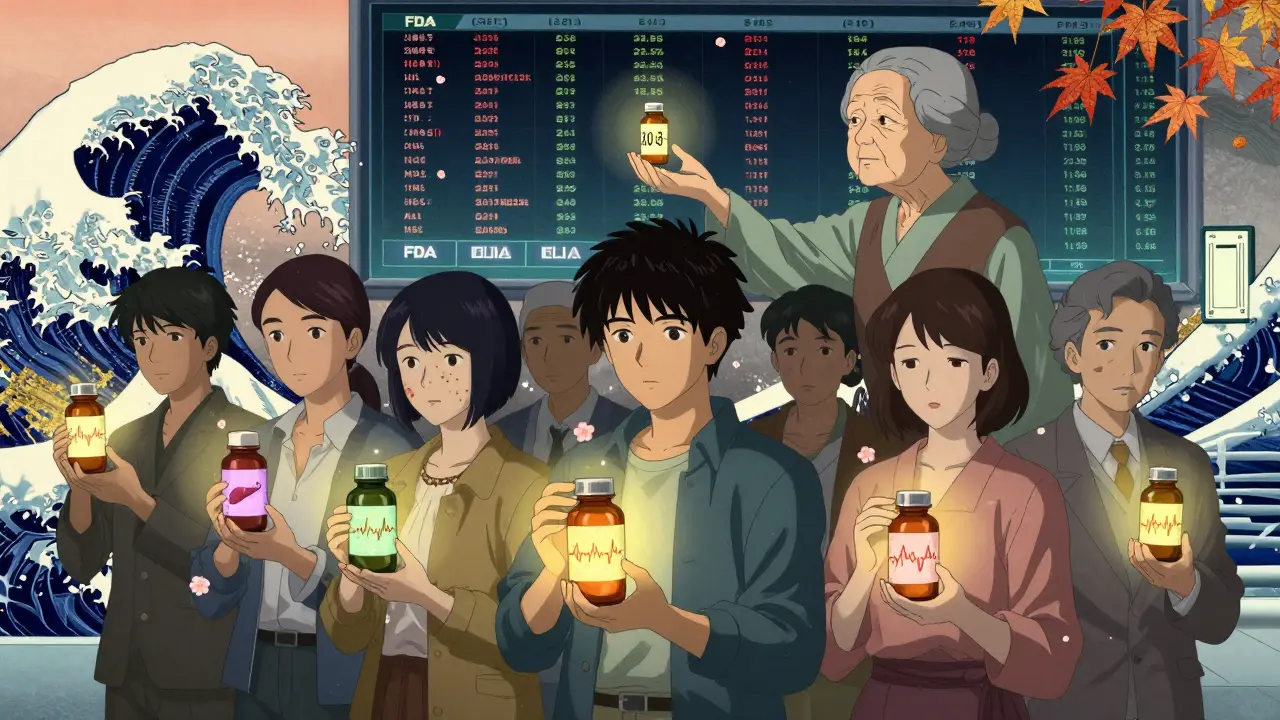
Many people assume that generic medications are less safe than brand-name drugs. That’s not true. The generic drugs you take have the same active ingredients, same strength, same dosage form, and same route of administration as their brand-name counterparts. The FDA requires them to meet the exact same standards for quality, purity, and effectiveness. But here’s something most patients don’t know: when something goes wrong, you’re just as responsible for reporting it - whether the pill came in a brand-name box or a plain white bottle.
Why rare side effects from generics matter
Rare adverse events are reactions that happen in fewer than 1 out of every 1,000 people. Some occur even rarer - 1 in 10,000 or less. These aren’t the kind of side effects you read about on the sticker inside the pill bottle. Things like sudden skin blistering, unexplained liver damage, or abnormal heart rhythms. They’re uncommon, but they can be serious. And because generics are used by millions, even a tiny percentage of people affected adds up to hundreds - sometimes thousands - of cases nationwide.The FDA’s Adverse Event Reporting System (FAERS) holds over 25 million reports. Of those, nearly all involve generic drugs because they make up over 90% of prescriptions filled in the U.S. But here’s the catch: only about 28% of reports from patients include enough detail to be useful. That’s a problem. Without proper information, regulators can’t tell if a reaction is linked to the drug, the batch, or something else entirely.
When you must report - not just when you can
You don’t need to be certain a generic drug caused the reaction to report it. You just need to suspect it. The FDA says: if it’s serious, unexpected, and happened after you started the medication, report it.What counts as serious? Any event that:
- Caused hospitalization
- Is life-threatening
- Results in permanent disability
- Leads to birth defects
- Requires medical intervention to prevent lasting harm
Unexpected means it’s not listed in the drug’s official labeling. For example, if you’re taking a generic version of lamotrigine and develop Stevens-Johnson Syndrome - a rare but deadly skin reaction - even if the label doesn’t mention it, you report it. In 2021, 17 similar reports led the FDA to update the label for generic citalopram, lowering the max dose for older adults.
Timing matters too. If you started a generic statin and developed severe liver pain six weeks later, that’s a red flag. Not every headache after taking a pill means trouble. But if the symptom matches a known biological mechanism - like swelling in the throat after an ACE inhibitor (even a generic one) - it’s worth reporting, even if it’s your first time seeing it.
How to report: The 5-step process for patients and providers
Reporting isn’t complicated. But it does require some key details. Here’s how to do it right:- Write down everything: Date you started the drug, exact name (including manufacturer if you know it), dose, and how long you’d been taking it. Note any other meds, supplements, or changes in your health.
- Document symptoms: What happened? When? How bad? Did it get worse? Did it go away when you stopped the drug? Did it return if you took it again? These are critical clues.
- Check the label: Is the reaction listed? If not, it’s unexpected. That triggers faster reporting.
- Use the right form: If you’re a patient, use MedWatch Form 3500B (free online or call 800-FDA-1088). If you’re a doctor, nurse, or pharmacist, use Form 3500. Both are available on the FDA website.
- Submit within 15 days: For serious, unexpected reactions, speed matters. The FDA needs these reports fast to spot patterns before more people get hurt.
Don’t forget the lot number. It’s on the bottle. Only 12% of patient reports include it. But that number is critical. If 10 people in different states have the same reaction after taking a specific batch of generic metformin, the FDA can pull that batch before it harms more people.

Why consumer reports often fall short
The FDA analyzed over 1.2 million reports and found that consumer-submitted reports were 18% less likely to include key details than those from healthcare providers. Most patients don’t know what to include. They write: “I felt weird after taking the pill.” That’s not enough.Real reports that led to action include things like:
- “68-year-old female, started generic levetiracetam on Jan 3, 2022. Developed severe joint pain on Jan 12. Pain resolved 3 days after stopping. Reappeared within 24 hours after restarting.”
- “Male, 72, on generic simvastatin 40mg daily. ALT rose from 32 to 487 IU/L over 4 weeks. No alcohol, no other liver meds. Stopped drug. ALT dropped to 45 in 6 weeks.”
These are the reports that change labels, update warnings, and save lives. Vague reports don’t. If you’re reporting as a patient, take five minutes to write it clearly. It’s the difference between your story being ignored and being part of a national safety fix.
What happens after you report
Once you submit, the FDA doesn’t just file it away. They use AI tools to scan all incoming reports. Since 2020, machine learning has helped detect rare safety signals 4.8 months faster than before. That means if 15 people report the same unusual reaction to a generic drug, the system flags it. The FDA then reviews medical records, checks manufacturing data, and sometimes orders new studies.In 2022, the FDA’s Sentinel Initiative - which uses real-time data from 300 million patient records - found a new risk with certain generic metformin formulations: higher rates of low blood sugar in older adults. That led to updated prescribing guidance.
It’s not just the FDA. Europe’s EudraVigilance system processes over a million reports yearly, and 38% involve generics. The rules are the same everywhere: if it’s serious and unexpected, report it. No exceptions.
Myths about generics and safety
There’s a myth that generics are more likely to cause side effects because they’re “cheap.” That’s false. The FDA requires generics to match brand-name drugs in bioequivalence - meaning they deliver the same amount of active ingredient into your bloodstream at the same rate. The 2021 study of 1.2 million reports showed no significant difference in side effect rates between generic and brand cardiovascular drugs.Another myth: “If it’s not on the label, it’s not real.” But labels are written based on clinical trials - which involve only a few thousand people. Rare side effects only show up after millions take the drug. That’s why post-market reporting exists.
And no, manufacturers can’t block generic versions just because they’re worried about side effect reports. The 2020 REMS Transparency Act stopped brand companies from using safety programs to delay generics. The FDA issued 17 warning letters in 2022 for exactly that.
What’s still missing
One big blind spot: inactive ingredients. Generic drugs use different fillers, dyes, and preservatives than brand-name versions. For most people, that’s fine. But for those with allergies or sensitivities - like lactose intolerance - it can matter. Only 15% of reports mention inactive ingredients. If you’ve had a reaction and suspect it’s due to something like cornstarch or FD&C yellow dye, say so. That data is rare - and valuable.The FDA’s 2024 plan aims to boost high-quality generic ADE reports by 25% through better training for providers and simpler tools for patients. By December 2025, all manufacturers will be required to report electronically - no more paper forms.
What you can do today
You don’t need to be a doctor to make a difference. If you or someone you care about has a strange, serious reaction after starting a generic drug - even if it’s been months - report it. Don’t wait. Don’t assume it’s “just a coincidence.”Here’s your action list:
- Keep the pill bottle - lot number matters.
- Write down dates, symptoms, and what you were taking.
- Go to fda.gov/medwatch and fill out Form 3500B.
- Call 800-FDA-1088 if you need help.
Your report could be the one that prevents someone else from being hospitalized. It’s not just about you. It’s about everyone who takes that same pill next month.
Do I have to report side effects from generic drugs if I’m not a doctor?
Yes. Patients and caregivers are encouraged to report any serious or unexpected side effects, even if they’re not medical professionals. The FDA’s MedWatch program is designed for public use. Your report helps identify safety issues that clinical trials might miss.
What if I’m not sure the generic drug caused the reaction?
You still report it. The FDA says you don’t need to be certain - only suspicious. In fact, 68% of major safety discoveries started with reports where causality was unclear. Reporting early helps regulators spot patterns before more people are affected.
Are generic drugs less safe than brand-name drugs?
No. Generic drugs must meet the same FDA standards for safety, strength, and quality as brand-name drugs. Studies show no significant difference in side effect rates between generics and brand-name versions of the same medication. The active ingredient is identical.
What information should I include when reporting?
Include: your age, gender, the name of the drug (and manufacturer if known), lot number, start date, dose, symptoms, when they started, how long they lasted, other medications you take, and whether symptoms improved after stopping the drug. The more detail, the more useful your report.
How long do I have to report a side effect?
For serious and unexpected side effects, report within 15 days. For less serious or expected reactions, you can report anytime - but don’t wait. The sooner the FDA gets the data, the faster they can act. Even reports from years ago can help identify long-term patterns.
Can I report a side effect if I didn’t take the drug myself?
Yes. Family members, caregivers, or friends can report on behalf of someone else. Just indicate your relationship to the patient and provide as much accurate information as possible.
Will my report be kept private?
Yes. The FDA protects your personal information. Your name and contact details are not shared publicly. Reports are anonymized before being used for safety analysis.
What if I report and nothing happens?
One report rarely leads to immediate change - but hundreds or thousands do. Safety decisions are based on patterns across many reports. Your report adds to the evidence. Even if nothing changes right away, your input helps build the data that protects future patients.
Jason Xin
January 30, 2026 AT 05:04Been taking generic metformin for 8 years. Never had an issue. But last month my knee started swelling like I’d been hit by a truck. Stopped it. Swelling went down in 3 days. Restarted it? Back in 48 hours. I reported it. No one called. No one cared. But I did my part.
Lot number was on the bottle. Took 5 minutes. Worth it.
Yanaton Whittaker
January 30, 2026 AT 12:50AMERICA STILL MAKES THE BEST DRUGS. WHY ARE WE EVEN TALKING ABOUT GENERIC CRAP? BRAND NAME IS SAFER, BRAND NAME IS AMERICAN, BRAND NAME IS TRUSTED. YOU WANT TO LIVE? BUY THE EXPENSIVE ONE.
🇺🇸💊
Gaurav Meena
January 31, 2026 AT 17:02Bro, this is so important. I’m from India, we rely on generics here more than anywhere. But the quality? Sometimes it’s hit or miss. I had a cousin who got liver issues from a cheap generic antihypertensive. She didn’t report it because she didn’t know how. Now I make sure everyone in my family knows: write it down, keep the bottle, report it. Small act. Big impact.
❤️
Sazzy De
February 1, 2026 AT 00:56My mom took generic lisinopril and got this weird rash that looked like sunburn but wasn’t sunburn. She thought it was just dry skin. Took her two weeks to connect it to the pill. By then she was in the dermatologist’s office. She reported it last week. I told her it’s not too late. Turns out three other people in her county had the same thing. The FDA flagged it. She didn’t know she was part of a pattern.
Just sayin. Don’t ignore weird stuff.
Jodi Olson
February 2, 2026 AT 05:20One cannot help but observe the profound epistemological gap between pharmaceutical regulation and layperson perception. The ontological equivalence of active ingredients does not guarantee phenomenological equivalence in patient experience. The placebo effect, the nocebo effect, and the socio-cultural framing of ‘brand’ versus ‘generic’ create divergent biological responses even when pharmacokinetics are identical.
Reporting is not merely a bureaucratic act-it is an act of epistemic resistance against the commodification of health.
Amy Insalaco
February 3, 2026 AT 11:03It’s fascinating how the FDA’s entire adverse event infrastructure is predicated on the assumption that laypersons possess the clinical literacy to distinguish between a drug-induced reaction and a coincidental autoimmune flare. The very premise is flawed. Most patients can’t differentiate between ALT and AST, let alone interpret bioequivalence thresholds. The MedWatch system is a statistical noise generator masquerading as a safety net.
And don’t get me started on the ‘lot number’ requirement-only 12% of patients know where to find it? That’s not negligence, that’s systemic design failure. The burden should be on manufacturers to embed traceability in the packaging, not expect patients to become forensic pharmacologists.
Katie and Nathan Milburn
February 4, 2026 AT 18:43My wife had a reaction to a generic version of a statin. We reported it. Two months later, we got an automated email saying ‘Your report has been received.’ That’s it. No follow-up. No call. No update. I’m not naive-I know one report doesn’t change the world. But it feels like shouting into a void. And yet, we still do it. Because if not us, who?
Beth Beltway
February 5, 2026 AT 02:36People who don’t report side effects are either lazy or stupid. You think your ‘weird feeling’ isn’t important? Your ‘mild headache’? Newsflash: the FDA doesn’t have a crystal ball. You think they magically know what’s happening? No. They rely on YOU. If you don’t report, you’re not just ignoring your own safety-you’re endangering others. Stop being a coward. Write it down. Submit it. Do your civic duty. Or shut up.
Marc Bains
February 6, 2026 AT 23:48As someone who grew up in a country where generics are the only option, I’ve seen what happens when people don’t report. My uncle died because no one connected his liver failure to a cheap antiviral. That’s why I teach my community: write the date, write the name, write the lot number. Don’t wait for someone else to speak up. Your voice matters-even if it’s quiet.
And if you’re reading this and you’re scared to report? You’re not alone. But you’re not powerless either.
Kathleen Riley
February 7, 2026 AT 07:00It is a curious paradox that the very system designed to safeguard public health through post-market surveillance remains fundamentally inaccessible to the populace it purports to serve. The MedWatch form, while ostensibly user-friendly, imposes an epistemic burden upon the layperson that is disproportionate to the educational infrastructure provided. The requirement to discern ‘unexpected’ from ‘expected’ adverse events presupposes a level of pharmacological literacy that is neither uniformly distributed nor systematically cultivated. One is therefore compelled to ask: is the responsibility for vigilance being unfairly externalized onto the vulnerable, while the regulatory apparatus remains insulated within its own procedural inertia?