Chronic pain isn’t just a symptom-it’s a whole-life condition. If you’ve been living with pain for more than three months, you’re not alone. About 50 million adults in the U.S. deal with it every day. And here’s the hard truth: most of them aren’t getting the right help. Too many are stuck between pills that don’t work long-term and doctors who don’t know what else to offer. But there’s a better way-one backed by science, not just tradition.
What Chronic Pain Really Means
Chronic pain isn’t like a sprained ankle that heals in weeks. It’s pain that outlives the injury. Your nerves keep firing even when there’s no tissue damage left to repair. This isn’t "just in your head." It’s a real change in how your nervous system works. The body’s alarm system gets stuck on high. That’s why painkillers often fail: they’re designed to quiet inflammation, not reset a misfiring brain.
The latest guidelines from the CDC, WHO, and the American College of Physicians all agree: chronic pain needs a different approach. Forget the idea that pain must be erased. The real goal? Help you move better, sleep deeper, and live more-even if some pain sticks around.
The Four Pillars of Effective Pain Management
Research shows that the most successful strategies combine four key elements. Not one. Not two. All four.
- Structured movement-not just walking, but targeted exercises that rebuild strength and confidence
- Cognitive Behavioral Therapy (CBT)-a proven way to change how your brain reacts to pain signals
- Non-opioid medications-used carefully, not as a crutch
- Social and emotional support-because pain doesn’t live in isolation
Let’s break these down.
Exercise That Actually Helps
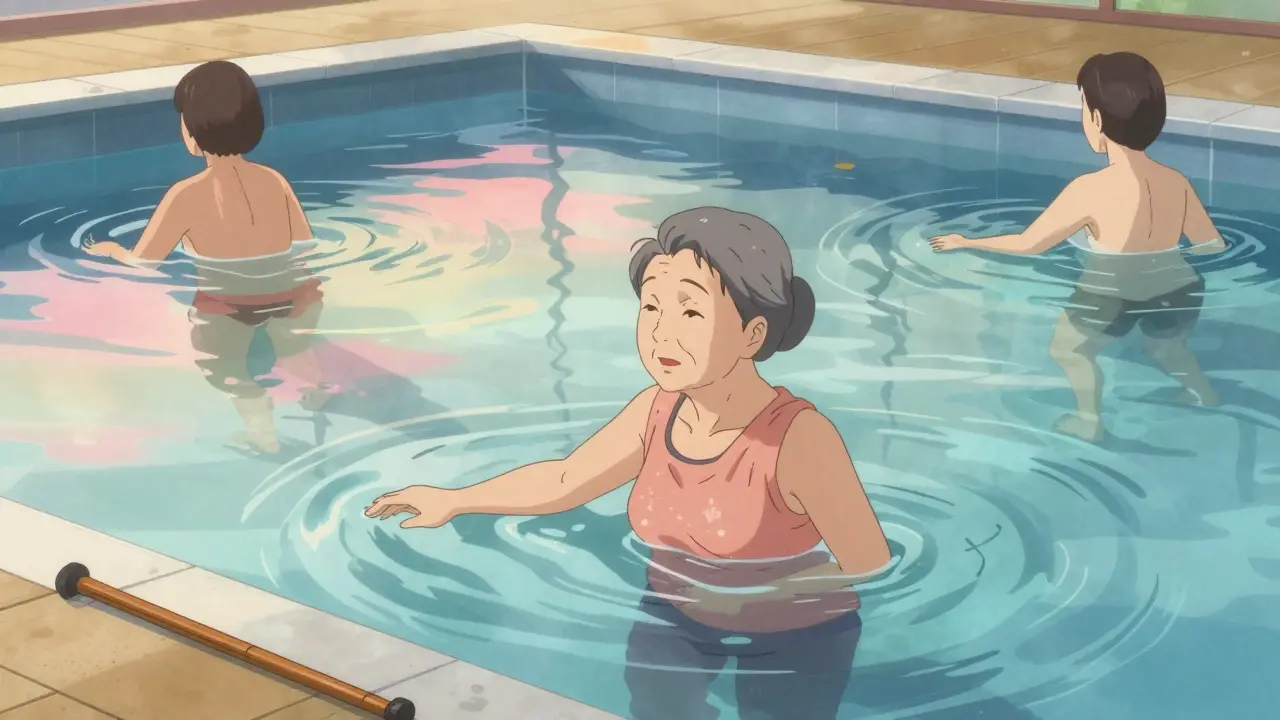
Forget "no pain, no gain." With chronic pain, you need "smart movement." Studies show that programs lasting 6 to 12 weeks, done 2-3 times a week, reduce pain by 15-30% and improve daily function by 20-40%. The best types? Aerobic walking, water-based exercises, tai chi, yoga, and strength training tailored to your limits.
One woman in Bristol, 58, with osteoarthritis, started with just 10 minutes of water aerobics twice a week. After three months, she stopped using her cane. She didn’t get "cured." But she got her life back. That’s the difference.
Cognitive Behavioral Therapy (CBT) for Pain
CBT isn’t about "thinking positive." It’s about learning how pain changes your thoughts, emotions, and behaviors-and how to take back control.
A 2023 review of 37 studies found CBT reduces pain intensity by 25-40%, cuts disability by 30%, and lowers pain-related catastrophizing (that feeling of "this will never end") by 35-50%. It works because it changes how your brain processes pain signals. You don’t need to believe pain will disappear. You just need to learn how to live with it without letting it rule you.
Typical CBT for pain includes 8-12 weekly sessions, each 50-90 minutes long. Many are now offered online, making them more accessible than ever.
Medications: Less Is More
When it comes to drugs, the rules have changed. Opioids? They’re not first-line anymore. The CDC says they should only be considered after other options fail-and even then, only at the lowest possible dose for the shortest time.
First-line non-opioid options include:
- Acetaminophen (up to 3,000-4,000 mg/day)
- NSAIDs like ibuprofen (1,200-3,200 mg/day) or naproxen (500-1,000 mg/day)
- Duloxetine (60-120 mg/day) for nerve-related pain
- Pregabalin (150-600 mg/day) for fibromyalgia or neuropathy
These aren’t magic bullets. But when used correctly, they can create enough space for movement and therapy to work.
Why Multidisciplinary Programs Are the Gold Standard
The Mayo Clinic Pain Rehabilitation Center runs a three-week intensive program. Patients see a doctor, a psychologist, a physical therapist, an occupational therapist, a pharmacist, and a biofeedback specialist-all in one place.
Results? 60-75% of participants see major improvements in daily function. Half reduce or stop opioids entirely. 65-75% return to work or meaningful activities.
It’s not expensive because it’s flashy. It’s expensive because it’s comprehensive. A single program costs $15,000-$20,000 per person. That’s why only 15-20% of eligible patients can access them.

The Real Barriers: Why So Many People Still Suffer
Here’s what’s broken:
- Doctors don’t know the guidelines. Only 35% of primary care providers have training in non-opioid pain management.
- Insurance won’t pay. 42% of patients report denials for CBT, physical therapy, or acupuncture-even though guidelines say they’re first-line treatments.
- Geography matters. 65% of rural U.S. counties have no pain specialist.
- Racial disparities persist. Black patients are 40% less likely to receive evidence-based care, even when pain levels are the same.
One Reddit user summed it up: "My doctor offered opioids or nothing." That’s not care. That’s surrender.
What You Can Do Right Now
You don’t need a miracle. You need a plan.
- Ask your doctor for the Brief Pain Inventory (BPI) and PROMIS Pain Interference Scale. These tools measure how pain affects your life-not just how much it hurts.
- Request a referral to a physical therapist trained in chronic pain. Look for someone who talks about "movement retraining," not just "strengthening."
- Try a 12-session CBT program. Many are now covered by Medicare and VA. Search for "pain CBT" + your state.
- Track your progress. Keep a simple log: What did you do? How did you feel? Did you sleep better? Move easier? That’s the real measure of success.
The Future Is Here-But It’s Not Perfect
New tools are emerging: wearable neuromodulation devices like Nevro’s Senza, FDA-approved digital therapeutics like reSET-O, and 37 new non-opioid drugs in clinical trials. These aren’t cures-but they’re steps forward.
The bigger challenge? Making sure they reach the people who need them most. Right now, 60-70% of chronic pain patients can’t access guideline-recommended care. That’s not a medical problem. It’s a system failure.
You don’t have to wait for the system to fix itself. Start with what’s available. Move. Learn. Talk. Ask for help. Small steps, done consistently, change lives more than any pill ever could.
Can chronic pain ever go away completely?
For some people, yes-but for most, the goal isn’t elimination. It’s control. Think of it like managing high blood pressure: you may never be "cured," but with the right tools, you can live without symptoms. Studies show that with structured movement, CBT, and proper medication use, most people reduce pain intensity by 25-40% and improve daily function by 30% or more. That’s enough to regain independence, sleep better, and return to hobbies or work.
Why do doctors still prescribe opioids for chronic pain?
Many doctors were trained to treat pain with pills. Changing that takes time. Also, some patients come in desperate, and opioids offer quick relief-even if it’s temporary. But guidelines have shifted since 2016. The CDC now says opioids should only be used after non-drug treatments fail, at the lowest dose, and with close monitoring. Still, only 5% of doctors increased referrals to physical therapy or CBT after the guidelines came out. That gap between science and practice is why so many people feel stuck.
Is acupuncture effective for chronic pain?
It depends on the condition. For osteoarthritis, especially in the knee, acupuncture shows 20-30% better pain relief than fake (sham) treatments. For nerve pain like diabetic neuropathy, it doesn’t help much. The VA Pain Management Pocket Guide says it’s worth trying if other options haven’t worked-but don’t expect miracles. It’s a tool, not a cure.
Can I do CBT on my own without a therapist?
You can start, but it’s harder. CBT works best with a trained professional who can adjust techniques to your specific pain patterns. That said, there are high-quality apps and online programs backed by research-like PainCourse (developed by Australian researchers) or the VA’s Pain Management Self-Management Program. These aren’t replacements for therapy, but they can be powerful first steps, especially if you’re waiting for an appointment.
What if my insurance won’t cover physical therapy or CBT?
Start small. Walk 10 minutes a day. Use free YouTube channels for gentle yoga or tai chi. Many community centers, libraries, or senior centers offer low-cost or free pain management classes. Ask your local hospital if they have a pain clinic with sliding-scale fees. The VA covers these services for veterans. If you’re in the U.S., check if your state has expanded Medicaid coverage for non-opioid treatments-many have since 2022. Persistence pays: 65% of patients who appealed insurance denials got them overturned.
How do I know if a pain specialist is qualified?
Look for credentials: board certification in pain medicine (ABPM or ABPMR), or training from a multidisciplinary program like Mayo Clinic’s. Ask if they use the CDC’s recommended tools-BPI, PDI, SOAPP, COMM. If they only talk about increasing your pill dose, walk away. A good specialist will ask: "What do you want to be able to do that you can’t right now?" Not: "How much pain are you in?"
Final Thought
Chronic pain doesn’t have to be your whole identity. You don’t need to wait for a cure. You need a plan that fits your life-not one that fits a textbook. Movement. Mindset. Support. Medication, if needed, but not as the main tool. It’s not glamorous. But it works. And it’s within reach-if you know where to look.
Sophia Rafiq
February 28, 2026 AT 08:59Used to catastrophize every twinge now i just note it and move on
Therapist had me track triggers and responses turns out my anxiety spiked pain more than the actual nerve damage
Also started water aerobics 3x a week no more cane no more panic attacks before doctor visits
Its not about fixing pain its about not letting it fix you
Gigi Valdez
March 2, 2026 AT 04:25Byron Duvall
March 2, 2026 AT 06:21Eimear Gilroy
March 2, 2026 AT 23:30Charity Hanson
March 4, 2026 AT 14:48My mom in Lagos has zero access to PT or CBT but she walks 2 miles daily and prays with her church group
They don’t have pills but they have rhythm and community
That’s two pillars right there
Don’t wait for the system to fix you
Start where you are with what you have
Justin Ransburg
March 4, 2026 AT 23:48Sumit Mohan Saxena
March 5, 2026 AT 05:59Vikas Meshram
March 7, 2026 AT 05:44Miranda Anderson
March 7, 2026 AT 12:16For years I thought if I just pushed harder I’d cure it
Turns out pushing harder made it worse
When I stopped fighting it and started listening to it-what it was telling me about my posture, my stress, my sleep, my emotional load-that’s when I started healing
It’s not about eliminating pain
It’s about changing your relationship with it
And yeah CBT helped but not because it made me think happy thoughts
Because it made me stop blaming myself for feeling pain
That shift was everything
Ben Estella
March 7, 2026 AT 22:03